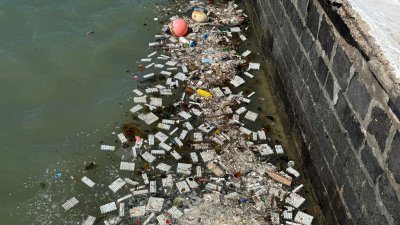
The strong swell produced by the passage of the high-impact storm Therese has left thousands of plastics on the coast and on the beaches of Lanzarote. Hundreds of cans, wrappers, and plastic waste of different types have been displaced by the waves to the coastline and add to the different damages caused by the force of the sea in areas of the east of the island.
A walk along the coast of Arrecife, the capital of Lanzarote, shows how marine litter accumulates in less than a kilometer of distance due to the combined sea and the groundswell of these days, with waves that have exceeded five meters.
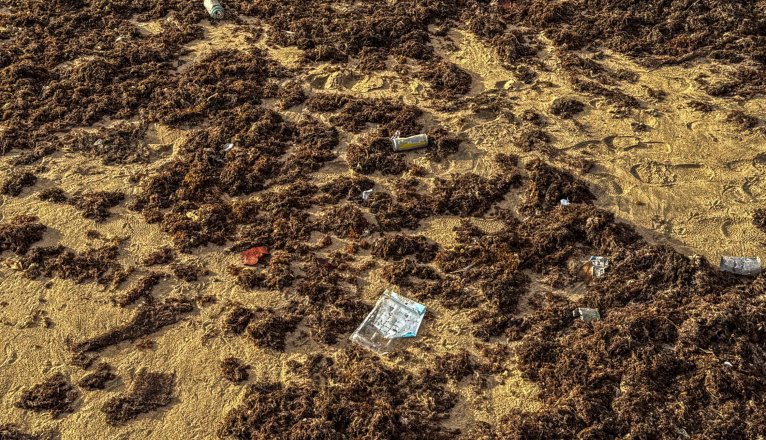
On the morning of this Tuesday, the Cleaning Service of the Arrecife City Council deployed several vehicles to remove the algae that had accumulated on the shore of El Reducto beach and in which hundreds of plastics were entangled.
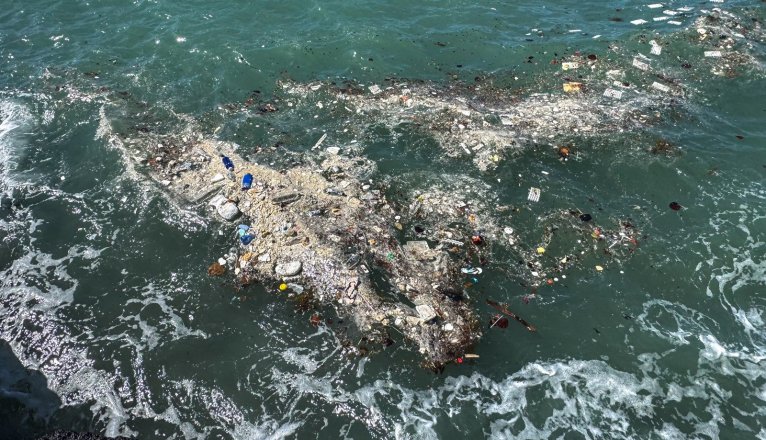
The Canary Current carries marine trash towards the islands
In recent days, a worrying image of marine litter contaminating the coast has been seen. The Canary Current drags towards the archipelago a large part of the marine litter generated in the North Atlantic, in countries such as the United States, Canada, or the European continent. Researchers from the Ecoaqua Institute group at the University of Las Palmas de Gran Canaria warned almost ten years ago about the high levels of microplastic contamination on beaches such as Lambra, in La Graciosa, or Famara, in Lanzarote. Both beaches are frequently affected by strong currents.
Within the areas affected by marine litter, the north of Lanzarote is one of the most damaged spaces, according to the RBMAR project. Among the most frequent litter are cigarette butts, plastic caps, plastic fragments, and fishing remains.
However, in recent weeks the strong swell has come from the northwest and offshore winds from the southwest with force seven. To the trash on El Reducto beach has also been added that which has appeared at the height of the Puente de las Bolas.
Plastics can take hundreds of years to disappear, they end up fragmenting and dividing into small parts until becoming microplastics which are mistaken by marine animals and by birds for food, entering their trophic chain.


Add La Voz de Lanzarote as a preferred Google source.
Stay informed with the latest current news.