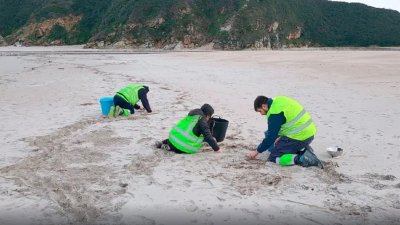
The plastic tide that has flooded the Galician coasts since the fall of several containers carrying 25-kilogram sacks full of pellets (small plastic balls) in December is leaving images of dozens of volunteers cleaning and straining the plastic from the Galician beaches have filled the news in recent days. Even, on January 5, the Xunta de Galicia activated the Territorial Contingency Plan for Accidental Marine Pollution.
This reality, which is not new, has increased in recent days, due to the dumping of tons of plastic balls into the sea. As a result, the presence of these pellets has also been reported on the Canary coasts. This Wednesday, the regional government has decreed a pre-alert due to the presence of a small amount of these materials in the coastal town of Bajamar, in the north of Tenerife. This was reported by the Lanzarote Security and Emergency Consortium, following a notification received by the Canary Islands Government.
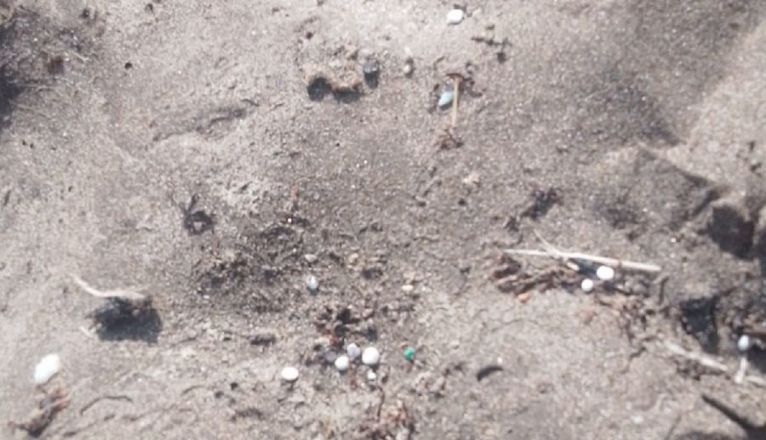
In addition, pellets have also been seen on La Garita beach in Lanzarote. However, the presence of these plastic balls and other microplastics on the coasts of Lanzarote are frequent and have been occurring for years due to marine currents that drag these waste to the Canary Islands. For example, Lanzarote Limpia has sent La Voz several images where these waste can be seen accumulated on the shores of the beaches.
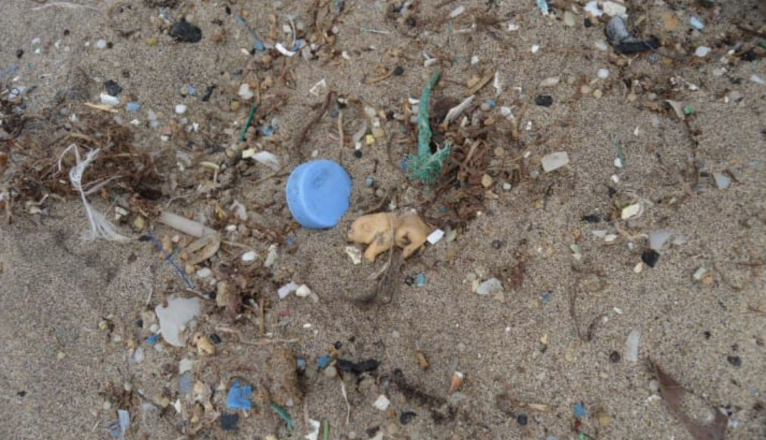
The Canarian marine biologist Pablo Martín explains on social networks "that these small particles are those that are used to generate the plastic products that we have in our day to day". He also adds that it is important to limit the consumption of plastic as much as possible to prevent this material from continuing to pollute the planet.
"Collecting these plastic particles is a highly complicated task," adds Martín. To which he adds that "it is a very serious problem because these plastic pellets are not going to degrade, or disappear", but will end up in the stomach of any marine animal.
The marine biologist adds that this plastic will become smaller and smaller and will become microplastic and transmit toxic substances.


Add La Voz de Lanzarote as a preferred Google source.
Stay informed with the latest current news.