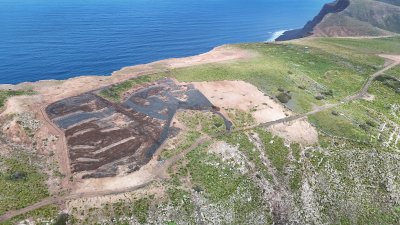
One of the realities facing the northern area of Lanzarote is the degradation of the Famara peaks, motivated by soil erosion. This situation poses a serious problem for one of the areas with the greatest biodiversity in Lanzarote, as it is located at a high altitude and makes it one of the most humid places on the island. To carry out a solution and tackle this problem, the public company Gesplan and the Cabildo de Lanzarote have been developing since 2024 a project to recover and conserve this area.
Francisco Fabelo, head of the Environment area of the Cabildo de Lanzarote, explains that this soil loss is not only due to the action of climatic phenomena, but also "to the action of herbivores like goats". The rains, especially torrential ones, and the wind "have led to the dragging of soil from the highest to the lowest areas of the island". This project for the recovery of these peaks is being carried out on publicly owned land and has a budget of almost 900,000 euros.
The area of action is comprised between El Bosquecillo and Montaña Aganada, a place where the soil does not have the capacity to retain the earth due to insufficient vegetation. And it is that the roots of shrubs, trees and other vegetation are the perfect tool to hold the soil and prevent the action of water from causing havoc. "During the rains, a kind of ravines are formed that become deeper and larger each time (called gullies), which means that when it rains, the water runs in the form of runoff that accentuates erosion more and more", points out Fabelo.
In fact, this type of soil, known in Lanzarote by many as "caliche", is a very calcareous and very impermeable soil that was even used to make lime. "It is a soil that lacks a lot of organic matter, so we make an amendment to correct its composition to make it more fertile," he asserts. These works are being carried out in three hectares divided into 18 different plots.
Soil preparation
Although the planting of native vegetation is vital and is part of this initiative, the most important step is soil preparation, as it is very calcareous and rainwater does not penetrate the earth, but rather runs over the surface. "We do it by adding organic matter and other elements that increase permeability," he explains.
This is not only achieved by adding manure, but also coconut fiber and with the placement of small meshes with pruning remains from other areas of the island such as vine shoots. "We introduce this into the deepest areas of the gullies and we keep adding a lot of organic matter," points out Francisco Fabelo. Therefore, the modification of the soil involves a physical and chemical transformation so that it retains more water, life begins to exist in it in terms of microbiota and when it receives the different species of vegetation, these have all the necessary nutrients.
At the same time as these works on the ground, from Environment they have been collecting different seeds of endemic flora species of the area. This seed bank has germinated in the Máguez nursery in a controlled manner. "We accelerate growth through techniques such as a controlled climate inside the greenhouse, but then we take them out of it so that they acclimatize and finally, we transfer them to the restoration plots, their definitive place", details the head of the Environment area.
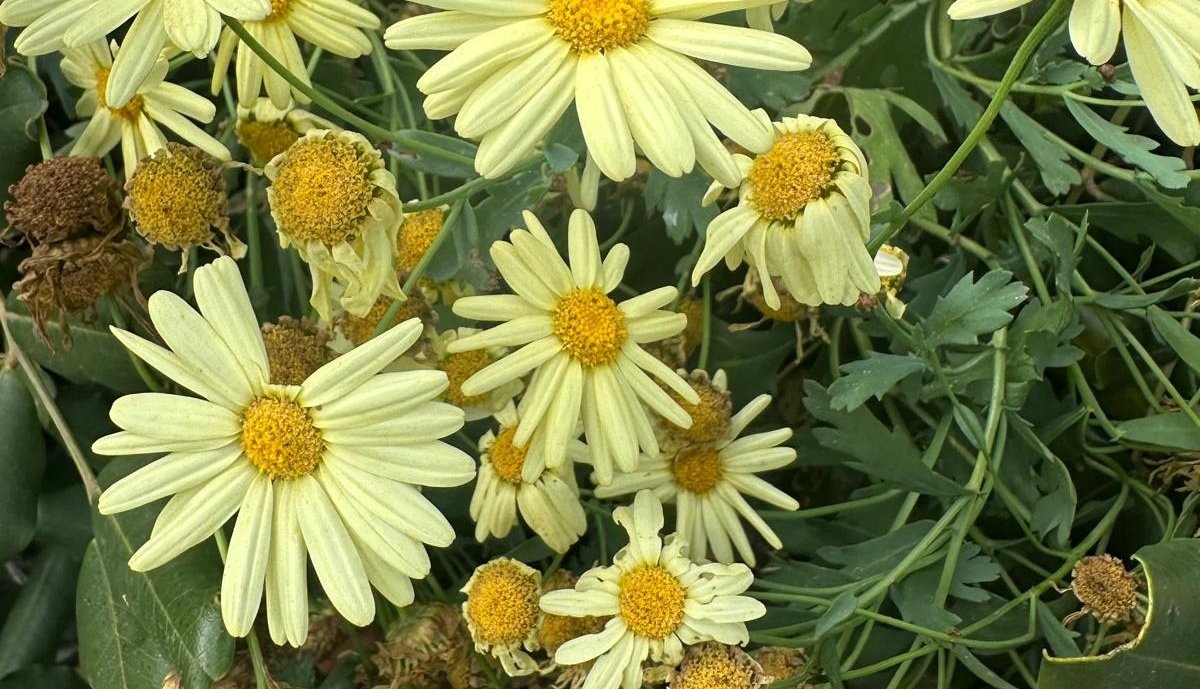
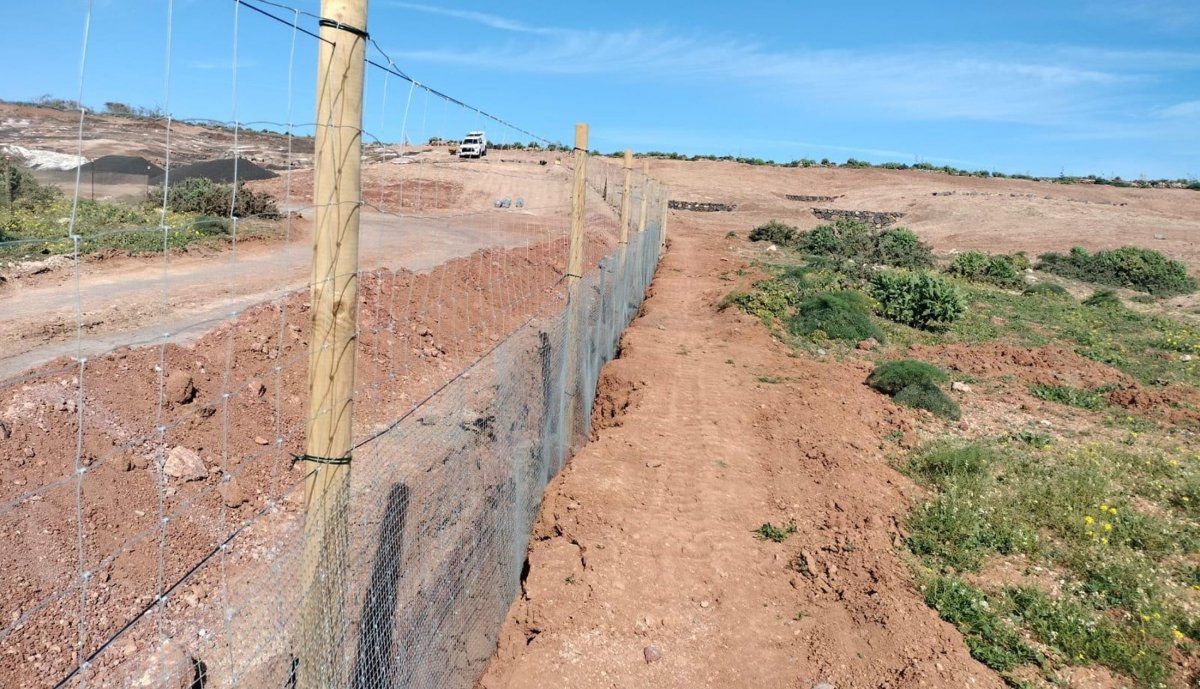
The bejeque, lavender, tabaiba, Famara daisy or sow thistle are some of the more than thirty varieties of plants that are cultivated to reforest the peaks of this area. The sow thistle, specifically, is one of the species most attacked by herbivores goats or rabbits, since "it is very nutritious and palatable for the fauna". The planted species are protected by a fence to prevent attack by herbivores. In this way, the survival of this vegetation is ensured.
These works are being carried out to prevent soil loss which seriously affects many other areas of Lanzarote, such as Montaña de Guanapay. "The gullies in this area no longer have vegetation because any plant that tries to colonize this place is washed away by the effect of the rains and everything is lost," explains Fabelo. Therefore, it is very important to prevent water from running strongly.
Evolution of the project
The project, which is currently a little over a year from completion, is progressing favorably in a year that has coincided with abundant rainfall distributed over several months. "It has been a total guarantee for the plantation, there have been no failures of these crops," he celebrates.
Now, the initiative is in full process to create an access for a water tank that can supply the area to water the planted species, but the use of water through the fog collectors is also contemplated. "Given the heatwaves that may come for several consecutive years without periods of rain in between, we will have to water," he points out.
Regarding the possibility of transferring this recovery project to other areas of Lanzarote, Francisco Fabelo points out that "we have an obligation, also on the part of the European Union, to increase our restored area, which has been punished by climate change and by erosion and that, if we do not take measures, the desertification of the island would grow by leaps and bounds and we do not want Lanzarote to become a desert in a few years".
Therefore, once the Famara peaks project finishes in the year 2027, he/she/it states that "it will be necessary to continue with the restoration of other plots".
Possibility of reforestation with Canary pines in the northern zone of the island
Contrary to what many people may think, in Lanzarote there indeed exists a tiny group of Canarian pines (Pinus canariensis) in the area of the Malpaso curves, in the municipality of Haría. Formerly, there was a very important arboreal system formed by pines, cypresses and tamarisks in the area of the Elvira Sánchez Ravine.
However, would reforestation with this species be possible in some areas of the north of the island? The head of the Environment area explains that this arboreal vegetation is "very sensitive to wind, but also to the very humidity of the area that causes a lichen to grow on the branches that does not help them to fully develop".
Therefore, these two factors represent a disadvantage for a possible reforestation with Canary pine in this area despite the fact that the few that exist remain alive.


Add La Voz de Lanzarote as a preferred Google source.
Stay informed with the latest current news.