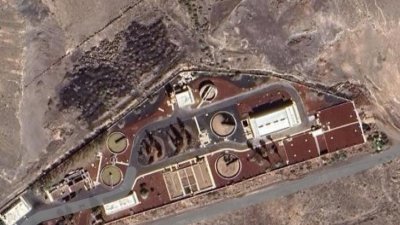
Ecologistas en Acción Lanzarote denounces the progress of an island model of water purification that bets on large centralized infrastructures, expensive and with environmental risk, compared to sustainable and decentralized alternatives.
The Ministry for Ecological Transition has published in the Official Gazette of the Province (BOP) the announcement of forced expropriation and establishment of easements that will affect a total of 311 plots of land, mostly dedicated to agricultural work or pastures, located in the municipalities of Yaiza and Tías, with the aim of expanding the Wastewater Treatment Plant (WWTP) of Tías.
Ecologistas en Acción Lanzarote informs citizens that there is "a real, economic and sustainable alternative": these are small natural treatment plants (phytodepuration), "which consume little territory, do not require electrical energy, do not generate odors or discharges into the sea, and are integrated into the natural environment without landscape impact." This type of installation offers high purification efficiency, allows the reuse of water for non-agricultural uses such as garden irrigation, and requires minimal maintenance and low economic cost.
These natural WWTPs, distributed by population centers of between 2,500 and 5,000 inhabitants - as recommended by the European Water Charter - allow to maintain public ownership of the recovered flows. All this without entailing an economic burden for the citizens.
In contrast, the proposed island system bets on the centralization of black water, through a complex and expensive network of pipes, pumping and impulsion stations that connect urban and tourist centers with large regeneration facilities, whose costs are paid by the citizens.
In addition, from the environmental group they assure that this "centralization responds more to a logic of profitability with the lucrative business of manufacturing industrial water that justifies millionaire public investments in patented technologies, instead of solving the real problem of illegal discharges, black wells and defective sanitation systems that still persist" on the island.
We also remember that the use of regenerated water "does not solve the problem of drought, due to its limited volume, and introduces new dangers: risk of accumulation of heavy metals in the food chain and secondary salinization of agricultural soils, something especially serious in arid islands such as Lanzarote and Fuerteventura."
Desalinated water is still, for agricultural and livestock uses, a safer option than regeneration, without entailing a significantly higher cost and without compromising the health of the soil or agricultural products.
Finally, from Ecologistas en Acción Lanzarote we remember that water and soil go together: their joint care allows better use of rain and fog, key elements for a water management adapted to climate change.


Add La Voz de Lanzarote as a preferred Google source.
Stay informed with the latest current news.