The Spanish Astronomical Society presents A World of Eclipses, a digital map with more than one hundred elements of cultural heritage from around the world, from antiquity to the present day. Thus, an open educational resource that connects science, history, art, and tradition.
The Canary Islands Institute of Astrophysics (IAC) participates in this initiative with several contributions dedicated to eclipses in ancient Egypt, the Hittite Empire, and the Canary aboriginal world, as well as an entry developed with the Institute of Heritage Sciences (Incipit-CSIC) on the eclipse associated with the death of the son of the prophet Muhammad.
For thousands of years, the sudden disappearance of the Sun caused astonishment among our ancestors in cultures of all times and places. The fear it inspired often led to eclipses being associated with terrible events, which spurred the need to understand, record, and predict them. Thus arose a great wealth of interpretations in which the natural explanation of the phenomenon, according to the astronomy of each time and place, and its supernatural reading linked to the beliefs of each culture, were intertwined.
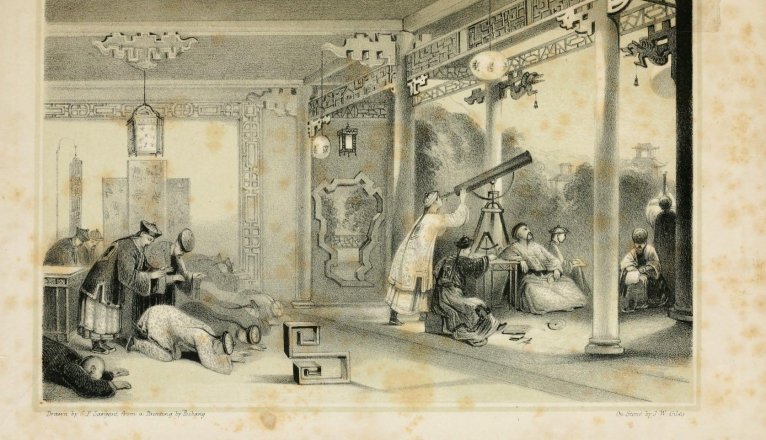
Fratricidal struggles between the Sun and the Moon, dragons, toads, squirrels devouring the Sun, or its death are some of those interpretations that reflect the universal need to make sense of a phenomenon that was as impactful as it was mysterious. And now they are collected in a new visual and interactive tool available online.
An interactive world map of eclipse interpretations
A World of Eclipses, a project of the Cultural Astronomy Commission of the Spanish Astronomical Society, is an interactive world map that allows you to virtually travel the world to discover a wide selection of interpretations of solar eclipses through the rich cultural heritage in which this phenomenon was captured.
From the Incas to The Simpsons and several examples in Spain
In total, more than 100 cultural manifestations have been compiled, selected for their historical, artistic, or ethnographic interest and for their geographical and temporal diversity. Each element has a complete file with detailed information, and we can find murals in Uganda, biblical texts, Egyptian hieroglyphs, the first photograph of a solar eclipse, commemorative postage stamps, a Tintin comic, or a manga in Japan, as well as Australian, Cherokee, or Zulu myths and legends.
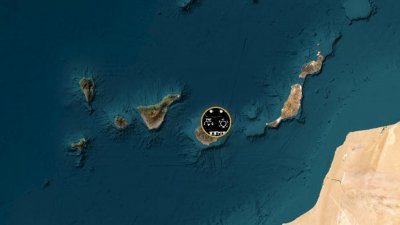
In Spain, a dozen different elements have been identified, including the ceramic piece known as the Agüimes vase in Gran Canaria, a medieval Hebrew poem, and a stone ashlar in Sos del Rey Católico. But they are not only chronicles or archaeological remains from centuries ago: recent pictorial works or songs also appear, and even an episode of The Simpsons.
Multidisciplinary project
The map is the result of the joint work of a team that integrates more than twenty specialists from about twenty research centers, universities, and other entities, in fields such as astrophysics, art history, ethnology, Egyptology, and sinology, along with creators in fields such as literature or photography.
The project has been coordinated by astrophysicist Montserrat Villar, a researcher at the CSIC at the Center for Astrobiology (CSIC-INTA), who highlights the transversal and innovative nature of the initiative on the international scene: “Our goal is for A World of Eclipses to teach, inspire, and awaken curiosity. We aspire to be one of the most complete online sources of information on the influence of solar eclipses in different world cultures, offering rigorous and accessible content, presented with a clear educational focus”. It is a free educational resource for teachers, students, and the general public. The atlas has been translated into English and adapted for visually impaired people.
In the words of Minia Manteiga, president of the Spanish Astronomical Society: “This project shows, in an enjoyable and inspiring way, how eclipses have awakened human curiosity in very diverse cultures, giving rise to interpretations and artistic expressions specific to each society. Although today we understand their origin, they continue to amaze us and become a collective celebration of the beauty and wonder that their observation provokes”.
The members of the coordinated project Orientatio ad Sidera VI of the MICIU on Cultural Astronomy, made up of the Institute of Heritage Sciences (Incipit-CSIC), the Autonomous University of Barcelona (UAB), and the Institute of Astrophysics of the Canary Islands (IAC), have contributed more than a dozen entries to this initiative. "In particular, the IAC drafted the entries on eclipses in ancient Egypt and the Hittite Empire, the indigenous Canarian world, and, in collaboration with Incipit, on the total solar eclipse that occurred after the death of Ibrahim, the only son of Prophet Muhammad, which would change the history of the world forever," points out Juan Antonio Belmonte, research professor at the IAC.
Scientific dissemination and artificial intelligence
The interface of A World of Eclipses has been designed with generative artificial intelligence tools. “This project demonstrates that AI can be a catalyst for democratizing the creation of highly complex digital experiences: technology ceases to be a barrier to become an amplifier of thought and dissemination,” states Sofía López, a member of the Cultural Astronomy commission, an AI expert at the Spanish technology company Magnific and creator of the interface.
Trio of eclipses
This project is of particular relevance today, given that Spain will be the scene of an exceptional astronomical event: the so-called “trio of eclipses,” with three solar eclipses visible in 2026, 2027, and 2028. This context reinforces the value of A World of Eclipses as a tool for bringing these phenomena closer to the general public from a multicultural perspective, and for showing how the observation of the sky has influenced the cultural construction of all societies.


Add La Voz de Lanzarote as a preferred Google source.
Stay informed with the latest current news.