
The man accused of raping a woman inside a car in Playa Blanca reached an agreement with the Prosecutor's Office this Tuesday just before the trial began, thus obtaining a considerable reduction in the penalty that was requested for him. Thus, he will finally be sentenced to two years in prison, compared to the 8 years initially requested by the Public Prosecutor.
To justify this reduction, the prosecutor has modified the initial classification, changing from a crime of sexual assault to one of sexual abuse, and has taken into account two mitigating factors. One of them has been the “reparation of the damage”, as the accused assumed the commitment to compensate the victim with 2,500 euros within a maximum period of 8 days.
The other mitigating factor has been the “undue delays” in the investigation of the case, which was stopped for more than 18 months in the Investigating Court Number 3 of Arrecife, according to the representative of the Public Ministry. Specifically, she detailed that a judicial statement was taken from the investigated party in mid-2019, shortly after the events occurred, and no new proceedings were carried out until the end of the following year.
May avoid the prison sentence
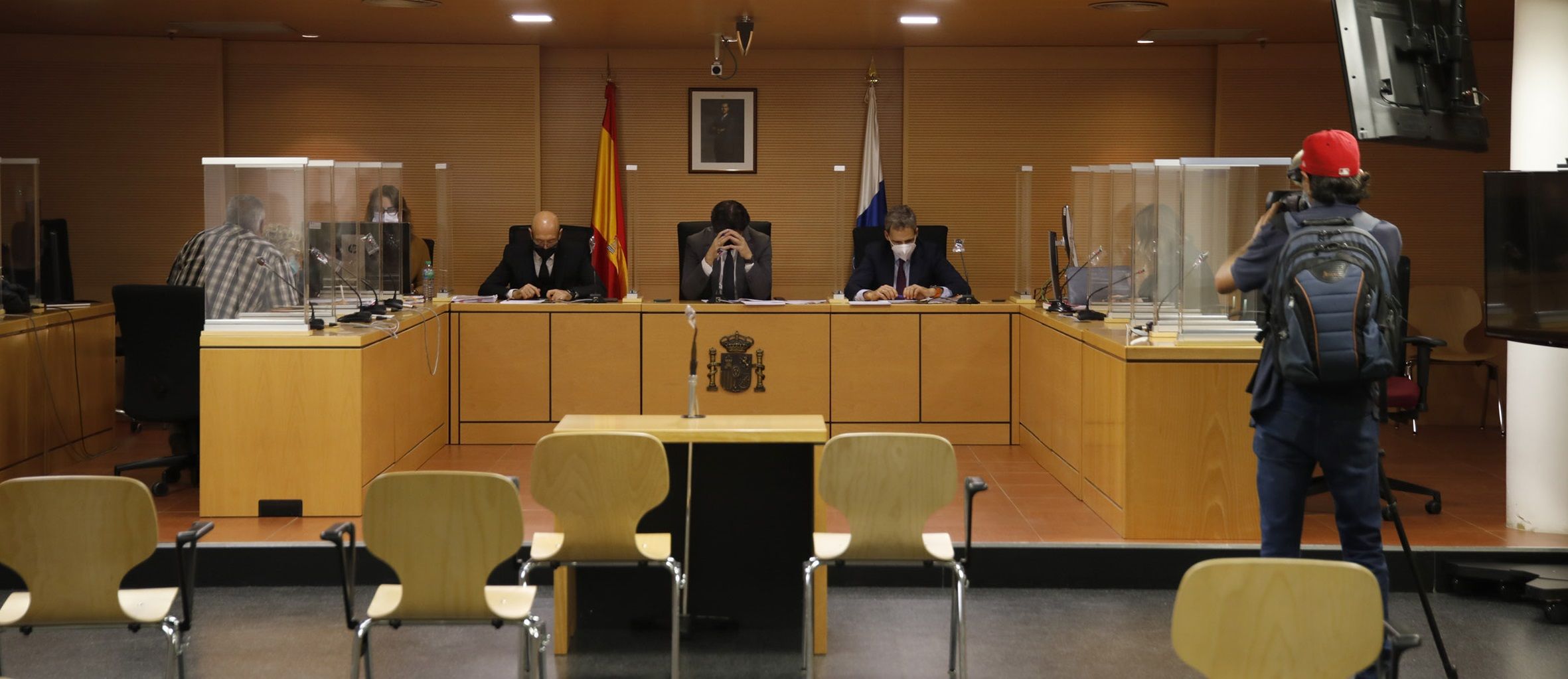
The negotiation between the parties has been carried out just before the start of the trial, which was scheduled for 9:30 a.m. before the First Section of the Provincial Court of Las Palmas, which had traveled to Lanzarote for the hearing. Finally, after more than an hour of conversations, the accused entered the room with his lawyer to ratify the agreement before the magistrates.
In this way, he has avoided the trial and a judgment of conformity has been issued directly, against which no appeal is possible, since both parties have waived it. “This court has no option but to issue a judgment in the terms agreed by the prosecutor,” said the president of the court after the accused confirmed that he accepted the agreement and that he recognized the facts that were attributed to him.
Next, he was warned that he must comply with the payment of that compensation to the victim within the maximum agreed period, and also with the other part of the sentence that has been imposed on him, which implies the prohibition of approaching within 500 meters of the victim or communicating with her by any means for 5 years. “If you do not do so, you may incur a new crime,” the judicial secretary warned him.
Regarding the prison sentence, since it does not exceed two years and the convicted person has no criminal record, he may not have to serve it, settling the case with the restraining order and that compensation of 2,500 euros to the victim.
No images of the accused to protect the victim
In its initial classification document, the Prosecutor's Office maintained that the crime had been sexual assault and not abuse, describing the physical violence used by the accused (which is what marks the difference between both crimes and the different penalties established for both). According to that document, the convicted man had been having a drink with the victim that night and then offered to take her home in his car. Once inside the vehicle, he deviated from the route and went to that secluded area, where he tried to kiss her. “Faced with her refusal, he struggled with her and dealt her a blow to the left side of her head,” the Public Prosecutor's Office stated, adding that he then took advantage of the effect of the blow and the alcohol she had consumed “to lower her pants and underwear and penetrate her vaginally”, against her will.
In addition, based on the medical reports, it indicated that the victim suffered various injuries to her face, knees and arms, for which she also accused him of a crime of injury, for which she requested a fine of 1,080 euros, which was finally also eliminated in the agreement.
Regarding compensation, it initially requested that it be 5,000 euros, but it has been reduced by half.
During the appearance of the accused before the court to ratify the agreement, the president of the Chamber allowed the press access, but warned that “direct images” of the accused should not be taken to “preserve the privacy of the victim”, avoiding showing his face in the possibility that he could be related to her.



Add La Voz de Lanzarote as a preferred Google source.
Stay informed with the latest current news.