The Second Section of the Provincial Court of Las Palmas judged this Tuesday in Gran Canaria a dentist accused of an alleged crime of procedural fraud for allegedly falsifying a document to cover a medical negligence in Lanzarote. For this reason, the Public Prosecutor's Office requests a sentence of two years in prison and the private prosecution raises it to eight years.
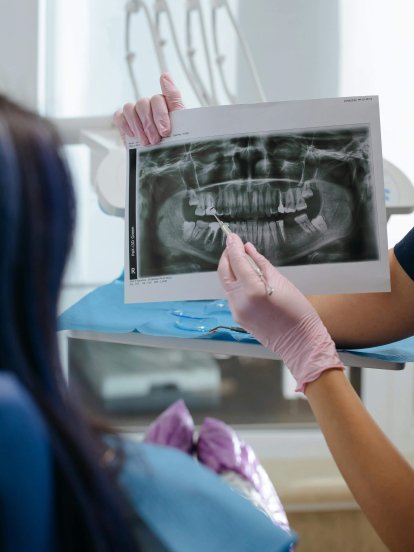
Specifically, according to the indictment of the Prosecutor's Office, it is the dentist L.M.D.C., who works in the only maxillofacial clinic in Lanzarote with an agreement with the health service. The events date back to January 2016, when a minor was referred by the Canary Islands Health Service to this dental clinic to have a supernumerary tooth extracted, that is, a piece that she had left over between the central incisors. However, according to the complaint of the minor's mother, in the clinic they extracted a fixed tooth and not the one indicated by the public doctors.
Initially, the mother filed a patrimonial claim in January 2017 against the Canary Islands Health Service for which she requested 153,987.62 euros for damages suffered by the minor, allegedly having extracted "by mistake" a fixed tooth instead of the one indicated. After its dismissal, she filed an administrative appeal against said resolution.
After that, the dentist and the complainant were summoned by the Contentious-Administrative Court. If the process resolved that there was medical negligence, the health professional and the agreed clinic should be responsible for it.
The Public Prosecutor's Office argues that when summoned by the Contentious-Administrative Court, the doctor would have added "in handwriting" to the informed consent for oral surgery, a process that must be signed when a patient undergoes an intervention of this type, that he was going to extract the fixed piece and/or the supernumerary tooth. This would be supported by the fact that the minor's mother was aware of this.
The Prosecutor's Office assures that "the accused, after signing it and before presenting it in the procedure, proceeded to add in handwriting [...] the expression 'and/or definitive piece 11' with the objective of simulating that the appellant had signed this document after being informed". Thus, the Public Ministry reveals that this "was not true", since she would have been informed "only" that the supernumerary tooth was going to be extracted.
The dentist defends that the minor's mother also signed a second document. While the Public Prosecutor's Office adds that he carried out "the same fraudulent purpose" after the signature, adding by hand that the fixed piece had been extracted and the supernumerary tooth was preserved.
This alleged falsification of the documents meant that the mother was not compensated for the damage against the minor, after the Contentious-Administrative Chamber of the Superior Court of Justice of the Canary Islands dismissed her appeal.
The Public Ministry understands that the dentist is the author of a crime of procedural fraud and asks for him a sentence of two years in prison, special disqualification for the right to passive suffrage during the time of the sentence and nine months of fine with a daily fee of 20 euros, as well as the payment of the subsidiary personal responsibility foreseen for the case of non-payment. In addition to the payment of costs.
For its part, the private prosecution, exercised by the lawyer Agustín Márquez, increases the request to eight years in prison, four for procedural fraud and another four for the alleged crimes of falsification of private documents. According to reports from the La Provincia newspaper.



Add La Voz de Lanzarote as a preferred Google source.
Stay informed with the latest current news.