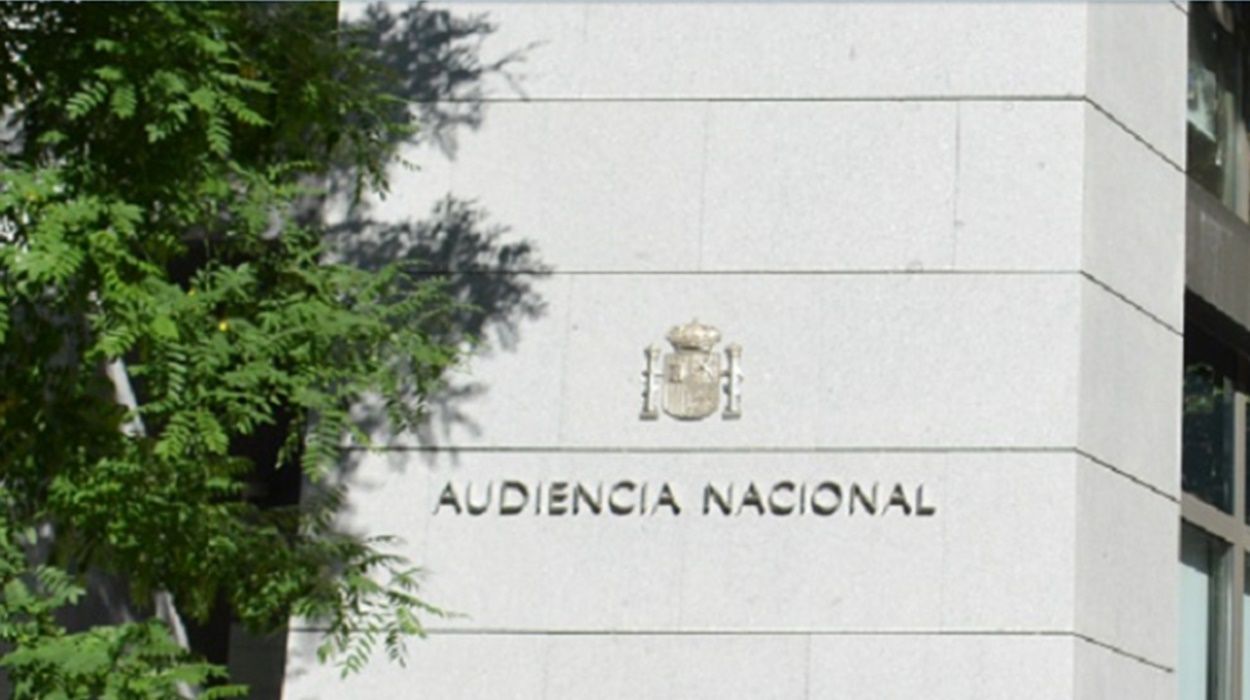
The Contentious-Administrative Chamber of the National Court has denied the asylum request of a woman who traveled to Lanzarote with her son fleeing "threats and economic extortion" in Colombia, considering her story "inconsistent and unjustified."
This woman, who arrived in Spain in 2016, already had her request rejected administratively, and in response, she appealed the decision judicially. However, in a ruling dated June 2nd, the National Court has dismissed the recognition of her refugee status and right to asylum.
According to the woman's account when requesting international protection, in 2013 she lived in Cali (Colombia), where the grandmother of her then-partner and father of her son had a grocery store and ceded the business to them so they could sustain themselves with the income obtained and thus cope with raising their son, "who had just been born at that time." However, the ruling points out that it has been verified that "the son was not born until August 2014."
During that time, the woman stated that "a group of criminals, without knowing if they have any name, began demanding the payment of a 'vaccine' of 300,000 pesos (about 100 euros at the exchange rate), without establishing a fixed periodicity for the payment, under the threat of killing them if they did not pay." According to the statement, the applicant and her partner paid "up to five times, until one day they decided not to pay them again."
Then, and "without specifying any date," the woman claimed that "three individuals showed up at the store" to whom "they refused to pay" and that she and her partner "were attacked with knives," suffering in her case "various deep cuts on her arms as a result of her attempt to defend herself, still retaining visible scars from the wounds to this day." "Upon hearing their cries for help, several neighbors came to their aid, and the three individuals fled the scene," it adds.
Due to this aggression, she recounted that "the mother of her then-partner paid for him a plane ticket to travel to Spain" and that "when he left, without specifying any date," she went to live "with her mother." There, she pointed out that she had spent eight months, during which she began working with her sister in a small town, stating that "there was also great insecurity created both by the guerrilla and by common criminal groups, demanding a 'vaccine' of 100,000 pesos (about 30 euros at the exchange rate) monthly."
After eight months, she explained that her son suffered "a fever attack" and began "to convulse," although after examining him at a medical center, "they did not diagnose any worrying symptom or illness." However, due to this, she contacted the father of her son, "who paid for the necessary expenses to acquire two plane tickets to travel to Spain." After their arrival, both were living with him in Lanzarote, although "they later separated after he had started a relationship with another person."
The applicant stated that she made the decision to leave her country with her son "given the situation of insecurity that she had been living throughout her life, for which she came to fear for her own life and that of her son." Thus, according to the ruling, after her separation from the father of her son, she decided to look for a way to stay in the country as she did not want to return to Colombia and went to the headquarters of the CEAR association in Bilbao, where she traveled because she had a cousin there and "where she was informed of the necessary procedures to be able to file an application for international protection."
Acts "of common crime" that "were not reported in origin"
However, the National Court considers it "inconsistent and unjustified" that the woman did not request protection until "10 months after entering" Spain "if she was coming to defend herself from fleeing an acute and serious situation of persecution," highlighting that she only did so after an event that occurred already in Spain, which was "the definitive separation from the father of her son, who also does not appear to have requested international protection."
Furthermore, it points out that "the alleged persecution that is said to have been suffered" refers "to acts of common crime" that "are not even reported in the country of origin" and that therefore "it is not possible to appreciate inactivity" by the Colombian authorities against these acts.
Likewise, the chamber highlights the "generality" of the woman's account, being "redundant in facts of general knowledge" and "without specifying dates in relevant events." It also points out that the direct family of the appellant and who "supposedly suffered the same extortionate acts and threats at the end of 2016," as is the case of her sister, continues "remaining in origin."
For all these reasons, the National Court considers it "adjusted to law" that the Undersecretariat of the Ministry of the Interior denied the asylum request to this woman, rejecting her appeal. It also imposes the payment of costs, which are set at 1,500 euros. However, an appeal for cassation can be filed against the ruling.



Add La Voz de Lanzarote as a preferred Google source.
Stay informed with the latest current news.