
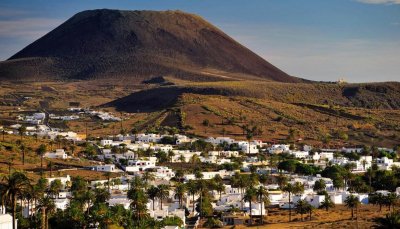
The latest edition of the travel magazine from National Geographic includes an extensive report on the island of Lanzarote, recommending a visit to the Villa de Teguise, Haría, Famara, and La Geria.
The article begins by explaining how “Maciot de Bethencourt, nephew of Jean (the Norman who conquered the Canary Islands in the name of the Kingdom of Castile), established his court in the center of Lanzarote and named the place after his wife”.
It also explains that until 1847, it was the capital of the island. "From the top of the Guanapay volcano, the marine horizon is dominated. There stands the castle of Santa Bárbara, intended to prevent pirate attacks. But it was of little use in 1586, when the corsair Murat Reis attacked the town and took 300 captives," describes National Geographic.
The magazine article highlights how everything in La Villa "breathes calm among the white colonial houses with bare basalt edges, the carpentry of doors and balconies painted green".
National Geographic also recommends traveling from La Villa to Haría to reach the Malpaso valley and "contemplate the bucolic Valley of a Thousand Palm Trees from the Ferns Viewpoint".
It also recommends visiting the Haría market on Saturday mornings and "enjoying this meeting place for many artists and artisans, where you can buy good goat cheese, handicrafts, and other island products".
It also highlights that Haría is home to "César Manrique's last residence, open to the public."On the beach of **Famara**, the report emphasizes that "it is a great place for gathering and communion with nature. The landscape has something **sublime** about it."
"With its dunes and the immense sandy beach revealed by the low tide, **the sunsets** on Famara beach attract islanders and foreigners alike. And **one doesn't know which way to stroll, or where to look**: the spectacle of the sky, the succession of waves, the lit-up cliff, the reflections of light on the wet sand or in the eyes of friends and strangers," it elaborates.
The report also delves into La Geria, which forms "one of the most surprising landscapes in the world, an example of adaptation to the environment".


