In statements to the English newspaper Daily Mail, which have been echoed by several newspapers in the United Kingdom, the British David Gainford, based in Lanzarote, has issued a warning about tourists who "ruin" the island.
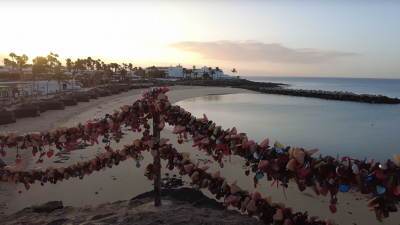
Gainford, who organizes tourist trips on the island and publishes videos about Lanzarote, denounces in one of the latest a growing problem for the environment in Lanzarote that, he says, no one seems to be talking about: the "explosion of love locks".
The travel agent considers Lanzarote "a paradise to visit and an excellent place to demonstrate love as a couple. What is not a good way to show love is locks. It is basically vandalism," he concludes.
Gainford explains that many local stores are selling plastic padlocks and permanent markers that some tourists use for what they consider romanticism and actually only vandalize the island.
“Someone has had the idea that this could be a gold mine, and they are taking advantage by selling plastic love locks. They are horrible. All they do is fade and rust,” he says.
"This is plastic pollution at its highest point. I ask the environmentalists: are you going to address the problem in front of your eyes? It has to stop, and it has to stop now," he concludes.
This type of padlock has gone viral on all types of railings in numerous tourist spots around the world. Some think they serve to demonstrate love and engrave their names or initials to give an idea of an alleged unbreakable love.
The phenomenon really took off in the 2000s. It is believed that the modern boom began after the publication in 2006 of the novel "Ho voglia di te" ("I want you") by Federico Moccia, and its subsequent film adaptation. In it, the protagonists place a padlock on a lamppost on the Roman bridge Milvio and throw the key into the Tiber River.
Fans of the film began to imitate the gesture, and soon the fashion spread to other tourist cities. In Paris, the padlocks were removed from the Pont des Arts in 2015 because their weight (more than 45 tons) represented a structural risk.


Add La Voz de Lanzarote as a preferred Google source.
Stay informed with the latest current news.