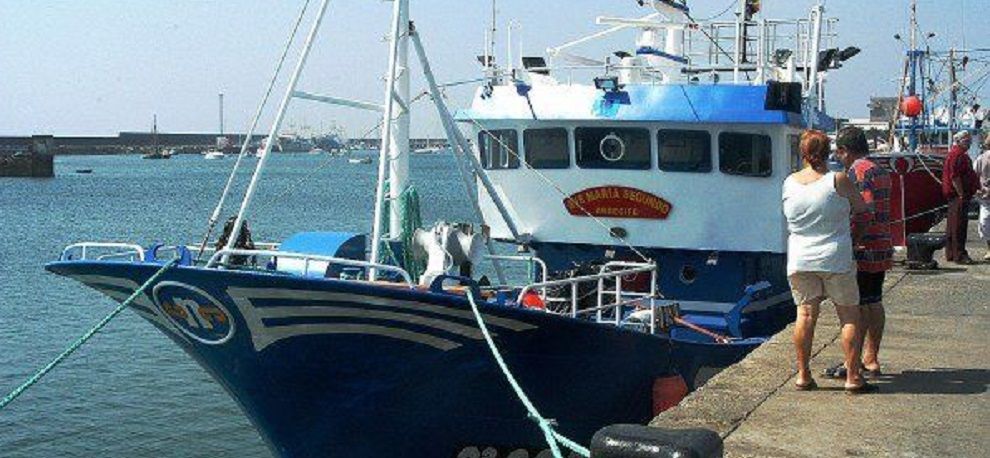
The rise in diesel prices triggered by the Russian invasion of Ukraine, which has already meant that in the Canary Islands the liter has gone from costing 0.45 euros at the end of 2021 to the 0.90 that is paid today in Tenerife, will jeopardize, if no one remedies it, 700 fishing boats, their 2,000 crew members and the other 8,000 indirect jobs they generate on land.
This was stated this Wednesday to Efe by the vice president of the National Federation of Guilds, senior master of Agaete and president of the Federation of Las Palmas, Gabriel Jiménez, who assured that this inflationary escalation is "very serious" and may lead in the Canary Islands to the closure of many small companies that, after two years of pandemic, will not be able to resist with an activity that will be forced to reduce to about 120 days a year due to cost overruns.
Jiménez stressed that at the national level, fishing fuel is already paid at 1.4 euros per liter, a scenario that may worsen and that will affect, he said, the movement of the fleet, which will result in the economy of companies in the sector and will also have consequences on the shopping basket, although that will depend on the prices set by intermediaries.
In addition to the "small subsidy" to fuel that the Government of Spain grants to the sector "for life", and that Europe threatened to withdraw, the fishermen's associations of the country believe that in this situation they should be worthy of significant support, as tourism, hospitality and other essential sectors have been, to which they estimate they belong.
Jiménez said that this situation affects about 700 boats in the Canary Islands, half of what there were in the nineties, especially tuna boats, which spend a lot of fuel because they have to move from one island to another looking for their catches.
"It practically leaves those stopped, and the medium and small fleet is also affected because the economy of those shipowners is not buoyant after two years of pandemic in which the sale of fish has not been important at all, to which has been added the lack of fishing that has been due to the quotas of tunas", he said.
In the same way that it has enabled aid to the sectors most affected by the cessation of activity derived from the restrictions imposed to try to stop the covid-19 pandemic, the fishermen's associations ask the Government of the Canary Islands "to make a move so that they can continue fishing".
"I think it is time for us to be rewarded with something to be able to face what is coming, because this will not last a month or two, but lowering these prices will take a couple of years," Jiménez predicted, who is confident, however, that we can soon return to the situation prior to this war conflict.
Add La Voz de Lanzarote as a preferred Google source.
Stay informed with the latest current news.