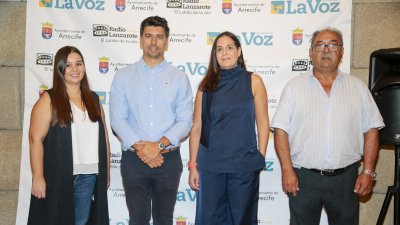
The Fishing School was the emblematic place chosen to reflect on the blue economy during the Blue Economy Forum, the second thematic event of the 5th edition of the Global South Forum held last Friday in Arrecife. The day brought together experts, entrepreneurs, professionals, political and business representatives, students and, in short, sea lovers to analyze the opportunities around the responsible use of marine and coastal resources.
The event stood out for the quality of its presentations and panel discussion, as well as the interesting contributions in the question and answer session. The experts shared knowledge and innovative proposals to harness the potential of the oceans in a responsible and sustainable manner.
The event was opened by Maciot Cabrera, Councilor for Employment and the Local Development Agency of Arrecife, who stressed his council's willingness to contribute to reviving activity around the sea in his municipality and the commitment to generate new employment opportunities for its citizens.
Panel of Experts
María Gálvez, oceanographer and environmental scientist, detailed what the economic potential of the sustainable blue economy consists of and praised it, addressing issues such as technological innovation, the impact of climate change on marine ecosystems and the economic opportunities that arise from the responsible exploitation of marine resources.
Noelia Hernández, National Geographic explorer, oceanographer and doctor in marine ecology, highlighted the positive effect of plans to boost the sector in local economies, such as her experience in Costa Rica, from which new areas of activity and new employment opportunities for local residents were born.
Round table
The experts' presentations gave way to a very interesting round table, in which local participants contributed their knowledge about the peculiarities of the sector in Lanzarote.
Carmen Déniz, director of the Fishing School, highlighted the maximum employability in all the training branches of the maritime - fishing vocational training institute and detailed various actions of the school, which has set itself the objective of setting an example in terms of environmental responsibility. She also requested institutional support for what is one of the leading fishing schools and one of the oldest in the national scene.
Andrés Cedrés, manager of Optuna, stressed the difficulty of attracting labor for the different positions needed in deep-sea fishing, which causes idle boats and forces very old sea professionals to continue in the work. He took the opportunity to encourage students not to despise their specialization in fishing, a beautiful activity that offers good economic prospects, compared to other more comfortable activities. As an example of the current situation, he commented on the good skills of the Senegalese for fishing, who only with a nautical safety course could be suitable to embark.
José Valle made the Chamber of Lanzarote fully available to entrepreneurs and entrepreneurs in the sector, both when it comes to obtaining aid and offering tutoring and support to entrepreneurship projects, also emphasizing the importance of public-private collaboration to promote projects and provide necessary infrastructure for the sector.
The round table identified areas with development potential such as artisanal fishing, personalized marine ecotourism or seaweed farming, insisting that some cannot devour others, giving the example that recreational tourism cannot commercialize its catches.
Questions and answers
Also a lively round of questions gave rise to very interesting reflections. The students of the Fishing School asked about the incentives to specialize in deep-sea fishing compared to other less demanding activities, obtaining the beauty of the profession, total employability and good income potential as an answer.
Another aspect in which divers, open water swimmers and professionals in the sector agreed is the deep concern about the increasing discharges into the sea on the Lanzarote coastline, derived from the unstoppable tourist and population growth and the consequent inability to purify all the water, which is having a very damaging effect on the quality of the water and affecting the marine ecosystem very negatively on beaches and coast.
Organized by the Department of Employment and the Local Development Agency of the Arrecife City Council, the Blue Economy forum has had the Lanzarote Media media group as its main partner.


Add La Voz de Lanzarote as a preferred Google source.
Stay informed with the latest current news.