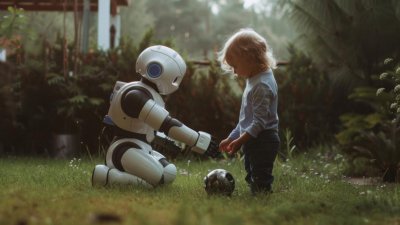
The irruption of artificial intelligence in daily life raises legal questions that were unthinkable until recently: could an AI marry or receive an inheritance? Although the Spanish Civil Code only recognizes legal capacity to natural persons, the affective, functional and patrimonial links with AI systems are already a reality that is beginning to generate debate.
“Civil Law regulates marriage, divorce and inheritance as institutions designed for natural persons. Neither animals, nor objects, nor artificial intelligences can marry or inherit in Spain”, explains Abel Marín Riaguas, partner at Marín & Mateo Abogados.
However, he clarifies: “The testator can leave his assets to a foundation or entity whose corporate purpose is to preserve and operate a certain AI. The final recipient is not the AI, but the practical effect is achieved. The legal fiction works”.
The question is not minor. More and more citizens delegate the management of their agenda, their finances or even their emotions to digital assistants. “There is a growing dissonance between the effectiveness practical of AI and the absence of legal personality that supports it. That tension will end up being transferred to the legislator”, Marín points out.
The debate is linked to legal precedents: the sentient animals have already received partial recognition in Spain, and the protected assets (Law 41/2003) allow assets to be allocated to a specific purpose without the need for a natural person as the owner. “Perhaps today it sounds eccentric to think about leaving everything to an AI. But if it represents you, generates income and, in a certain way, survives you, the idea becomes less distant”, the lawyer points out.
According to data from the World Bank, more than 40% of companies in developed countries already integrate AI systems into their operational management. This massive implementation anticipates patrimonial and succession conflicts that Spanish Law still does not contemplate.
“Law is not made for emotions, but it cannot ignore them either, much less when they translate into money, conflict or power”, concludes Marín. In his opinion, as happened with commercial companies or with the regulation of ecosystems, we will soon see new legal figures that recognize artificial intelligences as necessary subjects for the system.



Add La Voz de Lanzarote as a preferred Google source.
Stay informed with the latest current news.