
The Plenary of the Regional Chamber approved this Wednesday a Non-Law Proposal (PNL) from the Socialist Parliamentary Group to promote a regional agreement of all political forces that guarantees access to universal mental health, public and quality, with special attention to childhood and adolescence.
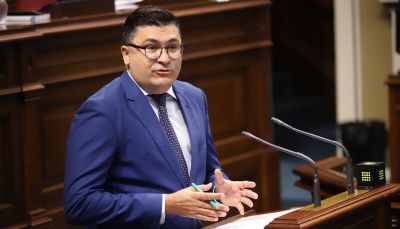
The initiative, defended by the Health spokesperson of the Socialist Group, Miguel Ángel Pérez del Pino, urges the Government of the Canary Islands to promote, with the greatest possible consensus with the political forces with parliamentary representation, public administrations and civil society organizations, a regional agreement for Mental Health, which guarantees the right to universal, public and quality mental health.
The proposal also urges the Government of the Canary Islands to promote, among other measures and actions, special attention to the mental health of children, adolescents and young people, through a greater reinforcement of mental health specialists to reduce the maximum waiting time for Mental Health consultation, especially among people under 21 years of age, as well as the development of a plan with specific measures aimed at preventing youth suicide.
The socialist PNL recalls that the promotion of mental health has been included among the Sustainable Development Goals (SDG) of the United Nations for 2030; and since 2012 all WHO Member States have committed to implementing the Comprehensive Mental Health Action Plan 2013-2030. In the case of the Canary Islands, it is one of the main concerns in public health, due to the burden of disease posed by mental health problems and their prevalence.
In addition, it is warned that the social and health crisis derived from the Covid-19 pandemic has had an impact on the mental health of the population, and has served to make more evident the need to act urgently in relation to this issue.
Currently, 37% of people in Spain have some mental health problem. The most frequent problems are anxiety, sleep disorders and depression. In childhood, adolescence and youth (under 25 years of age) the most frequent problems are anxiety, followed by specific learning disorders and hyperkinetic problems, which have been increasing since 2019, according to data from the SNS Annual Report 2022 of the Ministry of Health.
For its part, it must be taken into account that "mental health problems are more prevalent as people's income level decreases".
According to the Report Job Insecurity and Occupational Health 2023, there is a relationship between job insecurity (employment and work) and poor mental health in the working population, and another issue that the pandemic also highlighted was that the mental health of women can be especially affected, due to the exhaustion they suffer in their multiple roles and the overload linked to the social mandate of care, in many cases, aggravated in contexts of job insecurity.
In addition, the consumption of hypnotic and sedative drugs has not stopped growing since 2010, deaths by suicide have been increasing since 2018, and have increased by 2.3% in 2022, according to data from the INE.
In this context and within the framework of the new strategy in the SNS, the Mental Health Action Plan 2022-2024 is being developed.
For the Socialist Group, these challenges transcend the exclusively health field, so it is essential to establish a regional agreement for Mental Health. “We are in an opportune social and political context both in our nationality and in our country, where there is already a clear commitment to address and respond to the mental health needs of the population.”


