
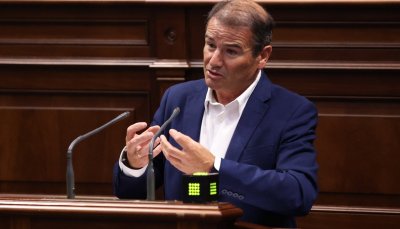
The spokesperson for Education of the Socialist Parliamentary Group, Marcos Hernández, has accused the Ministry of Education of the Canary Islands Government of working "with its back turned" to the families affected by the new Decree on Attention to Diversity that the regional Executive is preparing, and has denounced the "zero response" that groups such as the Canary Islands Platform for Inclusive Education are receiving to their demands.
Hernández spoke at the recent parliamentary commission on Education, which included Guacimara Navarro, representative of the Canary Islands Platform for Inclusive Education on the island of La Gomera, at the request of the Socialist Group.
The socialist deputy emphasized "the importance of including all minors in the educational system, regardless of the island they come from," while also calling for measures to prevent the segregation of these minors based on the municipality or place where they reside."Educational segregation based on disability or diagnosis cannot exist, and in any case, what we must achieve is the effective enforcement of the law, and therefore, not to place barriers in the potential development of each of these individuals," he statedFurthermore, she referred to the proposals made by the collective of this platform regarding the draft Decree on Diversity Care, criticizing the "poor response" from the Ministry of Education and the fact that it is working on this Decree "with its back to families," as confirmed by the representative of the Canary Islands Platform for Inclusive Education during her appearanceHernández also highlighted the work, effort, and dedication of people like Guacimara Navarro and other families, "who work for a long time to turn inclusion into a reality and not just a manifesto without real impact on the well-being of minors."In this regard, he thanked the involvement and work of "the many families and mothers and fathers who work towards this goal, and who often do so encountering or running into the indifference of an administration that, as they rightly point out, is not always up to the circumstances.""This Canary Islands government is very far from what it preaches in terms of inclusion," he criticizedFor his part, Navarro highlighted the importance of this inclusion, especially in the non-capital islands like La Gomera, and called for efforts to ensure that children with special needs can attend their local schools, "so they don't have to uproot themselves and travel dozens of kilometers daily to other towns or even change islands to access an inclusive educational center."Hernández recalls that this Platform was born as a response "to what they understand as a systematic breach of the right to inclusion in the Canary Islands' educational system, because many children with disabilities or special educational needs continue to face barriers that limit their learning and their participation on equal terms".
From the platform, they claimed various demands, such as the implementation of measures to end educational segregation due to disability or diagnosis; the provision of sufficient personal and material resources in mainstream schools, as well as mandatory teacher training in inclusion and accessibility.
Hernández showed his support for the platform's demands and its call to Canarian society, families, teaching staff, organizations, and public officials, "so that together we can build an inclusive school where everyone has a place and real opportunities. This inclusion can in no case be a favor or a handout, because it is above all a right that must be respected and guaranteed by the administration."


