A new methodology developed by several Spanish research centers will allow for the prediction of volcanic eruptions in urban environments with approximately two days' notice.
The new methodology, developed by the Geological and Mining Institute of Spain (IGME-CSIC), the National Geographic Institute (IGN), and the University of Valencia, has been selected by the UN Office for Disaster Risk Reduction as a tool that will enable scientists and institutions to improve the response and management of these types of natural emergencies worldwide.
Magma does not rise randomly, but rather follows a pattern over time, and that pattern or memory generates a series of seismic movements that are persistently and stably related to each other, the Spanish National Research Council (CSIC) explained this Thursday. The results of the work have been published in the journal Scientific Reports.
However, when the magma's memory changes, it generates a time series of earthquakes, different from those previously recorded, which reveal that the magma has stopped being 'stagnant', or moving slowly, to begin an unstoppable ascent.This change in magma patterns, evidenced by irregular seismicity, marks a point of no return prior to the eruption, the CSIC has clarified
The new methodology, a world first, applies algorithms to identify the transition in the behavior of magma's long-term memory during its ascent, allowing for the precise determination of an eruption precursor signal approximately two days before it occurs.
Data collected in La Palma, essential for the new methodology
"This novel approach opens new avenues for implementing early warning systems based on the analysis of volcanic earthquake time series, applicable to real-time seismic networks during the monitoring of a seismic-volcanic crisis," explained Raúl Pérez, a researcher at IGME-CSIC
The new tool is not limited to issuing a pre-eruption warning; the algorithm is also capable of determining when the volcano is losing eruptive force. The moment the magma memory indicator stabilizes, scientists can identify an 'asymptotic' trend, a sign that the engine powering the eruption is running out of steam.
This ability to predict the potential cessation of activity is vital for emergency management, as it allows authorities to begin planning for the population's return and the start of reconstruction.
Due to the potential impact of this work on the management of future volcanic eruptions, it has been included by the UN Office for Disaster Risk Reduction on Preventionweb, its global knowledge-sharing platform for disaster management.
The objective is to disseminate the new method among the community responsible for managing these types of natural crises, thus putting the work of Spanish scientists at the service of society
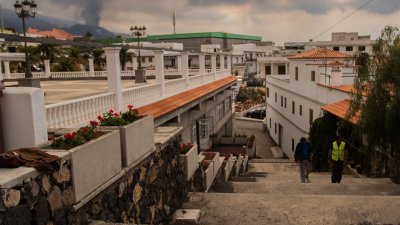
In 2021, the eruption of the Tajogaite volcano (Cumbre Vieja, La Palma) affected more than 8,000 people and caused the destruction of approximately 1,200 homes.
Many CSIC researchers were deployed to the field for the scientific study and advice on this natural emergency, and the information gathered then has served the research team to develop the new technique based on the use of statistical algorithms applied to the earthquakes recorded during the volcano's eruption
“Our work combines mathematical modeling of earthquake occurrences associated with magma ascent, from a depth of 9 kilometers, with exhaustive fieldwork, day by day, hour by hour, that was carried out during the eruption of the La Palma volcano. All of this allowed us to define signals associated with changes in eruptive dynamics, finding that said eruption lasted 86 days due to five deep magma injections,” Raúl Pérez specified.



Add La Voz de Lanzarote as a preferred Google source.
Stay informed with the latest current news.