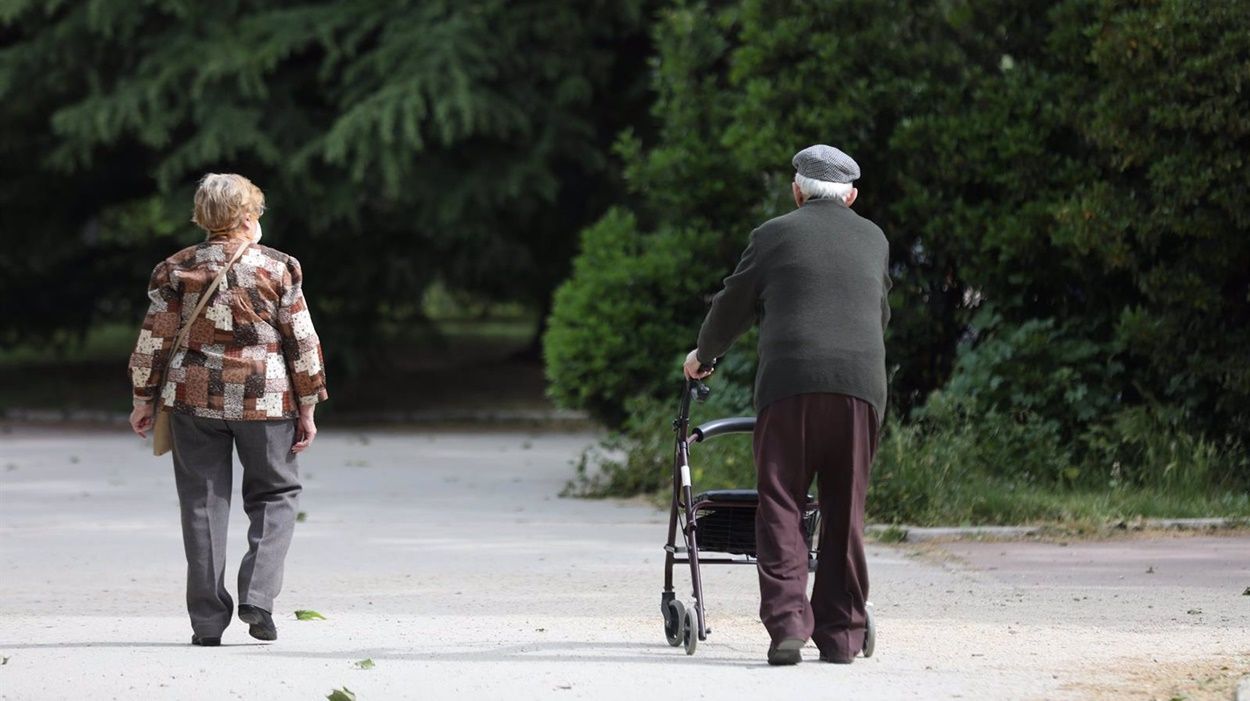
A total of 47,201 people on the dependency waiting lists have died so far in 2020, according to data from the Ministry of Social Rights collected by the State Association of Directors and Managers of Social Services, which shows that in the specific case of the Canary Islands, the number is 2,747.
Specifically, 29,453 dependents with rights and 17,748 pending assessment died from January to October 2020. This represents 160 deaths per day in the "bureaucratic labyrinth of the law," the association laments.
By autonomous communities, Catalonia leads with 12,013 deaths on the dependency waiting list from January to October 2020. It is followed by Andalusia, with 9,944; Madrid, with 4,736; Valencian Community, with 4,510; Canary Islands, with 2,747; and Basque Country, with 2,137.
The directors of Social Services criticize that "after almost a year of the Government pact, the Ministry of Social Rights has not increased the funding of the Dependency Care System by a single euro." "The 376,707 dependent people who are waiting for a procedure are being abandoned without care," the Association has denounced.
A "catastrophic" impact of Covid on dependency care
According to the latest MoMo prepared by the Ministry of Social Rights, which analyzes the mortality of people in the Dependency Care System (SAAD) and taking into account data up to October, 148,530 people have died this year with a dependency request.
In addition, an excess mortality of 40,065 people in the SAAD is observed (an increase of 36% of the expected), affecting 2.1% of the total number of applicants. 82% of the deceased were over 80 years old and 42% of the deceased had a Grade III dependency.
Specifically, the association observes a "very high impact" on excessive mortality in people cared for in residences (46,756 deaths), with an excess of 20,922 deaths, which represents 8.4% of the total number of dependent people cared for in residences.
The rate of dependent people who died in residences was 199.4 per 1,000. The highest rates were recorded in Madrid (293), Castilla La Mancha (261) and Catalonia (237).
"The impact of Covid-19 on the Dependency care System has been catastrophic, reversing important indicators and generating much pain, suffering and death to thousands of people in situations of dependency and their families," lament the Directors of Social Services.
Specifically, they point out that the rates of variation as of October 31, 2020, compared to the data before the State of Alarm, are all negative: 34,607 fewer people with the right to benefit pending receipt (12.9% less); 38,925 fewer beneficiaries with rights (2.8% less); 52,750 fewer applications (-2.8%); 41,952 fewer resolutions (-2.4%) and 4,318 fewer beneficiaries with benefits (-0.4%). "Not even the replacement rate is maintained and the waiting lists go down not because they are attended to, but because they swell the lists of cemeteries," they warn.
27% of deceased dependents were in a residence
As they specify, 27% of the dependent beneficiaries who died this year lived in a residence.
The communities where this percentage is higher are Cantabria (44.8% of the deceased beneficiaries had residential care), Catalonia (39.1%), Castila-La Mancha (36.7%) and Madrid (32.8%) and those where it is lower are Castilla y León (11.4%) and La Rioja (12.6%).
For all this, they ask the second vice president of the government and minister of Social Rights and Agenda 2030, Pablo Iglesias, to "urgently convene the Territorial Council to propose an immediate increase in the funding of the Dependency Care System, complying with what was agreed in the State pact for Dependency and the meeting of Autonomous Presidents (2017)".
They also demand "to speed up the procedures and eliminate the waiting lists" and apply measures of temporary suspension and flexibility of the service or benefit without the need for administrative resolutions.


Add La Voz de Lanzarote as a preferred Google source.
Stay informed with the latest current news.