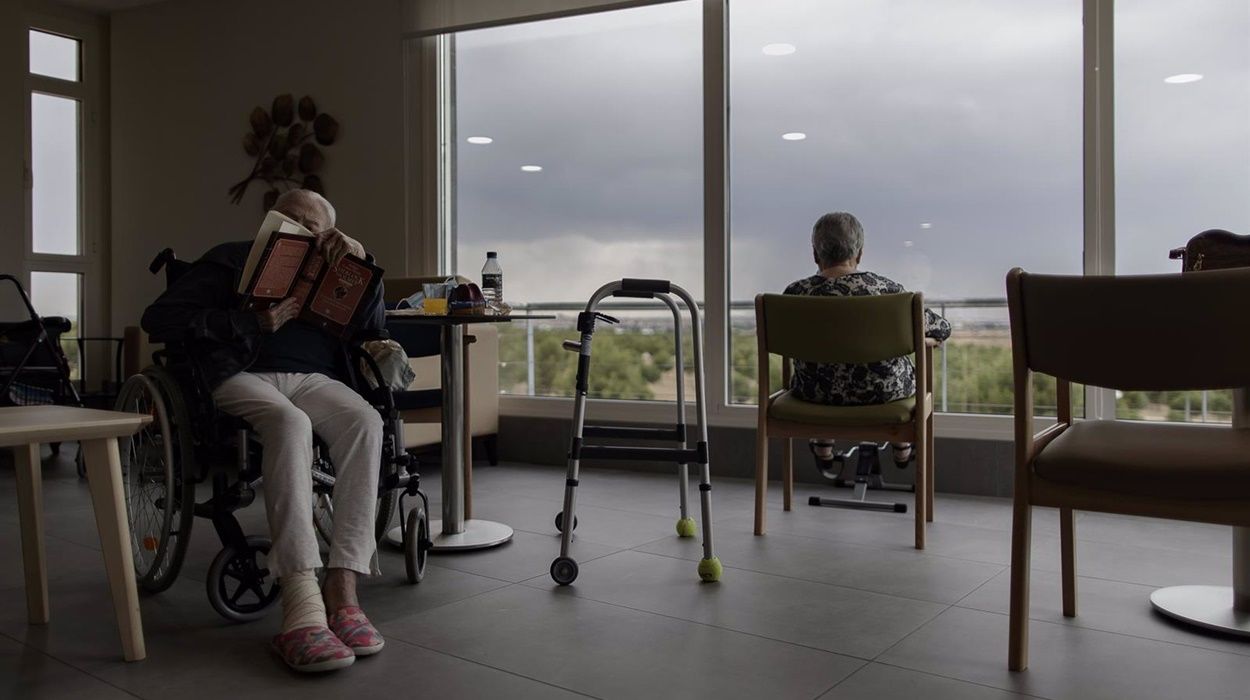
The Canary Islands is the Autonomous Community that invests the least in dependency with about 95 euros per inhabitant per year despite being one of the ones that has increased the budget for these policies the most during the past year with an increase of 16%.
Meanwhile, in the whole of Spain, the Association of Directors and Managers in Social Services has warned this Tuesday of the reduction of state financing of the dependency system, which is currently "the lowest value in history" and of the marked territorial inequality.
The association maintains that, according to the annual certifications of the autonomous communities in 2019, the public investment in the Dependency Care System was 8,607 million, of which the autonomous communities financed 83.9% and the state contribution "has been reduced by 16.1%, the lowest percentage since the beginning of the law, with 1,386 million euros."
Another piece of data provided by the managers is that the average expenditure per dependent person cared for in 2019 was 7,948 euros per year, of which, according to the aforementioned percentages, the Central Administration contributed only 1,276 euros as a guaranteed minimum level, from which it is deduced that it finances with 106 euros per month for each beneficiary of the law.
The directors and managers assure that the state financing stagnated after the cuts of 2012 and see "obvious" that "independently of the political instability someone has considered other priorities."
The communities that invest the most and those that invest the least
The communities that invest the most in dependency per inhabitant per year are the Basque Country (368 euros), Extremadura (286 euros) and Castilla y León (261 euros), and the least are the Canary Islands (95), Galicia (142) and the Balearic Islands (143).
Those that increased the budget the most in the last year were the Balearic Islands (+32%), C. Valenciana (18%) and the Canary Islands (16%). Only the Principality of Asturias reduced the budget in the last year, and Extremadura (1.6%) and Catalonia (2.2%) were the Communities that increased it the least.
The managers of social services consider, in view of these data, that there is an impossibility for the autonomous communities to attend to what they have ahead, with a waiting list of 234,000 people already assessed as dependent and with another 147,000 people pending assessment.
More than 43,000 deceased who were on the waiting lists
"The system is in decline and the waiting list is decreasing due to the 43,275 deaths on the dependency waiting lists this year and there are 27,116 deaths in the 'dependency limbo', people who had the right to receive a benefit and died without receiving it and 16,159 who died waiting to be assessed," they consider.
The financing of dependency was cut through a Decree-Law in 2012, according to the managers, appealing to circumstances of "extraordinary and urgent need." In their opinion, "the apparent impossibility of attending to the most vulnerable people is generating a situation as cruel as the one caused by that decree."
The directors of social services regret that "it is time again to settle for the announcement of the budget increase of 600 million euros for next year." The association predicts that the announcement will imply - with the current context of very low intensity care - an increase in annual public spending that, in justice, should be contributed entirely by the AGE to reach a global contribution of 22% of public funding, still far from the 50% planned. "It should be considered that this investment would generate 25,000 direct jobs and that returns of 240 million euros would be obtained without counting the induced returns," they specify.
Until then, they lament, "those who are insufficiently cared for, those who are unattended and those who have not even been assessed yet, have no choice but to continue disappearing as until now, discreetly and in silence."
Add La Voz de Lanzarote as a preferred Google source.
Stay informed with the latest current news.