
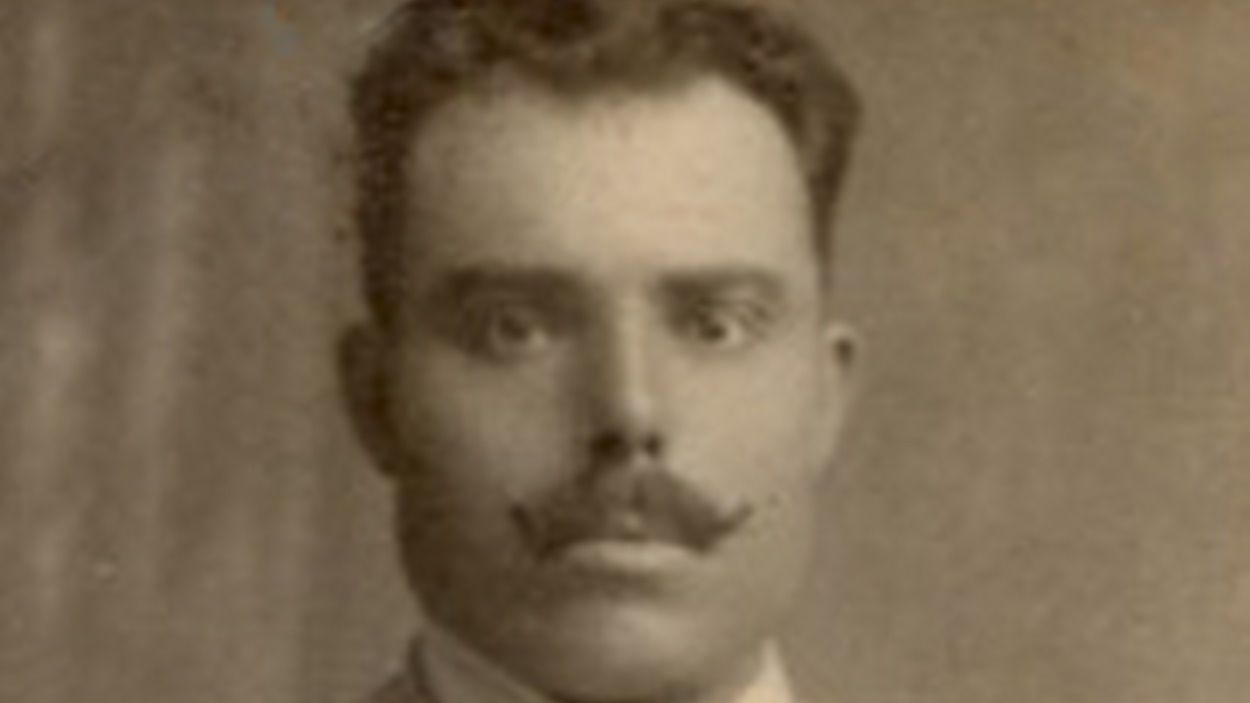
Marcial Tomás Cabrera Padrón (known as Rafael) was the pioneer in urban development, in the construction of the first tourist homes and in the design of the new urban morphology of La Tiñosa. His various occupations tell us about a unique character. Entrepreneur, expert in card games, lender, importer of camels, water carrier, harvester, exporter, winegrower, shipowner and politician. Rafael became the owner of the main farmlands and wasteland that reached the sea, mainly those adjacent to Segunda beach and Pila de la Barrilla. His hegemony with the ownership of the land allowed him to trace the main arteries of the current urban area of Puerto del Carmen, currently known as Bajamar, Hierro, Tenerife, Morro de Los Jureles, Playa Chica, Playa Segunda, Roque Nublo, Teide and Reina Sofía, in addition to a large part where the first tourist development of Lanzarote, Playa Blanca SL, is located today.
Rafael Cabrera was born in Arrecife in 1885. His mother, Luciana Padrón Rodríguez (Mácher 1862-La Tiñosa 1949), had a small shop in La Casa Roja in La Tiñosa. In all public documents and annotations of the time he appears registered with the name of Marcial Tomás - known as Rafael. His father, Rafael Cabrera Alvarado, was born in Arrecife. Cabrera is a bright and restless young man who stands out in the town of La Tiñosa in the first decades of the 20th century. These are times of great poverty and misery as described by one of the parish priests of those times, Don Manuel Sánchez Trejo. In his extensive and anguished letters that he sends to the Bishop of the Diocese, he indicates that "the residents of La Tiñosa are terrible Christians, they have given nothing to raise these walls...", in reference to the construction of the hermitage, unfinished in 1931 and which he has paid for with his own money.

Cabrera had many properties in the municipality of Tías in a short period of time, obtained mainly as a result of his great skills to obtain money through card games. He was a great public relations person, which allowed him to fight with the main landowners of the bourgeoisie of the island's capital. He "fleeced" many of them. Many of his properties passed into his possession as demonstrated by the books of assessment of land tenure at that time. But Cabrera was not a small-time player. Always dressed in good suits, tie and hat, with a good mare to ride, accompanied by his inseparable friend Nicasio. Later he was able to make use of the few and first trucks or cars in the area. He attended the best and most elegant furtive card game meetings in the Canary Islands.
On more than one occasion he was put in compromising situations, such as when he had to hide inside an oven in Betancuria. On another occasion, in a game in Conil, a group of players, including him, were arrested by the Civil Guard and taken to the Arrecife headquarters. While waiting for the proceedings, Cabrera proposed "playing a few hands of cards" to pay the fine. He also made incursions to the Peninsula for these purposes. It is said that Cabrera, upon returning from Madrid and taking the boat in Cádiz, was mistakenly arrested, being confused with the murderer of Eduardo Dato, President of the Council of Ministers and Head of the Conservative Party, assassinated in Madrid on March 8, 1921. Once the incident was clarified, the police verified that the initials R.C.P that appeared in his suitcase did not correspond to those of the anarchist involved in the death, Ramón Casanellas.
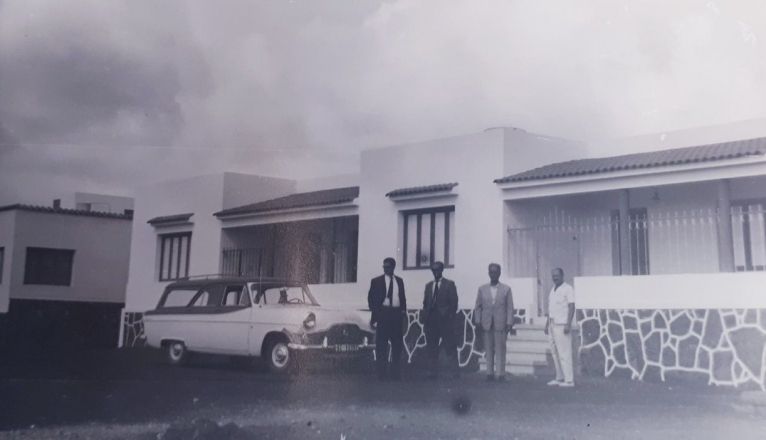
Good house in La Tiñosa and a large rustic farm in Mácher Abajo
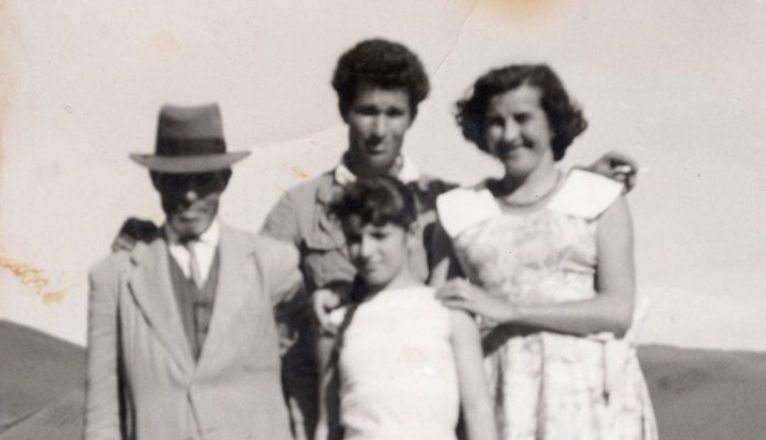
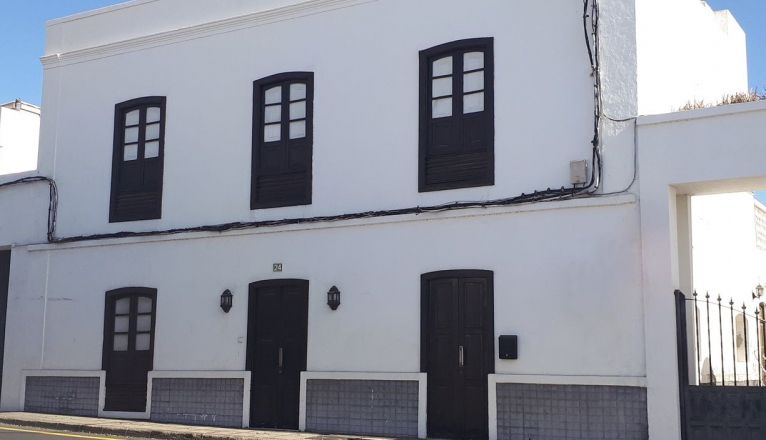
In 1925, at the age of forty, he married in the hermitage of Mácher to the young Amelia Díaz Lemes, 18 years old, a resident of El Cercado. In 1928 his only daughter, Celsita, was born. Cabrera is a consolidated entrepreneur. He acquires and has the best reference house in the town, in the current Roque Nublo street, near the emblematic eucalyptus tree. Built on two levels, with lounges on the ground floor, large rooms, windows and good wooden floors. Later, the warehouses were used to house the schools of La Tiñosa and the teacher's house.
In front of his house, Cabrera had built the best hydraulic work in La Tiñosa, consisting of a large cistern, of about 500 pipes, and a large "alcogida", with a "strainer" made with lime and salt water. He also built a distribution tank with several taps for the sale of water by pots or jugs. Initially, the tank was filled every afternoon, with the water that Luciano Cabrera hung, bucket by bucket. His wife's sisters, Trinidad and Antonia, were in charge of dispensing the water, and they were also excellent seamstresses of blue denim uniforms used by the sailors of La Tiñosa.
In the thirties, Rafael Cabrera is already a relevant and influential person in the municipality of Tías. His name appears in the minutes of a plenary session held in the Town Hall in March 1930 as "Accidental Mayor", together with the councilors Segundo Urbín Mesa, Manuel Aparicio Bonilla, Juan Cruz Mesa, Marcial Torres Martín and Ruperto Ferrer Parrilla. His economic power was reflected in another plenary session of the Town Hall in 1932, being mayor the socialist Mamerto Rodríguez Pérez, where Cabrera appears as one of the largest contributors of rustic wealth of the Town Hall of Tías, along with Juan Bermúdez Lemes, Mariano Stinga Rodríguez, José Pereyra Galviaty, Juan Rodríguez Romero and others.
Cabrera, from his properties, transforms the paths and roads into the beginning of the organized layout of the main streets of La Tiñosa. The entire current Roque Nublo street is located on his property. He also ceded land to build the water dispatch room from the Cabildo's cistern, in the current Biosfera Shopping Center. For the opening of the access street to Los Afrechos, current Teide street, he provided land and part of the work "El Castillo". He provided land for the new layout of the road from La Tiñosa to Mácher, in the initial section, in the current Reina Sofía street. He collaborated with the military to cede land and connect the arrival of the road from Las Playas to the town of La Tiñosa.
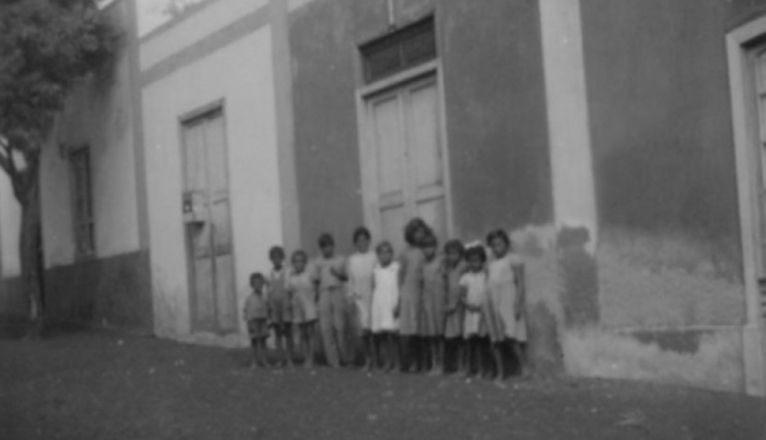
From the previous connection he traces a street from the sea to the intersection with the beginning of the road that goes up to Mácher, current Bajamar street. In it he builds about nine houses with stones extracted from the Cerro de Tegoyo and the Güime quarry to rent to fishermen. Many of these houses were left unpainted and constituted a very unique image of exposed stones. The houses had a hallway, bedroom with doors to the front, kitchen, toilet and a rear closing patio. After the Civil War they were occupied by a military detachment. Also in that same road, he ceded two plots to build the first schools granted within the National Plan of School Constructions. The one for girls and the teacher's house was inaugurated in July 1953. In the same act the Cabildo's cistern of 500 pipes was also inaugurated. For the entry into operation of these two important works, the presence of the Minister of National Education, Joaquín Ruíz Jiménez, was counted on. In 1957, in another land ceded by Cabrera in this same street, the school for boys and the teacher's house, current senior center, began to operate.
Tourist precursor
Cabrera sensed that the best natural space for tourist use was on the coast of La Tiñosa and specifically in its territorial domains. In the surroundings of the beach of the Pila de La Barrilla, a place close to the capital and airport, extensive beaches, rocks suitable for fishing, he personally insisted on convincing new rich people to make their beach house in this magical place. He built his own on the cliff with the same layout and on a smaller scale than his house in El Morro. He generously offered it to families from Mácher to spend days by the sea, in the current area of El Muellito. On that beach, at that time, Antonio Rodríguez (Antoñito el Canario) enabled a cave near Cabrera's house.
Cristóbal Cabrera built a stone hut roofed and with a door on the same beach. A little further back, Cristóbal Calero had another construction made of red stones. Pepe Mesa owned a tool store, further away, but located on land that reached the sea. Matías Garcías built a wooden room on the same beach. In that decade, Juan Viera acquired land to build the "Merendero Las Playas". Cabrera sells plots of about 100 square meters to the Mesa family, José Aparicio and Hermenegildo Duarte to build their beach house in a preferred place.
Thus, the multifaceted entrepreneur achieved his dream in the early sixties, seeing the first line of the beach built, although he could not enjoy it for a long time. In the Merendero itself, the three major investors, Virgilio Suárez, Vicente Calderón and Fernando Machado, with a good fish broth, gofio and a good wine, as Juan Viera emphasizes, supported Cabrera's idea and gave way to the construction of the hotel and the design of the Playa Blanca Urbanization, built on land acquired from Rafael Cabrera, José Mesa and Rafael Ferrer, and which gave way to the first tourist development of Lanzarote, at the beginning of mass tourism in 1966 with the inauguration of the Los Fariones hotel, the first one.
Rafael Cabrera Padrón died at the age of 76 in 1961. He was a man ahead of his time, a precursor. He left everything outlined for the transformation of his town, although his long life of work and projects did not reach the true beginning of the morphological, economic and social change of the island, nor the substitution of the name of the town of La Tiñosa by that of Puerto del Carmen. It would be fair that whoever traced, designed and ceded public land for so many streets, now, sixty years later, some of those roads should bear the name of this outstanding neighbor.
Add La Voz de Lanzarote as a preferred Google source.
Stay informed with the latest current news.