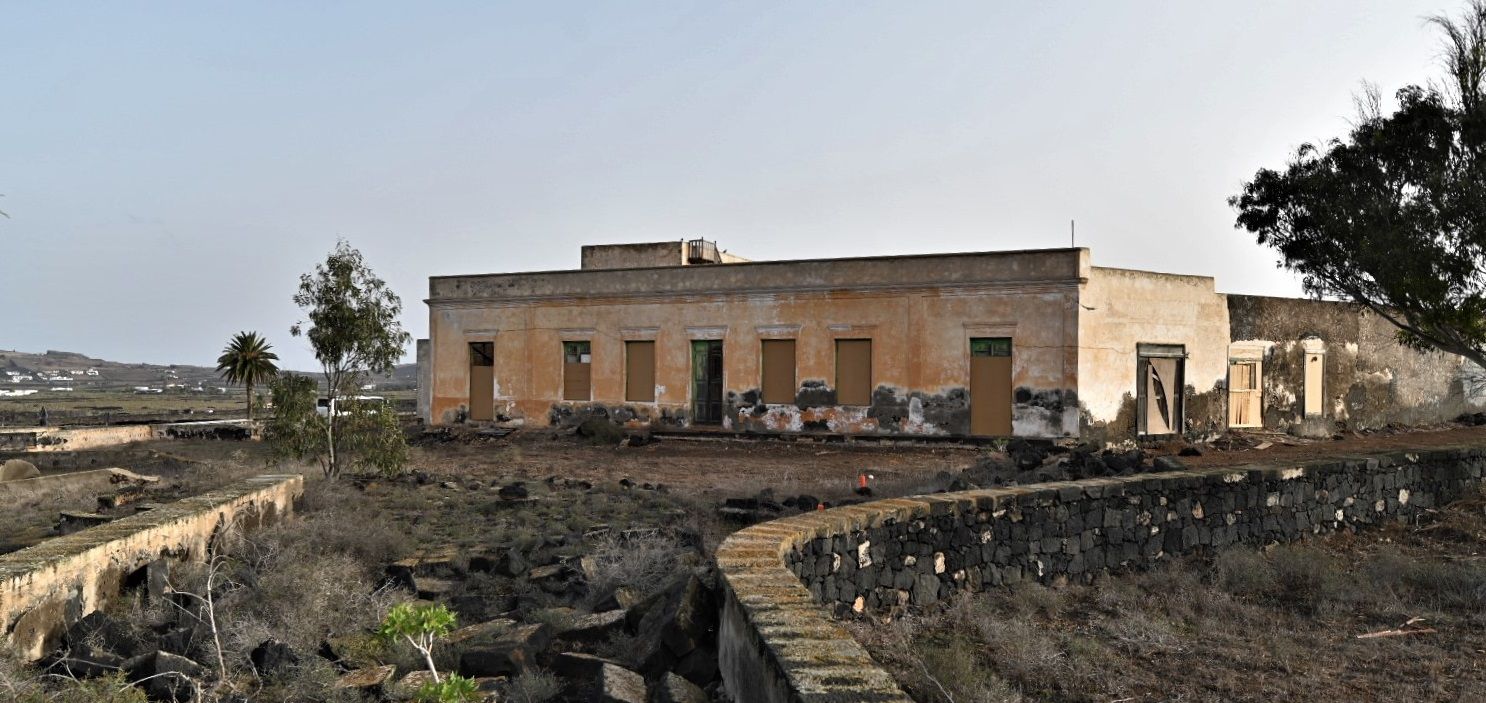
The San Bartolomé City Council has granted the license to restore, condition and change the use of Casa Carrasco, which it emphasizes is “the gateway to La Geria”. The property, located on Las Calderetas street in La Florida and with an important heritage value, has undergone several transformations and demolitions, which were carried out “illegally, mainly in 2005”, recalls the Consistory.
Currently, the house belongs to Bodegas Los Bermejos, which will restore it and allocate it to “viticultural production uses”.
“With this work, the real estate heritage of this municipality is valued and the wine-growing culture of the area is accentuated,” said the mayor, Isidro Pérez, who explains that this authorization “has had a cumbersome file until reaching this point in which the urban license is granted”.
For her part, the Councilor for Urban Planning and Heritage, Marlene Romero, highlighted that the license “has all the necessary favorable reports.” In addition, she recalls that San Bartolomé “is home to leading wineries such as El Grifo, Los Bermejos and La Florida”, and also gives access to the winery route along the La Geria highway, from the Monumento al Campesino, which will soon host the headquarters of the Regulatory Council of the Designation of Origin Vinos de Lanzarote.
Brief description of the “Casa Carrasco” property
Casa Carrasco is a manor-type house, made up of three large differentiated units separated from each other by open spaces in the form of a patio. These three units are the family home, which would correspond to the most noble part; the part dedicated to the rooms of the people who worked on the property; and the back part dedicated to economic production, which is the one that has suffered significant illegal demolitions and of which the winery and the wine press are preserved.
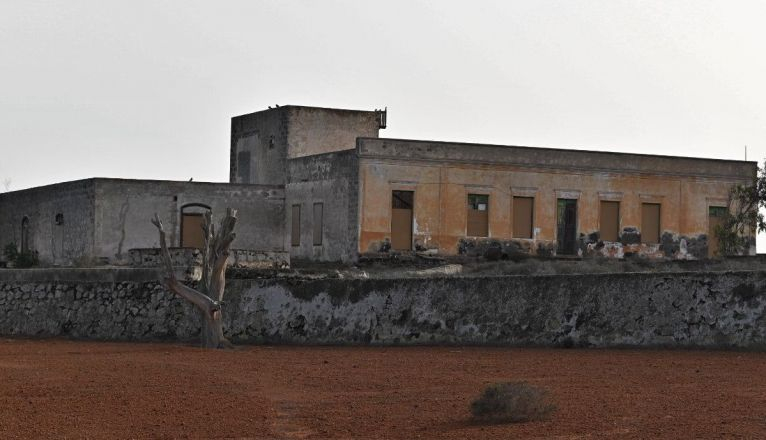
The main entrance to the property was through a double-leaf wooden gate, with vertical wooden bars and panels in the lower part, opening onto an esplanade that leads to the entrance door. “The paving stands out in a very relevant way due to the nature of the elements that make it up,” the City Council highlights.
The exterior of the house had a fairly complex hydraulic system, made up of three cisterns, drinking troughs and different channels.
The paved part covers almost the entire perimeter of the house, with great heritage value, except for the southeast-facing part, and the westernmost part of the property is a paved area with lime mortar of great value.
“The main façade of the house is made up of a succession of flat lintel openings, finished with semi-circular section moldings, a relief plinth and a series of sgraffito. Likewise, on the north façade of the house and on the exterior parameters of the winery, the marks of old friezes and sgraffito can be seen on the ashlars of the corners,” adds the Consistory.



Add La Voz de Lanzarote as a preferred Google source.
Stay informed with the latest current news.