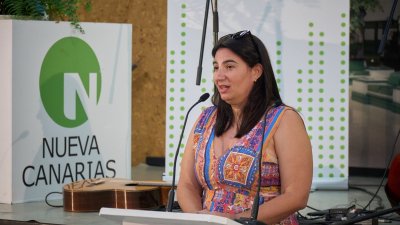
The Local Committee of Nueva Canarias-Bloque Canarista (NC-bc) in Tías has proposed the urgent creation of multipurpose sports courts in the municipality due to the scarcity of accessible public spaces for sports practice. This situation is especially aggravated during the summer months, such as summer, and during holiday periods like Christmas, when educational centers remain closed and children and young people lack safe alternatives for playing sports.
The president of the Canarian Coalition in the municipality of Tías, Arminda Barreto, has been particularly forceful in stating that "it is incredible that in the 21st century there is not a single sports court in the center of Tías, forcing many families to travel or for minors to find solutions on their own."
Barreto has also warned of the **lack of active municipal policies to promote sports** among children and young people, emphasizing that "in these times, where more and more children are staying at home playing PlayStation or glued to their mobile phones, it is incomprehensible that the City Council does nothing to get them out on the street and offer them spaces where they can play sports outdoors."
From the Canarist formation, it is insisted that this lack causes situations that "should not be repeated, such as children and young people being forced to jump over school walls to be able to play or do sports, with the risks that this entails, something that could be avoided with open and well-planned public infrastructure".
NC-bc defends that multipurpose sports courts are "an effective, viable, and socially necessary solution, as they allow for the practice of different disciplines such as futsal, basketball, or volleyball, and offer healthy, free, and local leisure alternatives, especially during non-school periods."
Likewise, Arminda Barreto recalled that "investing in sports is investing in health, prevention, and the future, because sports not only improve physical condition but also foster values such as coexistence, respect, and teamwork."
The proposal suggests that these courts be designed with sustainability, accessibility, and safety criteria, and that they be distributed in a balanced way throughout the municipality, prioritizing areas with higher population density and fewer facilities.
From NC-bc, they thus reaffirm their "commitment to a municipal model that puts people at the center and calls on the Tías City Council to assume this proposal as a real priority, responding to a long-ignored social demand."



Add La Voz de Lanzarote as a preferred Google source.
Stay informed with the latest current news.