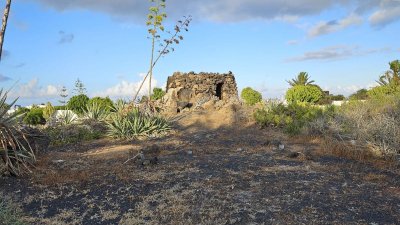
The Island Inspection of Historical Heritage, dependent on the Cabildo de Lanzarote, has formally communicated to the Haría City Council the existence of heritage values of the Taro de la Atalaya or de las Tabaibas, located in Charco del Palo. The institution has urged the council to incorporate this architectural element built of stone into the Municipal Catalogue of Cultural Heritage Assets, while assuring that the project authorized in Mala "does not involve direct physical impact on the taro".
As denounced by the Asociación Pueblo Maho, this taro "constitutes a testimony of methods and practices used by the population in their coexistence with the rural environment" and asked the administrations not only to protect this figure but also the environment in which it is located. Ecologistas en Acción also joined this demand.
The Cabildo's action began after receiving notice from several residents about the existence of the taro and the concern generated by the project authorized on the plot where it is located. On June 24, the Historical Heritage Service requested the urban planning file from the Haría City Council to study and assess the case.
After analyzing the urban planning file sent by the City Council regarding the authorized project for the opening of a new road and the execution of its sidewalks, the Island Inspection of Heritage concluded that these actions did not physically affect the taro. Nevertheless, the report recognizes that this construction has "important heritage values of a historical, ethnographic, and archaeological nature", for which reason it urges the Haría City Council, in compliance with the Cultural Heritage Law of the Canary Islands, to proceed with its inclusion in the Municipal Catalogue of Cultural Heritage Assets.
The report prepared by the Island Inspection of Historical Heritage highlights that the Taro de la Atalaya or de las Tabaibas constitutes a prominent example of Lanzarote's traditional dry stone architecture. Historically linked to agricultural and livestock activity, this type of construction was part of the way of life of generations of farmers and shepherds, constituting today an element of great historical, ethnographic, archaeological, and landscape value whose conservation contributes to preserving the island's cultural identity.
The president of the Cabildo assures that the taro had gone "unnoticed"
The president of the Cabildo and Minister of Historical Heritage, Oswaldo Betancort, wanted to thank "the attentive and vigilant attitude that the neighbors have maintained in the protection of our heritage. The existence of this taro had gone unnoticed by the administrations and it has been thanks to citizen participation that we have been able to learn about this asset. That collaboration demonstrates the commitment of Lanzarote society to the conservation of our history and deserves public recognition”.
Betancort added that "once the existence of this element has been verified, the duty of the administrations is to act in accordance with the law. The Cabildo has exercised its corresponding powers from the first moment, informing the City Council of the heritage values of the asset and urging it to adopt the protection measures provided for in the regulations”.
In the same document, the Cabildo conveys to the City Council "its total willingness" to collaborate technically in the correct protection of the asset and recalls that any administrative act that could affect the taro must be communicated to the insular Institution for the exercise of the powers attributed to it by current legislation.



Add La Voz de Lanzarote as a preferred Google source.
Stay informed with the latest current news.