
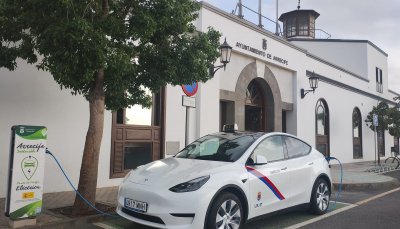
From the Department of Transport and Mobility of the Arrecife City Council, led by Councilor Mario González Altube, is working to respond to one of the main needs of public taxi transport in the capital of Lanzarote: increase the number of taxi drivers available in Arrecife.
The electronic headquarters of the Arrecife City Council, in its Announcement Board area, publishes the decree signed by the Councilor for Transport and Mobility, Mario González Altube, where the names of the 11 people who have passed the tests are listed. The last oral exercise was held on August 14.
During the current term of the Municipal Government presided over by Mayor Yonathan de León, four calls for examinations have been made, at an average of one call per semester, to allow this taxi sector to have professionals to meet the needs of the services in three daily shifts, during the seven days of the week.
Councilor Mario González Altube highlights that in this last call for exams 11 drivers have passed, which will contribute to further improving the service in the city of Arrecife by having the license holders of more workers to cover those shifts.
With this call, recalls the Councilor for Transport and Mobility, Mario González Altube, "we seek to reduce the lack of drivers, improving the service with new professionals with the permit, and guarantee a more efficient service for both resident citizens and visitors who demand taxi services for their trips."
The Municipal Government, led by Mayor Yonathan de León, and the Councilor of the Area of Mobility and Transport, Mario González Altube, have launched a series of measures that are making it possible for the taxi service to improve in Arrecife.
These include the update of rates, which allows to cover the costs - until recently Arrecife was among the municipalities in Spain with the lowest rates, the increase in calls so that more professionals can dedicate themselves to the taxi sector, and the renewal of the fleet with a line of aid launched by the City Council to provide accessibility and taxis adapted for people with reduced mobility, and the improvement of vehicles for this public service.


