
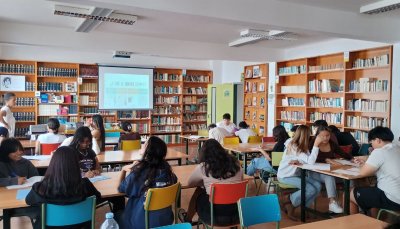
The School of Health and Social Services of the Canary Islands (ESSSCAN) and the Department of Social Welfare, Equality, and Immigration of the Arrecife City Council have participated in the training campaign *Universal Prevention of Techno-addictions*, consisting of participatory workshops on the addictive use of mobile phones and social networks.
The general objective of this initiative, which has had the participation of more than 140 students from seven educational centers and about thirty attendees in the session aimed at teachers and families, has been to offer tools for the prevention and management of techno-addictions.
Dependence on Mobile Phones and Social Media
The content, delivered by technicians from the Adsis Foundation, focused particularly on smartphone dependency and the dynamics associated with intensive social media use, with the aim of raising awareness of their risks, fostering responsible digital habits, and promoting healthier leisure alternatives.
The director of ESSSCAN, José Montelongo, who attended the session dedicated to teachers and families held on Wednesday, November 5, at the Casa de la Cultura Agustín de la Hoz, emphasized that this initiative represents another step in the School's commitment to promoting the health and emotional well-being of the population, especially young people.
“It is essential to raise awareness among the entire educational community about the risks of abusive technology use and promote responsible digital consumption. The role of families and teachers is key in preventing addictions among adolescents. Their involvement and support are essential to detect possible risk behaviors in time,” he pointed out.
Montelongo was accompanied by Maite Corujo Fontes, councilor for Social Welfare, Equality, and Immigration of the Arrecife City Council, who expressed her satisfaction "with the excellent reception of this initiative among the students, which has aimed to raise their awareness about the risks of cyberbullying associated with the misuse of social networks and the internet in general, through mobile phones and other technological devices, as well as to prevent addiction to sports betting and gambling."
This closing session was led by Edgar Chinea Gámez, a psychologist from the University of La Laguna who collaborates with the Non-Governmental Organization ACJ San Miguel Adicciones.
Intensive Program
In total, eight editions of the workshop were held, each lasting an hour and a half. Seven were aimed at 3rd and 4th year ESO students from the Agustín de Espinosa, Las Salinas, Altavista, César Manrique, Blas Cabrera Felipe, Las Maretas Secondary Education Institutes (IES) and the Argana Compulsory Education Center (CEO), which took place between October 21 and 30; while the additional edition was aimed at teachers and families in the municipality.
The content of the workshops combined theoretical and practical aspects, addressing the main risk factors associated with excessive technology use, the importance of digital self-control, and the development of communication and family support strategies that promote healthy use of mobile devices and social media.
Signs and Symptoms of Addiction
Thanks to this training, students and participating adults were able to identify signs and symptoms of screen addiction, recognize the risks associated with consuming inappropriate content—such as gambling or pornography—and learn about recommendations, protective factors, and regulation strategies that allow for the prevention and management of these types of behavioral addictions both in the classroom and at home.
The students also worked on assertive communication through social media, as well as the importance of personal development and social skills that protect self-image and self-esteemThe methodology used was eminently practical, favoring small group work and the exchange of experiences. Furthermore, innovative resources were utilized, such as virtual reality glasses, which offered an immersive experience aimed at acquiring tools for self-care and the prevention of behavioral addictions
These actions are part of the 2025 Training Program organized by ESSSCAN, in collaboration with the Arrecife City Council, which was inaugurated last June with the celebration of the Training Conference on Dual Pathology: Strategies and Tools for Improving Work with People with Dual Pathology and Their Environment from the Social Sphere, in which more than 50 professionals from the health, social services, youth, and education fields of the council participated.
Add La Voz de Lanzarote as a preferred Google source.
Stay informed with the latest current news.


