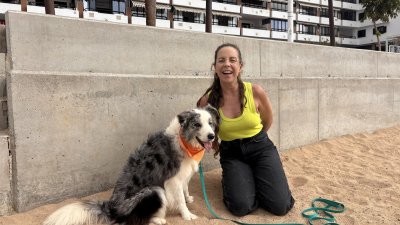
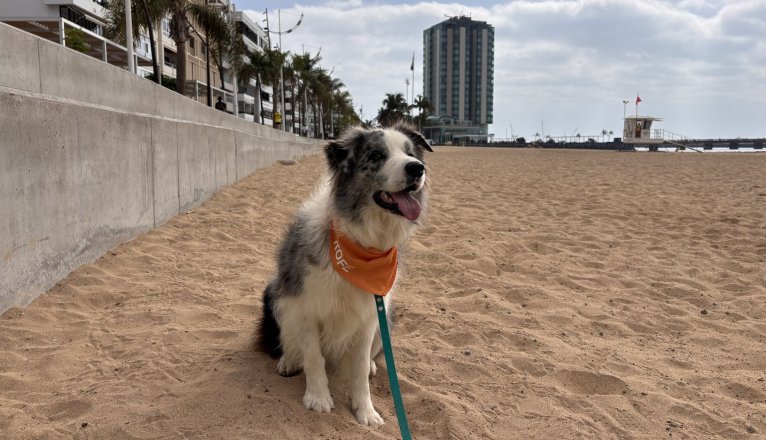
Rofe, a four-year-old border collie, and Cartucho, a one-year-old springer spaniel, are two intervention dogs that are part of the Rofe Project, an initiative promoted by the Asociación Dejando Huella Lanzarote. They are currently touring the schools of Arrecife to improve the lives of children, especially those with specific educational support needs (SEN) and Aula Enclave.
However, this project also works with the elderly and those with mental health problems, promoting animal welfare. "It has been shown that by developing empathy towards dogs, we also develop it towards people, it's like that... if we become sensitive to animals, we become more human," says Elisa Sanz, canine guide in assisted interventions with dogs and head of Dejando Huella.
Sanz says in an interview with La Voz that this path "began with a very strong human-animal bond between Rofe and me because at a birthday party with children, one of the mothers came crying because one of the girls, who had a very large disability, moved her body a little."
Based on this situation, Sanz decided to take the plunge and train in animal-assisted interventions. Thanks to that gesture, for the past two years, Dejando Huella has been a fundamental aid, channeled through two four-legged furry friends who have been trained for this purpose.
The training of intervention dogs is vital when working with people for this type of therapy. "They are trained so that they themselves are capable of bonding with people in the way they choose," she explains.
Rofe, for example, doesn't like a lot of contact, the opposite of Cartucho. Therefore, Rofe "connects through play, like throwing objects, bringing things, or through glances." Meanwhile, animal welfare activities are aimed at 5th and 6th grade Primary students, in which respect for animals is addressed.
During these workshops, students work on concepts such as One Health (“one nature”), learn how to behave civilly with animals in public environments, learn about the physical and emotional benefits that dogs provide, and discover how to interpret their body language to avoid conflicts and foster respectful relationships.
Activities with children with special needs
The work with students with specific educational support needs (SEN) and the Enclave Classroom in schools had "a great reception last year," when it was implemented in all municipalities of Lanzarote. Despite the fact that the Cabildo did not want to continue with the project, it was the Arrecife City Council that chose to continue the initiative.
One of the points that the canine guide highlights the most is that "the children get very happy when they see Rofe, a joy that lasts throughout the activity." The teachers emphasize that, thanks to the project, "the children are able to pay attention to an activity and, just because Rofe is present, they pay attention and manage to be calm during that time."
Sanz and Rofe work with minors who have affected areas of cognition, language, and socialization, which are very important for human relationships. "You still hear the expression that children with autism are in their own world, but it is known that this is not the case, they are in this one and dogs help them connect more with it and be more present," she says.
"The children we work with don't know what taking turns is and skip it whenever they can, so the dogs help them learn to wait, play, and share," Sanz continues.
During activities with the dogs, the most important thing is to build a bond. "As a canine guide, I have to know what my dog likes and dislikes, we always prioritize animal welfare," she points out. "In addition to doing some activities and crafts, we give children with special needs colorful toys with different shapes that they throw so that Rofe can bring them back, these are games in which both parties connect and have fun," the professional details.
The socialization that they create from Dejando Huella is reflected in anecdotes such as the one told by Elisa Sanz, where "only the children from Aulas Enclave received the interventions assisted by dogs, which caught the attention of the rest of the students, who began to interact with them."
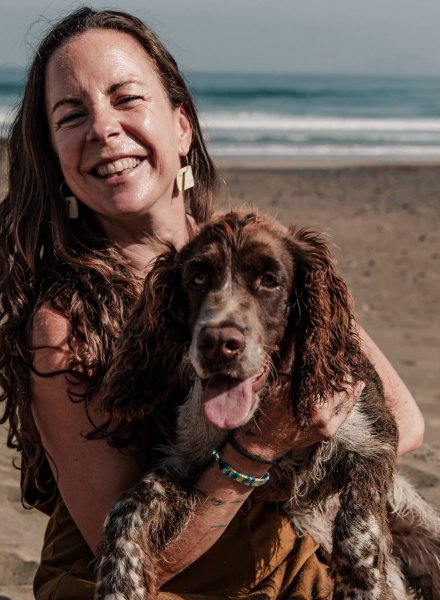
I work with elderly people and people with mental health problems
Rofe and Cartucho also work with older people, in this case depending on what the centers want to promote, such as mobility or cognition. "From activities with dice and numerical calculations to active walks or throwing things," he explains.
Recently, they have launched another new project in which they combine mental health and the elderly, training young people with mental health problems on how to work with intervention dogs in senior centers. After the training and under the supervision of Elisa Sanz and the center's psychologist, they themselves carry out the dynamics of the sessions with the dog.
Dejando Huella, which is also starting to operate in Fuerteventura, aims to continue with this project in the future, with a view to increasing the animal and human staff.
```html
```


Add La Voz de Lanzarote as a preferred Google source.
Stay informed with the latest current news.