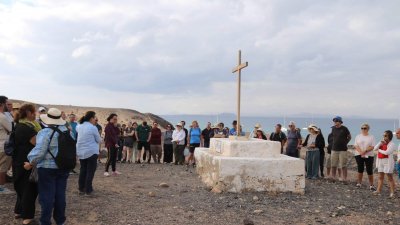
The VI Rubicón Conference held between Friday and Saturday in Yaiza served to confirm the complexity of the work carried out by the multidisciplinary scientific group in charge of the archaeological exploration of the San Marcial de Rubicón site.
This work focuses both on the area of what was the first European city in the Canary Islands in the 15th century, and on the exhaustive laboratory work especially focused now on the genetic analysis of the remains of human bodies found at the site, which for science represents "valuable information" in the task of continuing to scrutinize in a documented way the origin of the population, their daily activity and social relationships and coexistence.
The Yaiza Town Council, the Cultural Heritage Directorate of the Government of the Canary Islands, the University of Las Palmas de Gran Canaria, and the University of La Laguna brought together in Yaiza ten scientists committed to this ambitious project, which is financed by the aforementioned entities, in an exercise of scientific dissemination that, in light of the high participation, was of great interest to the academic community and the general public.
In 2023, the remains of ten human bodies were found in the Rubicon, in 2024 three more bodies, and in the current intervention, the sixth excavation campaign, four more individuals have been found so far, for a total of 17, of which four are children. The results presented at the VI Rubicenses Conference refer to the first ten findings with a conclusion based on science: "no human remains have appeared that are not from the 15th century," as stated by archaeologist Miguel Ángel Hervás.
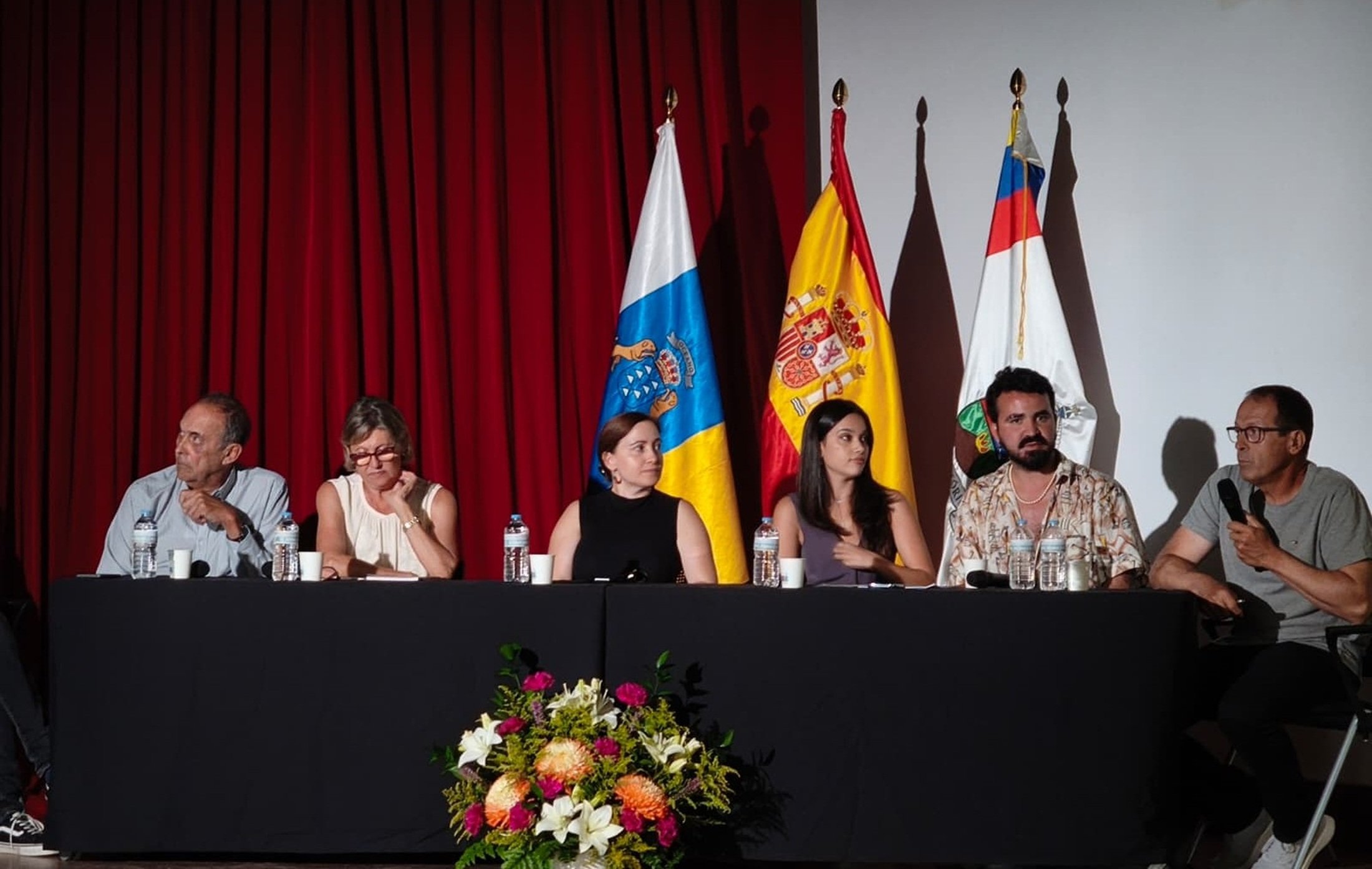
The archaeologist Verónica Alberto Barroso opened the conference with an illustration of pre-Rubicon research in various geographical locations on Lanzarote and the funerary practices of the aboriginal population. She explained that radiocarbon and paleogenomic analysis (2019) of human skeletal remains found on Lanzarote reveals that the oldest remains date back to the 3rd century, "burials in caves, in Jameos del Agua and La Chifletera in El Golfo. We gave voice to the bones with this study." In reality, she added, "we know few funerary sites, hence the importance of Rubicon and all the information it provides."
The archaeologist and physical anthropologist, Jared Carballo, addressed the methods of analyzing the remains, the estimation of age, sex, body mass, as well as the activity they might have carried out, for example, "the men had physical strength activities in a sustained and repeated way."
For her part, researcher Selene Rodríguez presented the results of the findings of the remains of children's bodies, the age estimation of the four children's bodies from Rubicón, recalling the importance of childhood in society and the information it can provide about their parents.
And in that multidisciplinary work process, genetics, of course, comes into play. Professor Rosa Fregrel revealed that initially there were only two bodies with enough DNA to investigate; however, she asked the research management for more human and archaeological remains in order to obtain more DNA and thus be able to obtain the genetic profile of up to six individuals in the future.
From the excavations of the sixties carried out in the Rubicon by the Serra brothers, Rosa Fregel concluded that the origin of two women found was North African and the origin of two men was European.
Matilde de Arnay, a professor of prehistory, stated that "the unexpected Rubicon cemetery is a unique opportunity to delve deeper into the biography of the population," while the physician and historian, Emilio González, maintained that one of the great results of the research has been the discovery of Paget's disease in one of the bodies: "the bone cannot bear the load to develop the usual functions of man." It is "a paleopathological jewel since the analysis of the remaining bone helps in the clinical analysis."
Yaiza premiered the documentary ‘San Marcial de Rubicón, Voices Buried in the Sand’ at the conference, commissioned to Desenfoque Producciones by the research project. The full content of the VI Rubicense Conference can be found on YouTube.
The mayor of Yaiza, Óscar Noda, and the Director of Cultural Heritage of the Government of the Canary Islands, Miguel Ángel Clavijo, agreed on the importance of advancing research and the challenge of continuing to combine scientific work with the creation of an archaeological site park, which can be enjoyed and understood by citizens as a fundamental space for understanding the recent history of the Canary Islands. Both public representatives thanked the research team led by archaeologists María del Cristo González and Esther Chávez for their effort and commitment, a message echoed by the Councilor for Heritage of Yaiza, Silvia Santana.


Add La Voz de Lanzarote as a preferred Google source.
Stay informed with the latest current news.