UNFINISHED
The biologist and ethology specialist Alex Avello has shown in the form of a short documentary on social media the work of the organization We Whale and the Society for the Study of Cetaceans in the Canary Archipelago (SECAC).
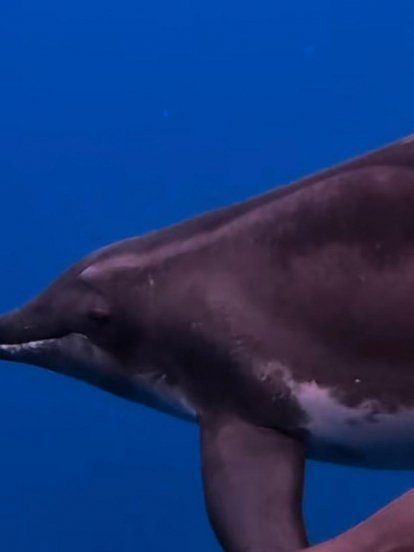
Avello, with National Geographic, went to the island with the objective of documenting and learning more about the rough-toothed dolphin (Steno bredanensis). It is a species rarely observed in the Canary Islands, as they are normally found in deep oceanic waters. They move in small groups of six to ten individuals and, often, in the company of other dolphin species.
They are one of the most social dolphin species, which is why on many occasions they can be seen swimming alongside tourist boats. This species prefers warm, deep oceans, reaching a length of up to 2.8 meters long and up to 150 kg. The name of this dolphin comes, logically, from the rough texture of its teeth.
During the video, the biologist went to the Society for the Study of Cetaceans in the Canary Archipelago (SECAC) to learn firsthand about the work they do on the island researching cetaceans for more than three decades.
Hand in hand with We Whale, the expert boarded a boat to go in search of this species on the southeast coast of Lanzarote. This organization began a photo-identification project for the rough-toothed dolphin in 2023 and so far they have identified 27 individuals.
During this experience, Alex Avello was able to choose the name of one of the specimens of this photo-identified cetacean: that of his own mother.


Add La Voz de Lanzarote as a preferred Google source.
Stay informed with the latest current news.