A 60-year-old man suffered a cardiorespiratory arrest in a tourist apartment complex in Tinajo on August 19. As reported by the Emergency Coordination Center in a statement, the hotel reception worker explained to the coordinator that he had located the affected person in his room in cardiorespiratory arrest.
In a call with 112, the Emergency coordinating nurse explained to the caller how to perform basic resuscitation maneuvers, performing chest compressions, until the arrival of health resources.
In parallel, Emergencies informed the Local Police of Tinajo to transfer the Semi-Automatic External Defibrillator (AED) that they have to the tourist complex, to continue with the care of the affected person. The agents together with the first responders made several discharges with the defibrillator that, together with advanced resuscitation maneuvers, managed to reverse the cardiorespiratory arrest.
The indications provided to a caller through the teleassistance provided by a coordinating nurse of the Canary Emergency Service (SUC), attached to the public company Gestión de Servicios para la Salud y Seguridad (GSC) in the Canary Islands and dependent on the Ministry of Health, contributed to recovering the man.
The reaction of the caller was fundamental
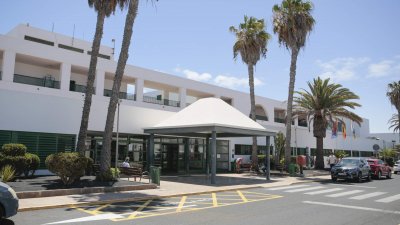
The personnel of a medicalized ambulance and a basic life support ambulance of the SUC, stabilized the affected person who was transferred in critical condition in a medicalized ambulance to the Doctor José Molina Orosa Hospital in Arrecife, where he remains admitted and stable within the severity.
The coordinating nurse of the SUC, Alexandre Hernández, highlighted the decisive relevance of the first responders in a cardiorespiratory arrest and the support offered by the SUC's teleassistance until the arrival of emergency resources.
Hernández stressed that the reaction of the caller, who remained calm and acted quickly, was fundamental for the initial care of the affected person. And it is that, in the face of a cardiorespiratory arrest, time is vital and a rapid action increases the chances of survival of the affected person and contributes to reducing the possible sequelae that it may cause.
Semi-automatic defibrillators (AEDs) allow in cases like this, to analyze and restore the heart rhythm, in those people who suffer a cardiorespiratory arrest. To this is added the rapid action of the first responders who, with their call to the 112 emergency telephone and resuscitation maneuvers, manage to save lives.


Add La Voz de Lanzarote as a preferred Google source.
Stay informed with the latest current news.