
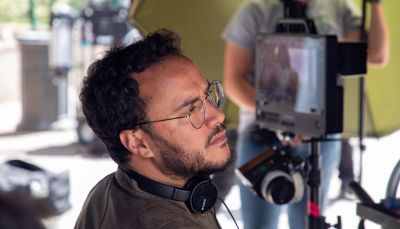
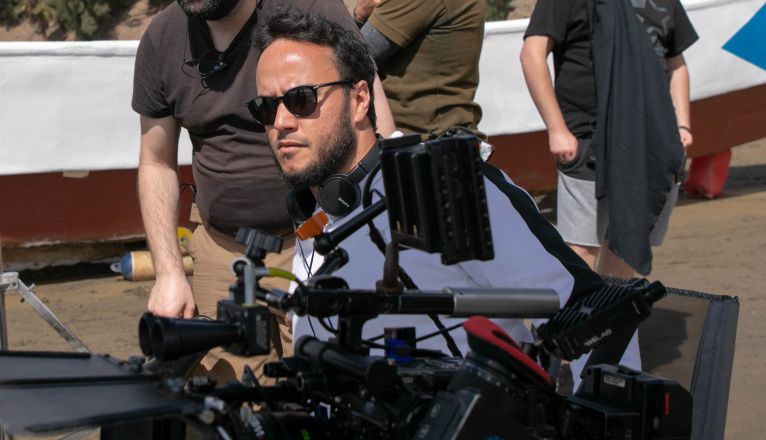
Filmmaker Armando Ravelo (Gran Canaria, 1982) premieres his next film Once Upon a Time in the Canary Islands on September 22. In this feature film, the second of his career, he has decided to focus on the story of Nola, a young Senegalese woman who risked her life on a canoe trip to the Archipelago to meet her Canarian father. During the journey, and once on land, the woman encounters different people who show a portrait of Canarian society.
The film is also a kind of X-ray of Canarian society itself. "In it, I tried to capture the realities that are also usually invisible, such as people on the street or life in the countryside and the rural world, and try to make the journey in reverse and that the migrant is the one who looks at us and the one who observes us and the one who portrays us. In that sense, I think there is a very beautiful dialogue in the film in which otherness meets," Armando Ravelo reveals in statements to La Voz.
"Migrants, people on the street, the rural world and other diverse perspectives that, in the end, also complement us as a people," says film director Armando Ravelo.
Through that photograph, the Gran Canarian tries to understand what was the breaking point that had happened between the Canary Islands and the African continent. "Historically we have had many ties and I wondered at what moment that broke and at what moment we began to feel with those airs of superiority that are sometimes breathed in society. Not so much the obvious reasons, which are political trends or racism, but even those who, trying to do good, have that white savior complex, which in the Canary Islands has never been the tonic."
For the artist, part of that detachment between two worlds with a common past and present comes from "the rupture of our ancestral canality." Those African aborigines who populated the Canary Islands before the conquest of the Archipelago. "If people have a lot of money, they fit in, but if they don't, they don't. So there we not only receive racism but also a lot of fear of poverty and a lot of rejection," criticizes the producer.
With this film, Ravelo seeks to transmit "a different look at what is usually seen, heard and, above all, felt in the Canary Islands about migration," he tells La Voz. In this line, he tries to break from art with the single discourse on a complex reality such as that of migratory movements.
Beyond the numbers
The director presents this project as a "more human approach" to the stories behind the arrival figures to the Islands. The Canary Islands is a point of arrival for thousands of people who risk their lives trying to find new opportunities. The migratory route to the Archipelago is one of the deadliest in the world.
When it comes to tackling a project like this, so multifaceted, Armando Ravelo wanted to convey "a sensation more than an idea." In the approach he wanted to offer the viewer, he reveals that he had "the feeling that something is escaping us when it comes to focusing on the issue and it had to do with the fact that, many times, we talk about numbers of migrants who arrive or who, unfortunately, die and the stories remain in statistics."
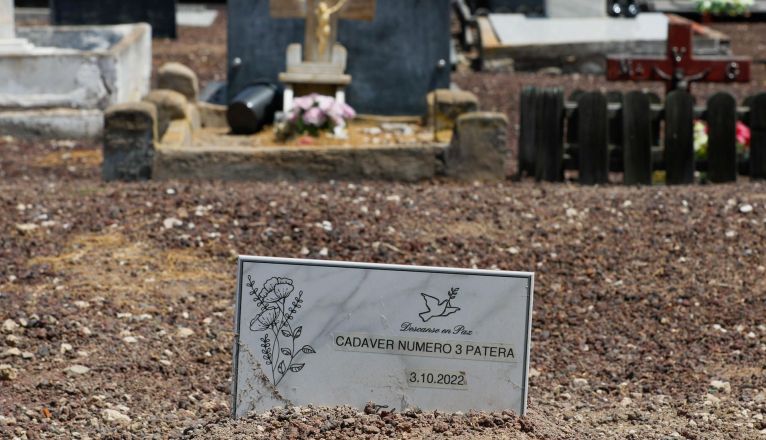
"We see the images of people disembarking with Red Cross blankets and we forget those who are before that, what the trip is like, what life is like in Senegal, for example, or what awaits them here," says Armando Ravelo.
The importance of showing another message led the Gran Canarian to embark on this initiative. "We forget the stories behind each of the people, which are thousands. Beyond political considerations, even geopolitical or more biased views, on one side or the other, what I was eager to deal with was the more human side and explain the why and the how," he adds.
Despite starting with a certain sensitivity, once he started with the project, which culminated with part of the recording in Senegal, he learned "that he had many prejudices and that, despite the fact that I thought I was sensitized, I really had no idea and that I will never have it because I have not lived it."
To carry out this work, Armando Ravelo and his team moved to two Senegalese cities. First, to the capital of the country, Dakar. In this case, the filmmaker points out that "it has nothing to envy any European capital." In addition, they also recorded in M'Bour to the Lebou fishing village. "We discovered many bridges between Senegal and the Canary Islands, for example humor," adds Ravelo. For this filming in the African country he had a local production company directed by a woman.
For the filmmaker, leaving the country of origin, launching into the uncertainty of a trip and culminating in a precarious boat in the middle of the Ocean to try your luck in another continent are situations that cannot be judged "lightly." Thus, he assures that most of the migrants he knows deeply love their countries. "If they move from those places it is because they really have a very strong need and deserve respect," he points out.
"I discovered that I was wrong to think that they are looking for Europe or fleeing Africa rather. They come for a much deeper and much harder question that has to do with a better life for them or their family."
Canary Islands told from the Canary Islands
Since he was a child he dreamed of being a film director. "I don't know if also conditioned by my islander condition, I saw something very difficult and also far away to be able to study cinema. It was very far away because you had to leave the islands, in a fairly precarious environment, it was complex," he confesses. The irruption of reflex cameras adapted for almost all pockets served as a trick to start recording. "I started making short films at 30 years old, which made me remove certain mental chains that had made me think that I was not capable."
"The Canary Islands is the place where I was born, grew up and am living and what I am doing is telling human stories from here, not as a specialist in Canarian identity, but as something natural. I grew up seeing things from the Guanches, talking about the witches in Telde or seeing the reality of the migrants who walk down the street and I want to tell their stories. It is the natural thing," he explains. About his references when it comes to being a filmmaker in the islands, he highlights the Ríos Brothers or María Miró. The latter made the first documentary that was made in the Canary Islands about the arrival of African migrants to the Archipelago, under the name of Cayuco.
"There have been very worthy references, but it is true that it has not been the tonic. In other sectors there is more and more dignity, there are more and more self-centered views and more desire to tell us," he adds.
"There are a series of people who from the Canarian culture are rising up, are launching and are saying we have our own perspective we can contribute other things to humanity as a whole, which are not serving and smiling," adds Ravelo.
The director of Once Upon a Time in the Canary Islands reveals that making films economically is "difficult because it requires a lot of people, but it also gives a lot of work for a while." "We were working more than 150 people because of course there are so many departments in so many details, that it is something very expensive and in Spain, as in France, the issue of the public institution comes in, which support these films in this case from the Government of the Canary Islands and several city councils that decided to support the project," Ravelo asserts.
"A great disease that is happening is that people are normalizing that this is happening and that large-scale solutions are not put in place and that there is also a rejection of the people"
After 11 years trying to make films in the Canary Islands, Ravelo assures that his is a story "of perseverance and a lot of struggle and resistance, because every day they put several obstacles in your way." However, he assures that by "continuing to insist" he has managed to make a living from cinema in the Canary Islands. "It's not easy, but it's been worth it."
Regarding the rise of film shoots in the Canary Islands, the filmmaker reveals that it can occur at the same time that the islands are a place to receive shoots and that all kinds of services can be offered. From accommodation to the people who work in the production playing any role.
"I think there is a very powerful intangible that goes from self-esteem to the tangible that is that the Canary Islands has a presence in the universal cultural world as is happening with music, as is happening with literature, which also happens with cinema, but for that a lot of investment is needed. We need to start believing that from here products can be made that reach the whole world with our voice," he adds, "finally the Canary Islands raises its head from the ground and begins to think about itself."
Add La Voz de Lanzarote as a preferred Google source.
Stay informed with the latest current news.


