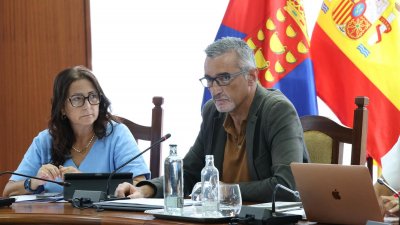
The Cabildo de Lanzarote has addressed with the management teams of the Vocational Training centers of the island the possibility of incorporating the Spanish Sign Language (LSE) as an optional professional module in the intermediate and higher level training cycles, within the framework of the resolution published by the Dirección General de Formación Profesional del Gobierno de Canarias.
The initiative was exposed last Tuesday, April 14, at the vice-directors' table organized by the Area of Education, where the fitting of this elective was transferred within the new framework that regulates the implementation of elective modules in the D Degrees (levels 2 and 3) starting from the academic year 2026/2027.
The president of the Cabildo de Lanzarote, Oswaldo Betancort, pointed out that the incorporation of the Spanish Sign Language into the Vocational Training system introduces a useful element for students, which improves their qualification and expands their job opportunities in areas where communication is essential. Furthermore, he added that “training must adapt to social reality, incorporating tools that facilitate equal access and attention to all citizens”.
Likewise, the Councilor for Social Welfare and Inclusion, Marci Acuña, stressed that the inclusion of this elective “aligns with the Accessibility and Inclusion Strategy of Lanzarote and La Graciosa, which proposes concrete actions to eliminate barriers and facilitate the participation of all people”. He pointed out that “Spanish Sign Language has a direct impact on sectors linked to public service, social services or the health sector, where having this competence improves the quality of the service”.
For her part, the Minister of Education, Ascensión Toledo, explained that this measure “allows for progress in a training offer more adjusted to new demands, incorporating content that provides added value both from an educational and professional point of view”. In this regard, she indicated that LSE can be integrated as a transversal resource in different training profiles.
The implementation of optional modules such as LSE responds to the new regional regulatory framework, which opens the door for educational centers to adapt their curriculum starting from the 2026/2027 academic year, incorporating content that connects training, employability, and accessibility.

Add La Voz de Lanzarote as a preferred Google source.
Stay informed with the latest current news.