The Ministry of Public Works and Housing has confirmed to La Voz that Visocan (Social Housing of the Canary Islands, S.A) is immersed in a bidding process to buy hundreds of empty homes and thus contribute to responding to the housing situation that exists in the islands.
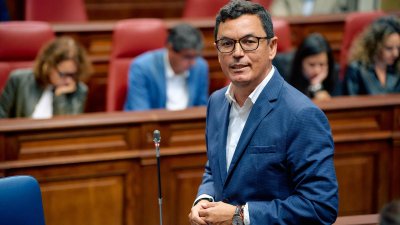
The announcement was made by the Minister of Public Works and Housing, Pablo Rodríguez, during his appearance in the Parliament of the Canary Islands to explain the progress of his department in this matter.
Rodríguez explained that within the framework of the working tables agreed upon at the I Conference of Presidents of the Autonomous Community of the Canary Islands, more than 100 experts from the public and private sectors proposed 14 initiatives to increase the housing supply and facilitate access to adequate housing for the Canarian population.
Among the proposals put forward, the need to expand the regional deductions in the Personal Income Tax (IRPF) for the rental of the habitual residence stands out.
This measure benefits "on the one hand, the tenant by expanding the beneficiaries of the current deduction in the full amount of the tax for the rental of habitual residence, raising the income limit that allows access to it and its amount, and, on the other hand, the landlord, improving the intensity of the state reduction of income from the rental of the property, updating the deduction in quota for expenses on credit insurance premiums to cover rent defaults, making the incentive for the materialization of the RIC in protected housing for rent more flexible, eliminating the existing subjective restriction".
Likewise, it is proposed to establish bonuses for owners who rent empty homes in the social rental market, with tax deductions and exemptions in the Real Estate Tax (IBI).
With regard to the sale of housing, it is suggested to make the requirements for the application of the reduced rate of 5% in the IGIC in the purchase of habitual residence, in the Property Transfer Tax (ITP) and documented legal acts (AJD) more flexible.
In addition, the possibility of regulating the qualification of third-party collaborators to carry out efficient management of urban planning licenses has been raised; establishing a "one-stop shop" system for the processing of construction licenses in the municipalities, centralizing the procedures and streamlining the processes; and creating a catalog of available land that can be used for the construction of protected housing, among others.
The Minister has insisted that "the team of the Ministry has worked tirelessly during this first year to promote measures that respond to the housing emergency, proof of this has been the approval of Decree-Law 1/2024, on February 19, which has allowed local administrations to have the necessary instruments to address this crisis".
New decree to "speed up urban planning licenses"
In this sense, the Minister has informed that the executive is currently working on a new decree aimed at speeding up urban planning licenses, minimizing bureaucracy and shortening the deadlines and procedures.
"This new regulation that is proposed is a complement to the previous decree. This initiative seeks to simplify administrative procedures, so that the deadlines for the approval of licenses are significantly reduced. With this reform, it is intended that construction works can begin within a month, which will not only facilitate access to housing, but will also contribute to mitigating the current shortage of supply in the real estate market", Rodríguez explained.
Rodríguez recalled that "the solution to the lack of properties is to decisively increase the supply", which is why the decree law speeds up the procedures for the construction of new protected housing, supporting young people and vulnerable groups, promotes public-private collaboration as a formula to increase the supply of housing in the market, facilitates the compatibility of residential and tourist use and recovers developable residential land.
This regulation, which has been in force for eight months, incorporates the possibility of reclassifying buildings and premises for residential use and rehabilitating unfinished urbanizations.
Likewise, the Government of the Canary Islands is working on finding tools to facilitate the reformulation of the current 'Empty Housing' program to encourage the placing of more properties on the market. In this line, Rodríguez has announced that he has met with the Canarian Association of Real Estate Management "with the aim of seeking legal and economic guarantees and studying concrete measures that allow owners to be reassured, providing security in the collection of rents, in the management and in the maintenance of the property, so that they include their homes in the rental market through a public program".
"One of the solutions we are considering is the possibility of taking out insurance to cover these risks, something that administrations cannot currently guarantee completely without outsourcing", he pointed out.

Add La Voz de Lanzarote as a preferred Google source.
Stay informed with the latest current news.