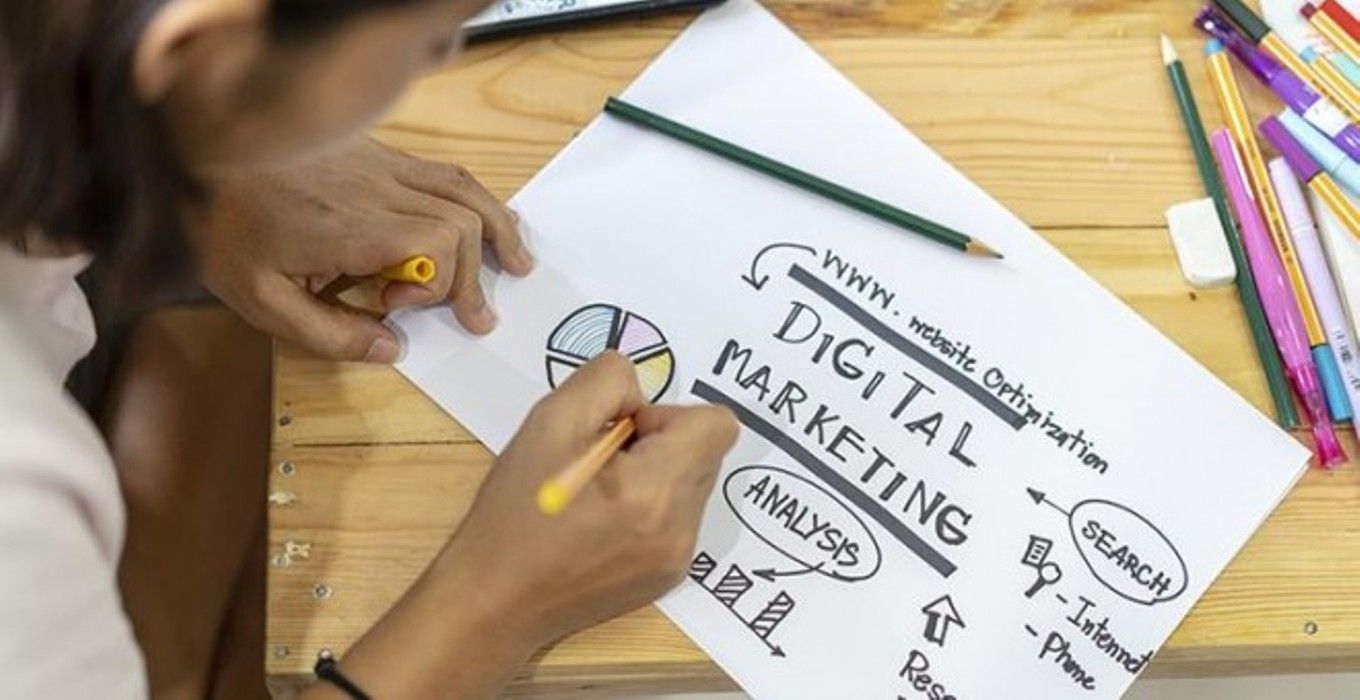
The digital marketing is no longer what it was just a couple of years ago. Between artificial intelligence, changes in consumption habits, and the constant evolution of algorithms, the landscape has become more dynamic, but also more interesting.
In 2026, standing out does not only depend on having an online presence, but on knowing how to connect with the user at the right time and with the appropriate message.
The brands that are growing today are not necessarily the largest, but those that best understand this new environment. And that is where the strategies we will see below come into play.
Artificial intelligence as the core of the strategy
Artificial intelligence has gone from being a trend to becoming a key piece within digital marketing. Today, it allows automating processes, yes, but above all to make smarter decisions.
Thanks to AI, companies can analyze large volumes of data in seconds, identify behavior patterns and anticipate user needs. This translates into much more effective and, most importantly, relevant campaigns.
However, not everything is automation. The brands that really stand out are those that combine technology with a human approach, achieving close and authentic messages.
- Content hyper-personalized: the new standard
If something has become clear in recent years is that generic content no longer works. In 2026, users expect tailor-made experiences.
Hyperpersonalization allows adapting messages, offers and even complete pages according to the user's profile. From recommendations based on their behavior to emails that seem written especially for them, everything adds up.
This approach not only improves the experience, but also increases the chances of conversion. In the end, when someone feels that a brand understands them, it is much easier for them to trust it.
- SEO adapted to the era of conversational search
SEO has also evolved, and quite a lot. With the popularity of virtual assistants and search engines powered by artificial intelligence, queries are increasingly natural and specific.
This means that it is no longer enough to work with loose keywords. Now it is necessary to understand the search intent and answer it clearly and completely.
Furthermore, factors such as user experience, loading speed, or content structure remain fundamental. Good positioning does not only depend on what you say, but on how you present it.
In this context, relying on a digital marketing agency can be a very wise strategic decision, especially to adapt SEO to these new scenarios without losing competitiveness.
- Data-driven marketing (data-driven marketing)
Making decisions "by intuition" has taken a back seat. In 2026, marketing relies more than ever on data.
The companies use advanced tools that integrate information from multiple channels: social networks, paid campaigns, email marketing, and web behavior. All this allows for a global vision and to act with greater precision.
The interesting thing is that it is no longer just about analyzing what happened, but about foreseeing what can happen. Predictive analytics is helping to optimize strategies even before problems arise.
- Intelligent automation and customer journey
Automation has made a significant leap. We no longer talk only about scheduling emails, but about designing complete experiences throughout the customer journey.
Today, systems are capable of adapting in real time. If a user shows interest in a product, they will receive related content. If they abandon a cart, personalized reminders will be activated.
This type of automation not only improves the results, but also makes the experience more fluid and coherent.
The rise of user-generated content (ugc)
In an environment where everyone competes for attention, authenticity has become a differential value.
User-generated content —reviews, testimonials, social media posts— has an enormous impact on brand perception. It is closer, more credible and, in many cases, more influential than traditional advertising.
That's why, more and more companies are incentivizing their community to share their experiences, turning their own customers into ambassadors.
Social commerce and new platforms
Social networks are no longer just communication channels. They have become authentic shopping spaces.
Social commerce allows discovering products, interacting with brands, and making purchases without leaving the platform. This shortens the decision process and facilitates conversion.
Furthermore, formats such as live streams, collaborations with creators, or interactive content are gaining prominence, offering more dynamic and attractive experiences.
Privacy and ethical marketing
The privacy of the user is an increasingly relevant topic. Regulations have changed and brands have had to adapt.
The use of first-party data has become essential, which implies building more transparent relationships with users. It is no longer just about capturing data, but about doing so with consent and providing value in return.
This approach, far from being a limitation, can become an opportunity to generate trust and strengthen the brand's reputation.
Immersive experiences and emerging technology
New technologies are opening doors to forms of interaction that previously seemed distant. Augmented reality and virtual reality, for example, allow users to interact with products more directly, even before buying them. This not only improves the experience, but also reduces uncertainty in the purchase decision.
Although they are still in the process of mass adoption, their growth is evident and everything points to them having a key role in the coming years.
Digital marketing in 2026 is more strategic, more personalized and, above all, more user-centric. Technology has raised the bar, but it has also opened new opportunities.
Adapting to this environment does not mean doing more, but doing it better. Understanding the user, leveraging data, and using the right tools will be what makes the difference.
Because, in the end, marketing is still the same as always: connecting with people. Only now, we have many more ways to do it.



Add La Voz de Lanzarote as a preferred Google source.
Stay informed with the latest current news.