
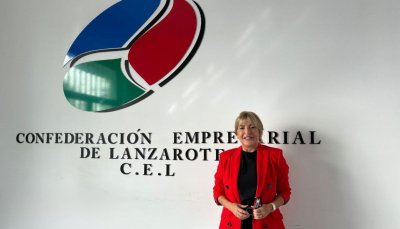
The Lanzarote Business Confederation (CEL) points out the importance of closely monitoring the evolution of the international scenario, marked by the uncertainty derived from the Iran war, and its possible impact on the island's economy through factors such as energy costs, transport, inflation, and tourist activity.
The president of the CEL, Beatriz Salazar, showed her concern about this scenario, since “Lanzarote, due to its ultra-peripheral condition and double insularity, is especially vulnerable, which increases uncertainty due to its high external dependence for the transport of goods, energy supply, and the arrival of tourists”.
Beatriz Salazar assured that Lanzarote's tourist reservations are already starting to feel the impact, due to "The possibility of interruptions in the flow of oil and the rising cost of kerosene are already starting to transfer to the European air sector, with capacity adjustments by some airlines, a foreseeable price increase in tickets and the first signs of weakening in reservations."
He added that the situation in the United Kingdom and Germany, the main source markets for tourists to the Canary Islands, is especially worrying. If this situation intensifies, the Archipelago's connectivity could be affected, the arrival of tourists is compromised, and consequently, the economic activity of Lanzarote and the Canary Islands in general.
Therefore, it highlights the need to work on a preventive strategy in coordination with the Canary Islands public administrations, with the objective of “activating mechanisms that allow guaranteeing supply, reinforcing the archipelago's connectivity, containing the impact of surcharges, and protecting the competitiveness of companies and the self-employed in Lanzarote”.
According to the latest data from the Business Confidence Indicator (ICE), Canarias registers a decrease of 4.6% in the second quarter of 2026, while Lanzarote presents a fall of 7.3%, one of the most significant setbacks in the regional set.
“The current international environment advises maintaining a prudent and preventive vision, at a time when business confidence indicators are declining,” it indicates.
Along with the international context, remember that the island economy continues to face structural challenges that condition its development, among them the availability of housing, administrative bureaucracy, and the need to reinforce legal certainty.
Salazar warns that the current international uncertainty scenario could add new pressures to the housing market, especially due to the increase in construction material costs and the rise in transportation expenses, factors that directly impact the development of new projects and access to housing on the island.
Likewise, it underlines that the evolution of the conflict and its impact on international energy markets, with special attention to the situation of European countries such as the United Kingdom and Germany and their high sensitivity to oil availability, can contribute to an environment of greater volatility in logistical and energy costs, with indirect effects on the island's economy.
On the other hand, Salazar highlights the role of the self-employed and small and medium-sized enterprises as an essential element of Lanzarote's productive fabric, emphasizing their contribution to economic diversification and job creation.
“We must continue strengthening its stability with measures that facilitate its activity, improve access to financing, and reduce administrative burdens, as its contribution is essential for the island's economic resilience, especially in contexts of uncertainty like the current one,” he concludes.


