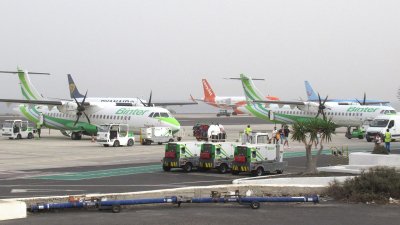
Airlines will pay an additional cost of 234.2 million euros in 2025 for the use of 2% sustainable aviation fuel, SAF for its acronym in English, in Spain.
The Association of Airlines (ALA) demands "incentives for production to scale up its development and reduce its price differential with respect to conventional kerosene".
This year 2025 begins to apply the mandate that comes from Brussels known as ReFuelEU Aviation, which establishes quotas for the use of SAF ranging from 2% in 2025 to 70% in 2050.
"We are committed to SAF as it is the most effective solution in the short term to advance sustainability in the aviation sector, but today it is an underdeveloped product and its price is high, between 3 and 6 times more expensive than conventional fuel. To cushion this rise, incentives should be set as soon as possible for its production", said the president of ALA, Javier Gándara.
Subscribe for free to our weekly newsletter, with the highlights of Ekonomus.
The bill will increase as the quota of this sustainable fuel progressively increases, especially once the use of synthetic SAF or eSAF, generated from renewable energies, is introduced.
Specifically, the additional cost that airlines in the EU will have to bear in 2030 when the SAF quota rises to 6% and 1.2% of synthetic SAF is introduced will rise to around 9.5 billion euros.
This additional cost must be added to the payments for trading emission rights ETS, which will become significantly more expensive from 2026, when the free emission rights disappear, in addition to the fact that the supply of rights will be reduced progressively, so that demand will put pressure on its price.


Add La Voz de Lanzarote as a preferred Google source.
Stay informed with the latest current news.