
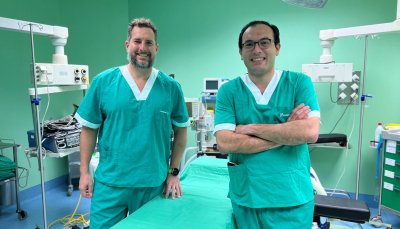
Hospiten alerts to the importance of treating varicose veins, as they are not only an aesthetic problem but can also have health consequences.
The Angiology, Vascular and Endovascular Surgery Service at Hospiten in Lanzarote and Tenerife points out that many people consider varicose veins an aesthetic problem. However, they can be the manifestation of chronic venous disease and a frequent pathology that can progress over time.
Varicose veins in their early stages usually do not cause significant symptoms, but if not properly managed, they can lead to persistent discomfort and complications that affect people's quality of life. For this reason, specialists recommend not normalizing symptoms and consulting when warning signs appear.
Dr. Octavio de la Torre states that pain, heaviness, swelling, or skin changes can be signs that warrant evaluation for venous disease. "Varicose veins reflect a malfunction of the venous system, and although they may not cause discomfort at first, they are part of a chronic condition that can progress. Early detection and assessment allow for the prevention of progression and improvement of both symptoms and long-term venous health," explains the specialist
Risk factors
Specialists recommend that an occasional check-up for asymptomatic individuals may be sufficient. However, if there are risk factors, a family history, or discomfort, it is advisable to undergo periodic check-ups, depending on health guidelines.
For his part, Dr. Juan Carlos Moy points out that "varicose veins are more frequent in people with a family history, during pregnancy, in those who work many hours standing or sitting, in cases of obesity or overweight, sedentary lifestyle, and in certain hormonal situations."
Recommendations to prevent or delay them
Some habits that help prevent and delay them are the following: maintaining an adequate weight, engaging in regular physical activity, especially walking or swimming, avoiding the same position for long periods, and using compression stockings when indicated by a specialist.
Dr. de la Torre points out that "if the disease progresses, pain, heaviness, and persistent fatigue in the legs, swelling or edema, skin changes such as darkening or hardening, venous ulcers in more advanced stages, and superficial thrombophlebitis, which is the inflammation and thrombosis of a superficial vein, may appear."However, it is important to clarify that the risk of deep vein thrombosis in people with uncomplicated varicose veins is low and similar to that of the general population, although each case must be assessed individuallyFor his part, Juan Carlos Moy points out that many varicose veins may not hurt in the initial stages, but that does not mean they are not progressing; early assessment allows for anticipation of possible complications. Similarly, he believes that exercise helps improve venous circulation, as it promotes venous return and alleviates symptoms.
Hospiten reaffirms the importance of a medical evaluation to treat varicose veins in their initial stages, as this can prevent future complications that worsen patients' quality of life.
About Hospiten
Hospiten is an international healthcare network with over 55 years of experience committed to providing a service of the highest quality. It has 20 private medical-hospital centers in Spain, the Dominican Republic, Mexico, Jamaica, and Panama, in addition to 175 outpatient medical centers under the Clinic Assist brand. Founded by Dr. Pedro Luis Cobiella, it serves over three million patients worldwide annually and has a staff of more than 5,000 people.
MD Anderson Cancer Center Madrid - Hospiten is an affiliate of the prestigious MD Anderson Cancer Center in Houston (Texas, USA). With over twenty years of history in our country, MD Anderson Madrid - Hospiten currently has a Phase I Clinical Trials Unit, over 150 medical specialists trained in oncology, a total of 87 hospitalization beds, and state-of-the-art technological equipment for the diagnosis and treatment of different types of cancer.
Add La Voz de Lanzarote as a preferred Google source.
Stay informed with the latest current news.


