
The general director of Coasts of the Government of the Canary Islands, Antonio Manuel Acosta, warned this Friday that the current distribution of powers over the coast leaves the autonomous community in a position of weakness against the State, as the Spanish Executive maintains the control over the demarcation lines, which, in his opinion, is a weapon that allows “to attack the Canary Islands”.
"As long as the State holds the boundary delimitations, it will have a weapon of aggression against Canarias," Acosta has emphasized in parliamentary commission, where he has cited as an example of "aggression" the case of the Lanzarote municipality of Yaiza.
Is the demarcation of Yaiza an example of aggression?
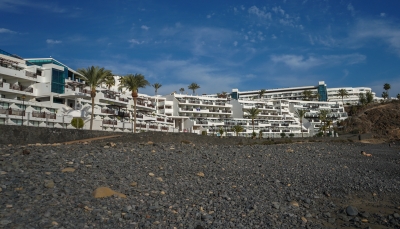
There, as he has explained, the start of a 22-kilometer demarcation by the State after the suspension of the general plan has conditioned the planning of the coast in an area of "high tourist relevance", which in Acosta's opinion has affected not only tourism and the economy, but also the lives of citizens, as has also happened, he said, in some places of Gran Canaria.
The director general has assured that the transfer of powers signed in 2022 "has hampered" the action of the Directorate General since its creation in 2023, by forcing the community to assume personnel and structure costs without having full regulatory capacity.
Likewise, it has lamented the lack of progress in the dialogue with the State, whom it has accused of not understanding the island reality nor supporting projects or investments in the archipelago.
Defends the need for a Canarian coastal law
In parallel, Acosta has defended the need for a Canary Islands coastal law that allows ordering the coastline within the current limitations, although he has recognized that it will not resolve the situation of the affected coastal settlements as long as the 1988 state legislation is not modified.
The director general has explained that the Government is working on the drafting of this regulation with the participation of cabildos, city councils and social groups, and has expressed confidence that it will have the support of the Parliament.
Furthermore, it has pointed out that the General Directorate has intensified coordination with other administrations to address problems such as discharges into the sea, and has assured that a specific team has been created for this area.
Likewise, it has recalled that the Statute of Autonomy recognizes in its article 157 the competence for coastal management to the autonomous community, and has stressed that the transfer decree approved in 2023 does not grant new competences, but rather limits itself to ordering them.
Criticizes that state reports can "block projects"
In this regard, it has pointed out that the current framework limits the capacity for action of the Ejecutivo canario in an area that concentrates 80% of the PIB of the archipelago, with a coastline marked by urban pressure, environmental value, and the presence of population centers.
The general director has criticized that, unlike Galicia or the Basque Country, Canarias does not have the final say in decision-making regarding its coast, as it is subject to binding state reports that can block projects.
On behalf of the PSOE, deputy Rafael Nogales, who had requested the appearance, has denounced that there is no effective Coastal policy in the archipelago and that the presence of the General Directorate is not noticed in the municipalities, especially in those areas affected by the demarcations, which, according to the socialist representative, have conveyed concern and insecurity.
He has also asserted that the investment plan of the General Directorate reveals a worrying reality, which in his opinion is that the area does not plan and manage "on a project-by-project basis", despite the need, he has said, for an integral strategy "balanced and transparent that does not depend on improvisation".
For Vox, Paula Jover has questioned the strategy of the autonomous Executive and has defended that the solution involves updating the state coastal law through consensus between autonomous communities, instead of strengthening self-government.
The deputy of Nueva Canarias Carmen Hernández, in contrast to Vox, has defended self-government as a constitutional right and has criticized centralist positions, while also estimating that the transfer of powers in coastal matters was carried out incompletely, which hinders its effective application.
From the groups that support the Government, the spokesperson for Coalición Canaria David Toledo has denounced a “competential invasion” by the State and has argued that Canarias does not have sufficient regulatory tools to respond to the problems of the coast, limiting itself in many cases to ordering inherited situations, and has condemned the "centralist" impulses of some groups.
"Why is an official from Madrid going to decide about our beaches and coastlines in an archipelago surrounded by sea?", Toledo has asked.
From the Partido Popular, Jennifer Curbelo has agreed that the transfer “is badly done” and has denounced that despite her party having promoted a legal reform in the Congress and in the Senate to improve this matter, it has not been possible to debate because the initiative "remains kidnapped" by the Bureau of the Congress controlled by PSOE and Sumar.


