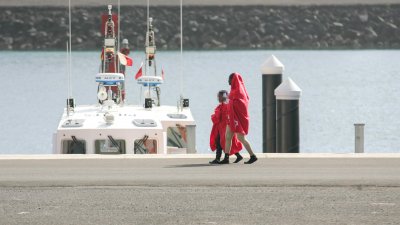
The UN Refugee Agency (UNHCR) has recalled the importance of not using terms that stigmatize or criminalize unaccompanied minor migrants fleeing war, violence, or persecution and to contribute to a narrative based on the dignity and rights of children.
Through a statement, UNHCR has underlined that protecting these children is not only an international obligation but also "a shared responsibility and an investment in the future of our societies": "Acting with responsibility and empathy today is sowing a more just, inclusive, and supportive future for all," it stated.
The organization has warned that an "important" number of unaccompanied boys and girls arriving in Spain do so after fleeing armed conflicts, violence, or persecution in their countries.
In the case of the Canary Islands, since August 2023, 1,500 children have requested asylum. 70% of these young people are of Malian nationality, followed by minors from other West African countries; 9% are girls and 22% are under 16 years old.
To date, Spain has granted protection to 65% of the approximately 700 cases already resolved, a percentage that, in the case of girls, rises to 80% due to the specific forms of persecution they face based on gender.
From genital mutilation to discrimination based on sexual orientation
Among the children arriving on Spanish shores are girls fleeing serious human rights violations such as forced marriage or female genital mutilation.
Others have suffered different types of violence, and cases of minors "with diverse sexual orientation or identity" who face discrimination, restrictive social norms, and lack of legal protection have also been identified, which can have "profound and irreversible consequences" for their development.
Risk of sexual or labor exploitation
In addition, children arriving alone in Spain face numerous risks, including **human trafficking for sexual or labor exploitation** and other forms of abuse and violence.
Many have gone through "deeply traumatic" experiences during the journey, such as separation from their families, lack of food, or absence of medical care.
The representative of the UN Refugee Agency in Spain, Grainne O’Hara, has highlighted that her priority is to ensure that these children receive "the protection, support, and access to rights that they could not find in their countries of origin".
The grave deterioration of security in the central Sahel
"A significant number" of these children come from countries in the central Sahel, such as Mali, where **violence, conflict, instability, and the impact of climate crises** have caused the displacement of more than four million people.
The region is experiencing a severe deterioration in security, marked by attacks from armed groups, internal displacement, and the flight of refugees to neighboring countries, which has led an increasing number of children to undertake dangerous routes to Europe in search of safety.
UNHCR carries out various actions to support Spanish authorities in the protection of these minors, such as training professionals and using tools that strengthen the identification of children in need of international protection and their specific needs.In the Canary Islands, he works alongside authorities and center managers to facilitate contact with children, understand their situation, identify specific needs, and contribute to determining the best interests of each child.

Add La Voz de Lanzarote as a preferred Google source.
Stay informed with the latest current news.