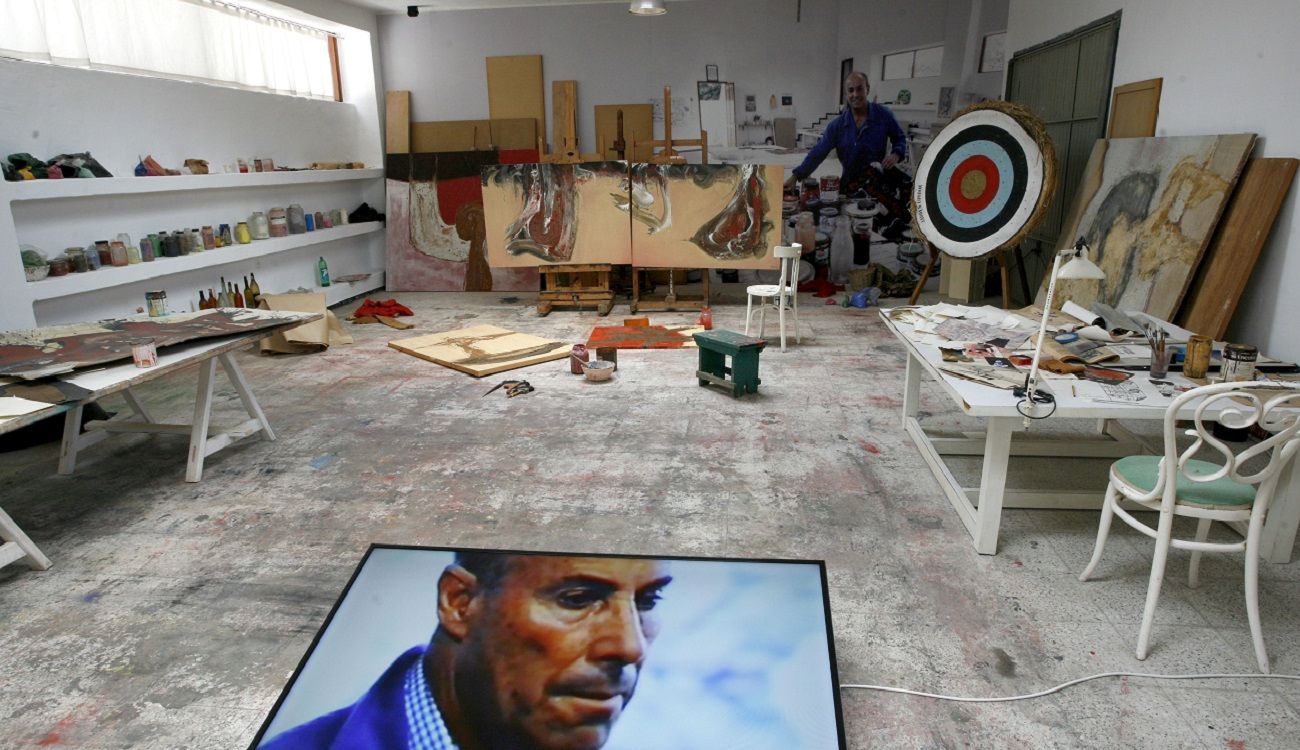
The culture and architecture of Lanzarote cannot be understood without the work of César Manrique, an artist who knew how to see the island's potential, always defending the environment and its own essence.
Born in Arrecife in 1919, Manrique became over the years a complete artist, mastering different creative languages, such as painting, sculpture, and urban planning, knowledge that he applied in the different municipalities of the island, but also in the rest of Spain.
Below are seven places that reflect the art of César Manrique on the island of Lanzarote.
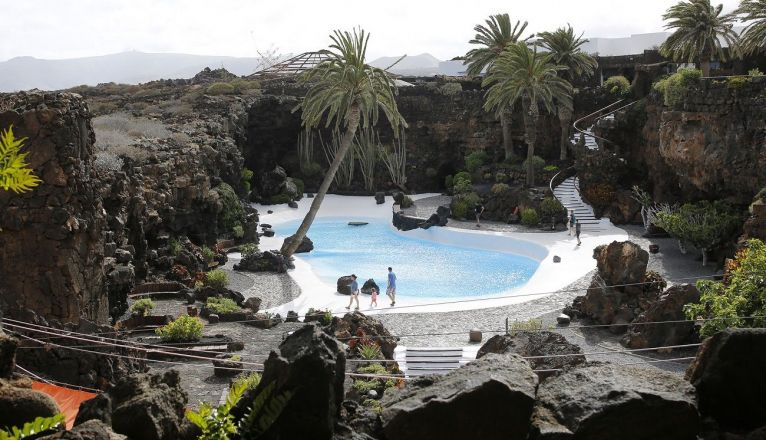
1. Jameos del Agua
César Manrique saw an unprecedented work of art in the middle of a collapsed roof of a volcanic tube, thus creating his first Art, Culture and Tourism Center called Los Jameos del Agua.
It is a lake inside a volcanic tube created by lava from the Corona Volcano, where today a unique endemic species known as the blind crab lives. Tiny white crabs that you won't find anywhere else in the world.
The place also has a volcanic museum, a restaurant, an outdoor pool (where swimming is currently not allowed), and an auditorium where famous singers generally perform concerts. A space where the turquoise blue of the water, the white of the ground, the black of the volcanic rocks, and the green of the large ferns mix in perfect harmony.
Admission to Los Jameos costs 10 euros per adult and 5 euros per child, although they can also be purchased in a pass for several centers.
2. Museo del Campesino
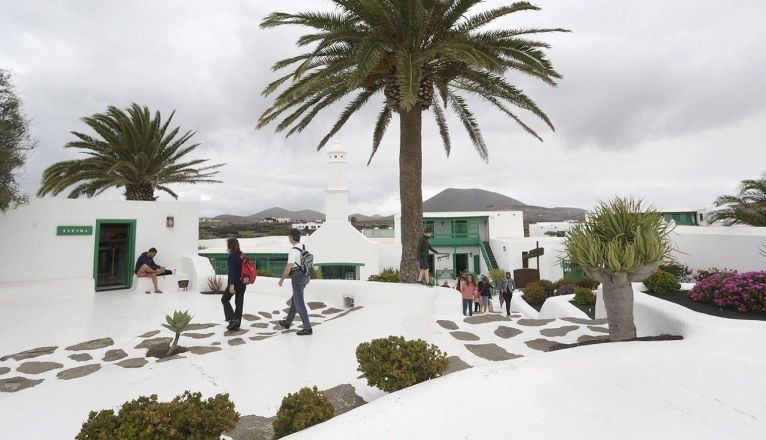
The Casa-Museo del Campesino, in San Bartolomé, is one of those places that catch your eye from the road, due to its unique architecture, very characteristic of César Manrique.
It is a building that aims to pay tribute to the effort of the farmers of Lanzarote, who had to face adverse conditions for their territory to prosper.
There you will find a restaurant where you can taste traditional Canarian dishes such as caldo millo, sancocho de cherne, or goat meat stew. In addition, the complex is characterized by a vanguard work of more than 15 meters known as the Monument to Fertility. Manrique managed to create this work of art, which has already become a symbol of Lanzarote.
3. Mirador del Río
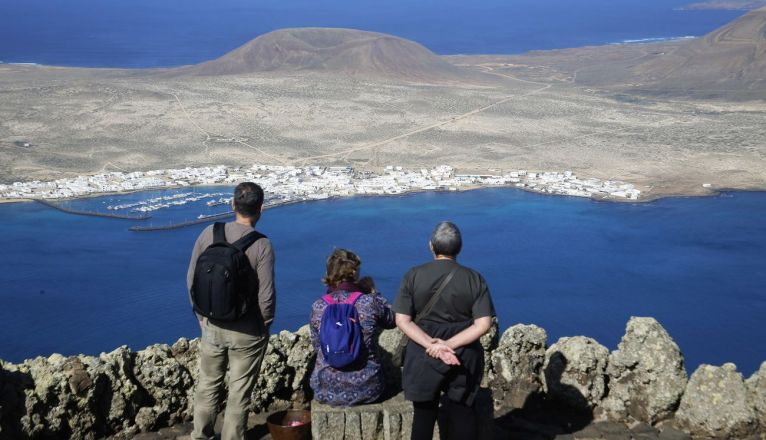
Another of the artist's works is the viewpoint par excellence in Lanzarote, the Mirador del Río, which owes its name to the body of water that separates the island of La Graciosa from Lanzarote.
This is one of the island's most touristy spots, where Manrique, along with architect Eduardo Cáceres and artist Jesús Soto, managed to integrate architecture and nature in such a way that it is practically imperceptible from the outside.
From the balcony itself and from the viewpoint's panoramic glass windows, visitors can contemplate the Chinijo Archipelago, a group of islets formed by La Graciosa and the islets Roque del Este, Roque del Oeste, Alegranza, and Montaña Clara.
In addition, the space has a cafeteria for a snack from the heights and with breathtaking views. It is important to mention that admission costs 5 euros for adults and half that for children, although it may also be included in the corresponding passes.
4. Timanfaya Oven-Grill
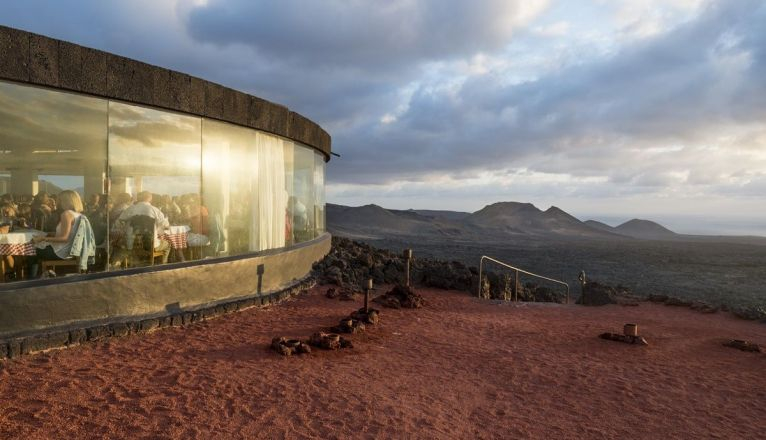
In the same Timanfaya National Park, César Manrique decided to create a very peculiar restaurant called Restaurante El Diablo.
This restaurant uses the heat of the volcanoes, with temperatures of over 600 degrees, to cook dishes, such as chicken or beef steaks and chorizos.
Thanks to its panoramic window, you can enjoy geysers and the Fire Mountains without leaving your table, a truly authentic gastronomic experience.
5. Cactus Garden
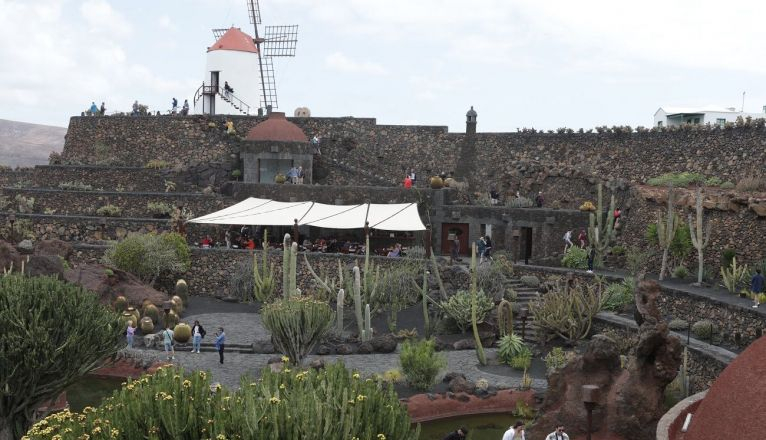
This is César Manrique's last major intervention in Lanzarote, managing to transform a simple quarry into one of the most special places on the island.
The Cactus Garden, located in Guatiza, is a botanical garden with over 5,000 square meters and more than 7,000 cactus specimens, from all corners of the world.
In addition, it also has a 19th-century corn mill, one of the last mills still standing in Lanzarote and where gofio was formerly ground, and a restaurant with a terrace. Here you can enjoy a panoramic view of the garden, as well as some typical island dishes such as wrinkled potatoes with mojo.
If it is not included in the pass, the price is 6.5 euros for adults and half that for children between 7 and 12 years old, with corresponding discounts for Canary Islands residents.
6. Wind Toys
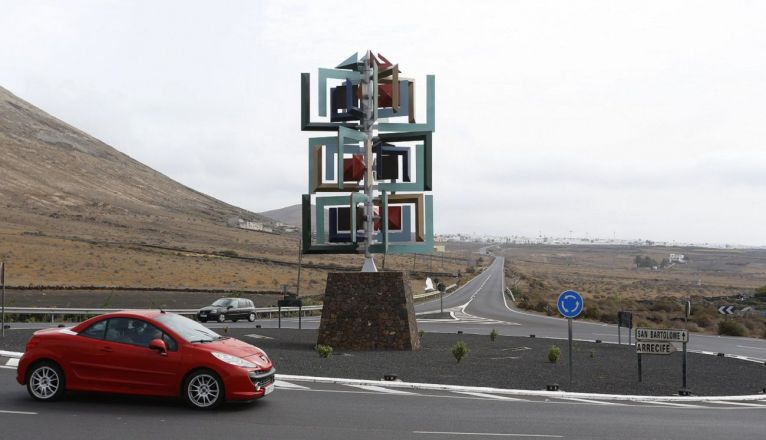
Another of Manrique's well-known works are the so-called “Wind Toys”, iron sculptures shaped like spheres or pyramids that rotate and move with the wind, as if they were a toy at the mercy of the Alisios.
It is a more avant-garde representation of the old windmills of Lanzarote located in different parts of the island, specifically on the busiest roads.
After César Manrique's death, the Cabildo de Lanzarote wanted to make them a reality, so through their workshops they were built little by little, spreading the artist's legacy. Furthermore, it should be noted that many of these sculptures are illuminated at night.
7. César Manrique Foundation in Tahíche
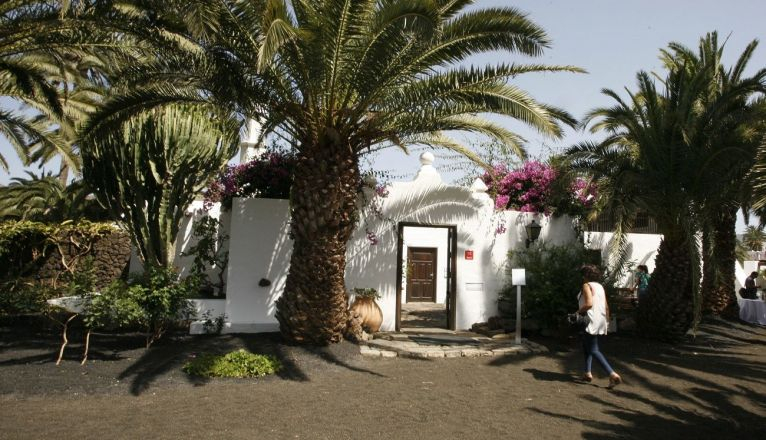
The César Manrique Foundation could be considered the ultimate representation of the work of the Lanzarote artist, as it is his former home, where he combined all his cultural reflections, sustainability, and plastic arts in one place.
With more than 300,000 visitors per year, the FCM located in Tahíche, was built on five large natural volcanic bubbles, but always in harmony with the landscape.
Currently, the museum has two art collections, a contemporary one with works by Picasso, Miró, Chillida, Klee, and another with Manrique's work, which includes sketches and notes by the artist, such as, for example, from Wind Toys or the Timanfaya logo.
The entrance fee is 15 euros and also includes admission to the artist's House-Museum in the municipality of Haría.


Add La Voz de Lanzarote as a preferred Google source.
Stay informed with the latest current news.