
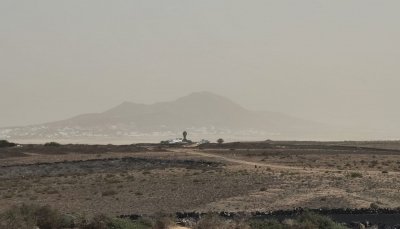
The Ministry of Health of the Government of the Canary Islands, through the General Directorate of Public Health of the Canarian Health Service, and given the forecast of presence of calima for the coming days, recommends to the population take precautions such as avoiding prolonged exposure to outdoor air, keeping windows closed and not performing physical exertion outdoors.
These recommendations are made according to the predictions that report on the presence of haze in several islands during the coming days. The State Meteorological Agency reports on the existence of adverse meteorological phenomenon due to suspended dust. Therefore, the Government of the Canary Islands has issued a pre-alert for haze, which will probably produce an alteration of air quality.
Given this forecast, the General Directorate of Public Health wants to remind of the preventive measures necessary to reduce the effects on the general and sensitive population.
How does the Saharan dust episode affect people?
High concentrations of suspended dust (particles) can cause mild symptoms such as irritation of the nose, throat, itchy eyes or cough, but also other more serious ones, triggering asthmatic crises in people who suffer from this disease or aggravating and worsening the clinical state and symptomatology of patients with respiratory or heart diseases. The probability of upper or lower respiratory tract infections also increases.
For all this, an increase in the number of emergencies attended in hospitals and health centers can be observed, even during the five subsequent days to the end of the episode.
Who are the most sensitive people?
Although all people are at risk of developing symptoms from exposure to haze, those most vulnerable to the effects of the high concentration of particles in the air ambient due to these episodes are:
– Minors.
– Elderly.
– People with preexisting chronic diseases, both respiratory (asthma, chronic bronchitis) and cardiac.
– Pregnant women.
– People who work outdoors.
– Smokers.
Recommendations
From the General Directorate of Public Health, a special appeal is made to take extreme precautions and follow the following recommendations to avoid the described complications:
– Avoid the performance of activities that involve physical effort outdoors.
– Stay at home or indoors as long as possible and stay as isolated as possible from the outside air closing windows.
– Perform the cleaning of the surfaces with the dust with damp cloths.
– Stay in humid environments and hydrate, as well as continue with the usual medication.
– Do not perform physical exercises outside.
– Pay attention to the information and forecasts that the authorities provide.
– In case of the respiratory symptoms worsening, call 1-1-2.
Finally, it is recommended to pay attention to the information and forecasts provided by the authorities regarding air quality, especially if one belongs to one of the vulnerable groups mentioned. To this end, furthermore, one can consult the “air quality index (AQI)”, estimated for each area of the a Autonomous Community, at the following address of the Air Quality Control and Surveillance Network of the Government of the Canary Islands: Canary Islands Air Quality Control and Surveillance Network - Air quality index
Add La Voz de Lanzarote as a preferred Google source.
Stay informed with the latest current news.


