One night the fishing boat Cruz del Mar was fishing off the coast of Western Sahara when about twenty men armed with assault rifles boarded the boat. Seven sailors from Lanzarote were murdered in that attack, while another three managed to escape after jumping into the sea.
Two families from Lanzarote were fishing on that boat: the Hernández and the Rodríguez families. The boat's mechanic, Miguel Ángel Rodríguez García, was only 23 years old when he was a victim of this terrorist attack, and by chance, he and his brother became two of the survivors.
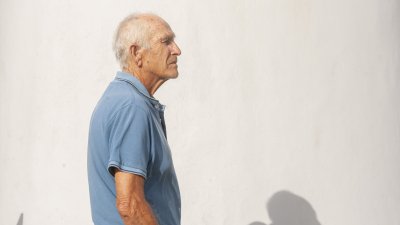
On the night of November 29, around 7:30 p.m., a group of men boarded the boat with machine guns, and Miguel Ángel witnessed how most of his companions were shot dead. "As I get older, I remember it much more, I remember everything as if it were now," he recounts during a conversation with *La Voz*.
It has now been 48 years since that violent assault, but he regrets that he has not yet received financial compensation as a victim of terrorism. Although various institutions have promoted tributes to the murdered and the survivors, in his case, this has not translated into financial reparation. "They gave me a reward of 3,000 euros because they classified it as if I had suffered a motorcycle accident. The widows were compensated, but as far as I know, the survivors have not been compensated, or if they have, I haven't found out," he indicated.
Even almost half a century later, it has not been clarified who ordered that attack, after Moroccan authorities accused the Polisario Front, which in turn accused Morocco of perpetrating the attack.
A zodiac boat loaded with machine guns that ended the lives of seven fishermen from Lanzarote
"We saw a zodiac boat loaded with people with machine guns, and we didn't think they were going to do what they did," recalls the survivor, "innocently, we didn't know what was going to happen." At first, the fishermen from Lanzarote helped the crew members, who were wearing bags, to board the boat.
At one point, Rodríguez realized he was in danger when he moved to the engine room to start the boat and take the crew to safety. Then, he noticed that bags with a cable hanging from them had been placed on the boat, so he decided, along with the fisherman Manuel Hernández, to launch a raft into the sea and jump onto it. When they moved away from the boat, they saw it explode.
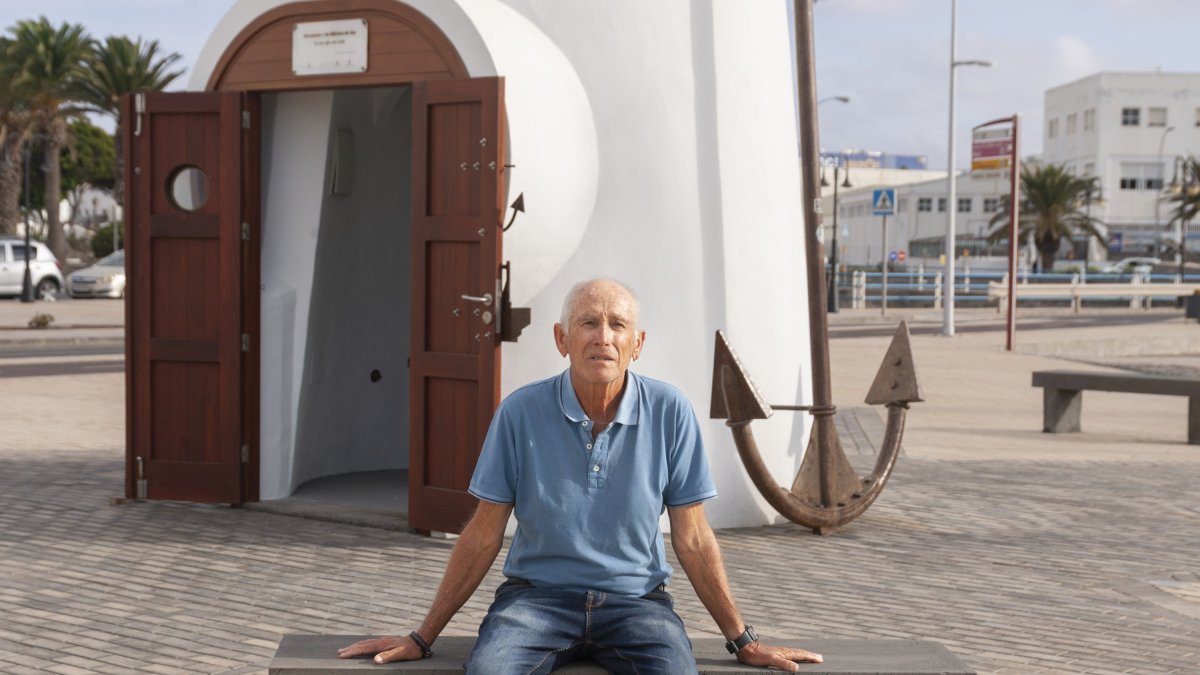
"After a while, I found my brother," recalls the fisherman, his brother Eusebio Rodríguez García was the third survivor of that attack. The man from Lanzarote found his brother in the water and rescued him. "The raft was completely broken, and we made it to Chico Grande as best we could," a fishing boat that was nearby and saved their lives, "because the current, the tide, carried us."
Seven men from Lanzarote died in that attack; initially, only the body of one of them could be recovered, that of the boat's captain, José María Hernández Marrero. Later, an incursion by the Spanish Navy allowed the recovery of the remains of the Cruz del Mar and the bodies of the boatswain Agustín Hernández Marrero and the sailor Juan Suárez.
It was the second time that the youngest of the group, Sebastián Cañada García, fourteen years old and known as Chano, had embarked on a fishing boat. In that attack, the sailors Amador Hernández Marrero, sixteen years old, and Rafael Salas; and the cook Alfredo Rodríguez Marrero also died.
Despite the painful memories of that attack, which have led Miguel Ángel Rodríguez to need psychological help throughout his life, this man from Lanzarote remains a lover of the sea. "My life is the sea; when I have free time and can, I go fishing because that's what I like. It's what I like, and it's what we've lived through," he confesses. "In this case, the boats were not to blame; it was some scoundrels who, surely sent by someone, were dedicated to causing harm," he adds.
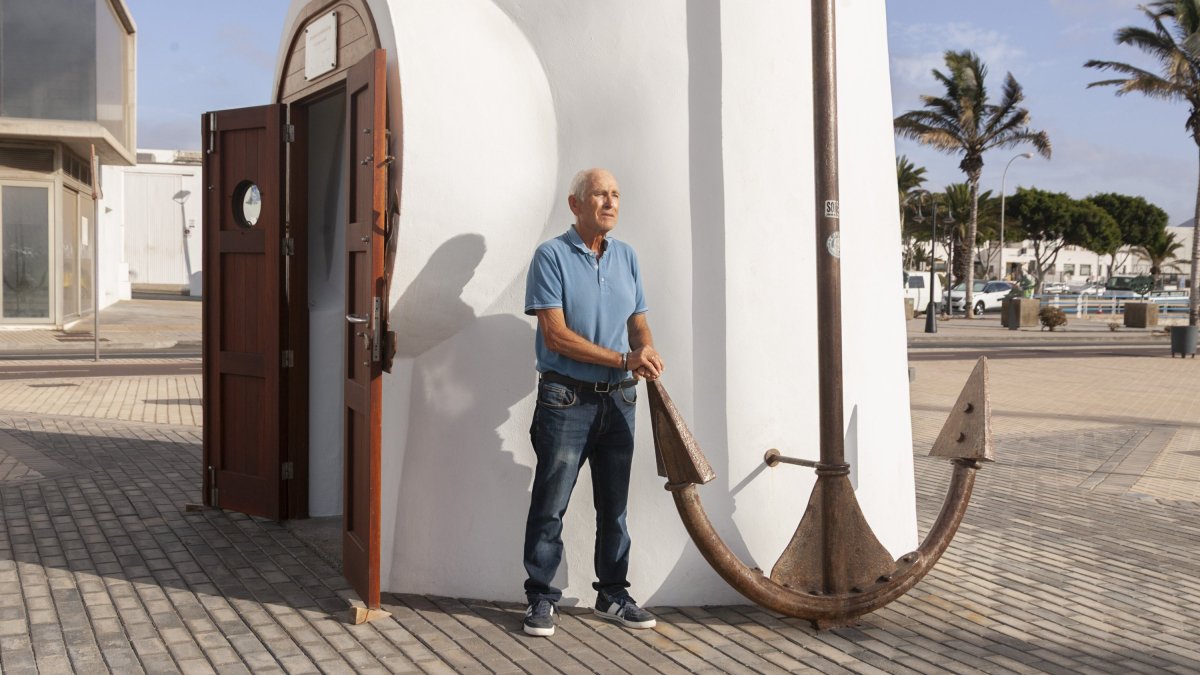
A monument erected in the Port of Arrecife remains from that attack, along with the testimonies of survivors like Miguel Ángel, who managed to save their lives.
Historical Context
With the agony and death of dictator Francisco Franco, in the final throes of the Francoist regime, Spain abandoned Western Sahara, then known as Spanish Sahara. In early November 1975, the Government of Morocco mobilized around 350,000 unarmed Moroccan civilians and occupied the Sahrawi territory. In this period of instability, Morocco and Mauritania came to divide control over the territory, including its sea.
In November 1975, the Spanish Executive sat down to negotiate with both African countries to draw up new fishing agreements, which affected the crews from Lanzarote. In this context, in 1976, the Polisario Front proclaimed the Sahrawi Arab Democratic Republic (SADR) and an armed conflict began with the occupying forces of Morocco.
In February 1977, an attempt was made to reach a bilateral fishing agreement between Morocco and Spain, which did not materialize. While provisional agreements were being drawn up. In this turbulent period, up to eight attacks were carried out on Spanish fishing vessels in the fishing area between the Canary Islands and the Sahara.
"The fishing agreement was complicated for all the islands and I think even for Spain because all Canary Islanders lived off it, and when they cut us off, the consequences were very severe for the Canary Islands," recalls Miguel Ángel, who has been at sea since he was 14, although after the attack he left his job as an engineer and goes to sea to enjoy fishing.
Regarding the Cruz del Mar attack, while Moroccan forces blamed the Polisario Front, Sahrawi representatives accused Morocco of blaming them to avoid rapprochement between the Spanish State, which was entering an incipient democracy, and the representatives of the Sahara.
Add La Voz de Lanzarote as a preferred Google source.
Stay informed with the latest current news.