Primary Care midwives from the Lanzarote Health Area have provided sexual and affective education to nearly 700 minors from the island's educational centers, as well as to people with functional diversity and their families.
The program has been developed through various workshops and training sessions adapted to the Primary, Secondary, and Baccalaureate stages, as well as in the island's child reception centers and the Lanzarote Association of People with Disabilities (ADISLAN).
The topics covered include contraception, bodily changes associated with puberty, prevention of sexually transmitted infections (STIs), risk factors and behaviors, and the development of respectful and healthy emotional relationships.
Dynamics with adolescents, sex education based on evidence
In the secondary education courses, the workshops focus on affective and sexual education from a participatory approach. Midwives address sexuality as an inherent part of human development and sex as a synonym for intimacy, fostering respect, equality, and informed decision-making
Through interactive dynamics, students raise questions and reflections on concepts such as consent, first relationships, condom use, or affective-sexual orientation.
Common questions such as "Do relationships end when the guy ejaculates?", "How do I know if I like someone?" or "What happens if I'm attracted to someone of the same sex?", "If I don't feel jealous, does it mean I don't really like my partner?", allow myths to be debunked and concepts to be explained clearly and adapted to age.
Work is also being done on risk situations such as non-consensual sexual practices, sextortion (sexual blackmail of a minor), or grooming (online sexual harassment and abuse). Real-life examples and dynamics that encourage reflection are used for this purpose.
At the end of the session, the so-called ‘Doubt Box’ is made available, where students deposit anonymous questions that are subsequently answered by the midwives and sent to the teaching staff so that the entire group has access to the information.
Fostering Healthy Affective Relationships in High School
In high school, workshops delve into aspects related to emotional responsibility, the prevention of sexually transmitted infections (STIs), equality, and consent. Through didactic tools such as interactive Kahoot-style games, midwives generate debate and dismantle misconceptions related to porn, virginity, sexting (sending messages, photos, or videos of a sexual nature), or contraceptive methods. This dynamic allows students to raise questions, reflect, and become aware of what they truly know
Intervention in minors' centers
In the centers for minors in vulnerable situations in Lanzarote, primary care midwives have carried out several interventions and presentations on affective-sexual education in workshops with small groups that foster a climate of trust and active participation.
Content has been addressed according to the age of the participants, such as healthy sexuality, consent, menstrual health, prevention of sexual violence, contraception, equality, prevention of prostitution, and risks associated with pornography consumption, safe sex, and STIs.
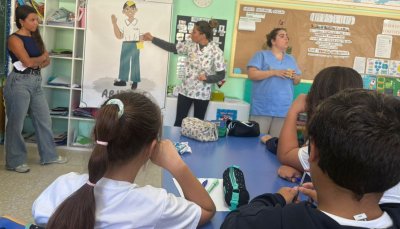
Also here, the workshop 'Aridane's World' on changes during puberty has been developed; and among the youngest, aged ten and twelve, the prevention of child sexual abuse (CSA) has been worked on, through fluid and open communication with minors, to help them identify inappropriate situations, express bodily boundaries, and ask for help.
Workshops for people with disabilities
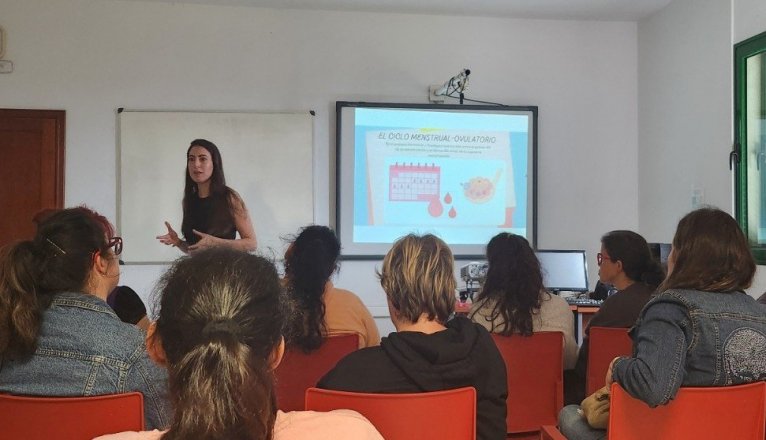
Primary care midwives have also collaborated with ADISLAN in organizing workshops for the association's users. One of them, on Menstrual Health, had the participation of 22 women who shared experiences and doubts related to this often-invisibilized process in people with functional diversity.
On the other hand, they developed workshops on contraception, consent in sexual relations, and the prevention of gender-based violence, as well as genital health and STI prevention, providing accessible information tailored to users' needs