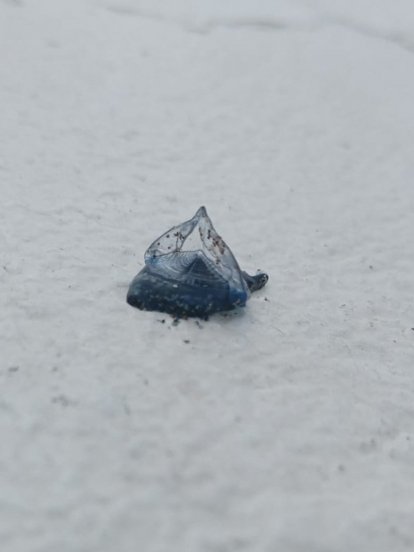
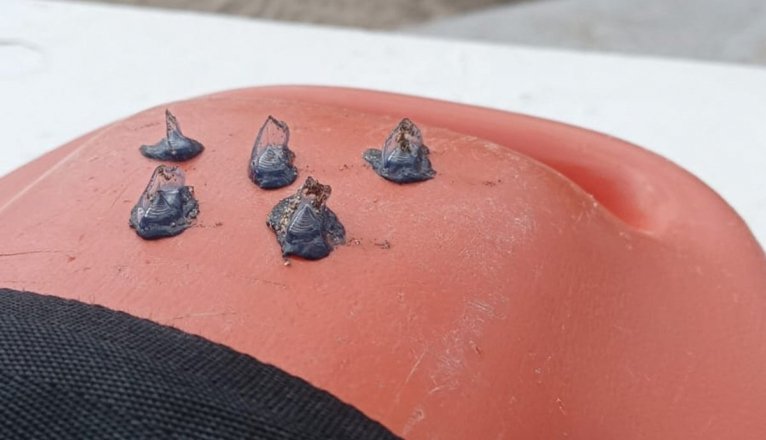
Several specimens of Portuguese man o' wars (Physalia Physalis) have appeared this Thursday on La Garita beach, in the town of Arrieta, according to the Emergency Consortium.
Despite having the appearance of a jellyfish, it is a colonial organism. Specifically, a grouping of hydroids.
It drifts at sea thanks to its oxygen float and its sting is painful and, at times, dangerous. Its tasks are divided into moving through the sea, dragged by currents and winds, hunting, feeding on small crustaceans and fish larvae, and reproducing.
It is important to avoid touching it, as its sting can cause intense pain and itching on the skin, nausea, and allergic reactions in some cases, as well as skin lesions that may require medical attention
To avoid stings, it is essential not to touch the Portuguese man o' war, even if it appears harmless. In case of a sting, you should **apply vinegar to the affected area to neutralize the venom** and seek medical attention if more severe symptoms appear
Add La Voz de Lanzarote as a preferred Google source.
Stay informed with the latest current news.