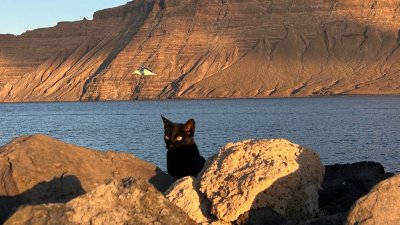
On Sunday, September 6, 2026, managers of feline colonies, animal protection entities, and citizens will simultaneously take to the streets in 38 demonstrations and gatherings in different parts of Spain to demand the effective fulfillment of Law 7/2023 regarding feline colonies. The demonstrations will take place at 11:00 AM in the Canary Islands.
More than three years after the approval of the regulation, Cats Have a Law denounces significant shortcomings in its effective application in numerous municipalities and a reality that continues to fall on the managers: sustaining with their money, their time, and their work a management that corresponds to the administrations within the framework of their responsibilities.
While legal obligations continue to go untranslated into sufficient public management, many managers continue to bear the costs of feeding, sterilization, veterinary care, and other needs of community cats out of their own pockets, in addition to contributing their time and work daily on a voluntary basis.
This is one of the central reasons for the call: managers "are tired of sustaining with private resources and voluntary work what should be part of public policy."
The mobilization summarizes their demand in one sentence: "We are not asking for a new law. We demand that the existing law be enforced."
More than three years waiting for effective compliance
Law 7/2023, of March 28, assigns specific responsibilities to local entities, within the framework of their competencies, in the management of community cats and establishes the need to develop Feline Colony Management Programs.
The regulation contemplates, among other actions, the identification of community cats through microchips under the ownership of the competent local administration, sterilization and population control, mapping and census, health care, health programs, regulation of citizen collaboration, protocols for managing neighborhood conflicts, and mechanisms for monitoring the implementation and evolution of the programs.
However, Cats Have a Law denounces that the effective application of these obligations "continues to be insufficient in numerous municipalities and that resources, stable and continuous TNR programs, veterinary care, censuses, identification, traceability, and mechanisms to evaluate management results are still lacking."
The consequence, they say, is that too many responsibilities continue to fall on the people who care for the colonies. The mobilization calls for a fundamental change: that the managers collaborate with the administrations, but not have to replace them.
Sustaining the colonies and doing so, moreover, from a position of unprotectedness
For years, managers have fed colonies, captured cats for sterilization, carried out relocations, attended to sick animals, coordinated treatments, and assumed numerous expenses with their own resources.
To this economic and workload burden is added, in many cases, lack of protection against situations of harassment, threats, and conflicts with individuals, as well as the lack of institutional response when they request help.
Managers can thus find themselves facing a double reality: assuming tasks and costs that should be supported by public policies and, at the same time, being unprotected while carrying out that work. "After more than three years, we continue to put our money, our time, and our work into sustaining the colonies. And many managers, in addition to feeling abandoned by their administrations, have to face threats and harassment simply for doing work that should be supported by them," says Mónica García, national spokesperson for Los gatos tienen ley.
The mobilization demands that administrations do not limit themselves to recognizing the existence of feline colonies, but rather effectively assume their management and protect the people who collaborate in it against situations of harassment, threats, or impediments to carrying out their work. The volunteer work and knowledge of the managers are fundamental, but Los gatos tienen ley defends an essential difference: collaborating with the Administration does not mean replacing it.
Transparency also when management is outsourced
Another of the axes of the mobilization is the need for transparency, monitoring, and control of the outsourced management of feline colonies. In municipalities where certain services are entrusted to external companies, Los gatos tienen ley demands that there be accessible information about which services are contracted, what public resources are allocated to them, what actions are carried out, and what their results are.
The outsourcing of a service does not eliminate the Administration's responsibility for its operation or for the fulfillment of its corresponding obligations. Therefore, mobilization requires traceability of public resources and effective monitoring and evaluation mechanisms, both when management is carried out directly by the Administration and when contracted companies are involved.
A state, collective, and independent mobilization *Los gatos tienen ley* is a collective initiative driven by people managing feline colonies, animal protection entities, and citizens. The call does not belong to any specific association nor is it linked to any political party. The associations, collectives, and entities that have decided to support the mobilization are publicly listed on the official website.
Furthermore, the protest is not related to a problem linked to a specific political party. The demand is the same for all administrations: the law must be complied with regardless of the municipality and the political leaning of those in power. On September 6, 38 demonstrations and gatherings will be held in different territories of the State under the same demand.
A state, collective, and independent mobilization
*Los gatos tienen ley* is a collective initiative driven by people managing feline colonies, animal protection entities, and citizens. The call does not belong to any specific association nor is it linked to any political party. The associations, collectives, and entities that have decided to support the mobilization are publicly listed on the official website. The protest is not related to a problem linked to a specific political party.
The demand is the same for all administrations: the law must be complied with regardless of the municipality and the political leaning of those in power. On September 6, 38 demonstrations and gatherings will be held in different territories of the State under the same demand.
The mobilization demands:
• Real and effective compliance with Law 7/2023 regarding feline colonies
• Sufficient economic resources for their management
• Effective, stable, and continuous TNR programs
• Real census, identification, traceability, and monitoring of colonies
• Veterinary care and adequate measures for community cats
• That administrations assume their corresponding responsibilities and that volunteering does not have to replace them
• Protection for people who collaborate in the management of colonies against harassment, threats, and impediments to carrying out their work
• Transparency, monitoring, and control of outsourced services and contracts.
Add La Voz de Lanzarote as a preferred Google source.
Stay informed with the latest current news.