
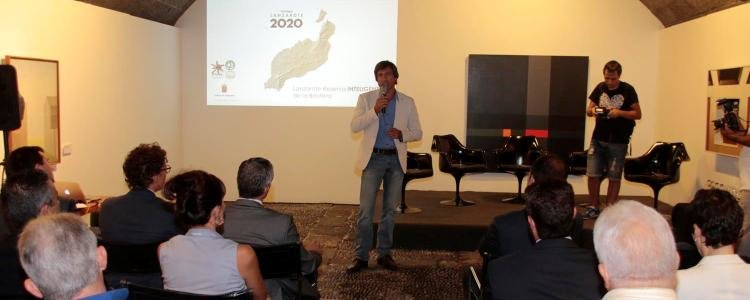
The Cabildo of Lanzarote presented this Tuesday at the MIAC-Castillo de San José the project 'Lanzarote Intelligent Biosphere Reserve', an initiative that aims to "promote the digital transformation of the island and its development as an intelligent tourist destination", through the use of information and communication technologies (ICT) and public-private collaboration.
"'Lanzarote Intelligent Biosphere Reserve' will improve the tourist's experience on the island and boost the growth of the island's economy by creating an e-commerce platform for the "tourism ecosystem", explain from the Cabildo. It will also provide the tourist destination Lanzarote with "capabilities to generate and reuse large data sets ('big data') through an intelligent platform", they point out, noting that Lanzarote "will become an example of good practices in terms of open innovation and open data in the field of sustainable tourism".
The initiative involves the "sensorization" in the eminently tourist areas -Puerto del Carmen, Playa Blanca and Costa Teguise-, in order to measure environmental parameters related to noise, air and bathing water quality or waste management; and to know the flow of traffic and people in the accesses to the main tourist centers of the island, among other benefits.
It will also involve the creation of a WIFI network in points of tourist interest to transmit the information to the platform and "make it possible to measure the tourist's experience at all times". Tourists will be able to access exclusively in these points, during their entire stay, within the limits established by the regulations on telecommunications and the protection of personal data. "Access to WIFI will allow tourists to receive contextual information and carry out commercial transactions with the local productive fabric", details the Cabildo.
Likewise, the creation of an intelligent platform is proposed, which allows the management and integral monitoring of said information in real time; collect and manage heterogeneous data from different sources or facilitate rapid access to structured information, among other services, both by tourists and tourism agents.
Finally, the creation of a digital tourist channel (web, app and physical offices) is proposed, which will have as its central axis the Tourist Information Office of the Airport (i-rock office), and a mobile application of the destination through which tourists can interact with the destination from their 'smart-phone'.
"Enormously ambitious"
The president of the Cabildo of Lanzarote, Pedro San Ginés, highlighted the suitability of this "enormously ambitious" project to the Lanzarote 2020 Strategy, "approved with a broad social and political consensus and whose main objective is to achieve a model of development of the island", which implies a balance between the economic, the social and the environmental, through the promotion of an economy "more sufficient from an ecological point of view and in a context of sustainable development".
San Ginés highlighted "the unity, support and participation" in the project of 32 island, state and international entities, including the seven town councils, tourist employers, Chamber of Commerce and other organizations such as the César Manrique Foundation, Aena or the ULPGC through the School of Tourism of Lanzarote; and thanked all the people and departments of the Cabildo who have contributed to its design.
For his part, the CEO of the Tourist Centers of the Cabildo, José Juan Lorenzo, said that the aforementioned project "will allow us to build a system for managing the tourist's experience at the island level, which will contribute to boosting the growth of the island's economy".
In this same sense, the CEO of the Society for the Promotion of Lanzarote Abroad (SPEL), Héctor Fernández, stressed that 'Lanzarote Intelligent Biosphere Reserve' will constitute "a tremendous accelerator in promotional matters, as it will allow applying all the force of technology to the tourism sector".
Likewise, the expert in digital innovation, former general director of Red.es and external advisor, César Miralles, stressed that "this intelligent initiative focuses on the needs of tourists and the local tourism ecosystem, enabling sustainable local development through an efficient and intensive use of information and communication technologies".
After the presentation of this project, which places the tourist and their travel experience at the center of the 'Smart Island' strategy, a colloquium was opened with the participation of representatives of the ICT sector Leopoldo Aznarez (partner Zona Sur de Deloitte), Daniel Olmo ('Key account manager', General State Administration, IBM), Carmen Gloria Rodríguez (director of the public sector Canary Islands, Telefónica) and Luis Bello (director of the Public Sector Canary Islands, Cellnex Telecom), who highlighted the vision of the future, the innovative nature, the adequate structure and focus, and the ambitious nature of the Lanzarote project.


