
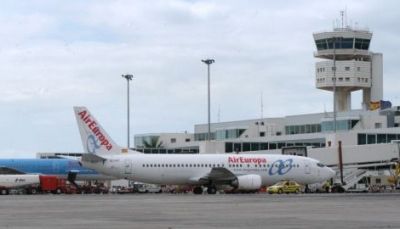
The Independent Authority for Fiscal Responsibility (AIReF), created by the central government as a supervisory body with its own autonomy, has proposed limiting the discount that Canarian residents receive on flights. The AIReF study, presented this Thursday, analyzes the impact of the increase of that discount to 75%, concluding that it has meant an increase of 12% in the price of flights between the Canary Islands and the Peninsula.
Specifically, it adds that the price increase "is greater the more likely a flight is to carry residents", in such a way that it is understood that "the higher the percentage of residents on a flight, the greater the effect of the increase in the subsidy on prices".
Therefore, the AIReF has called for limiting the subsidies granted to citizens of the Balearic Islands and the Canary Islands to make plane trips to the peninsula, so that they are modulated based on their income level or through a fixed amount per ticket.
To establish this limitation, the entity proposes setting a maximum subsidy per resident, or limiting the number of flights they can make per year.
With this measure, the AIReF intends to "optimize this subsidy", which amounted to 730 million euros to public coffers in the last twelve months, and avoid the distortions it considers are causing in this transport, both in price and in the traveler profile, as well as in the market.
The richest take half of the subsidy
In parallel, AIReF has also detected a "very unbalanced" distribution of the subsidy among the population, given that "half of the residents do not fly and, therefore, do not receive any help".
In this sense, it highlights that 20% of residents with the highest incomes concentrate 50% of the total subsidy, while, on the contrary, 40% of the population with lower incomes receives 17% of the total subsidies in the case of the Canary Islands.
Regarding the Balearic Islands, although it registers more equity, it indicates that 40% of the population with lower incomes accumulates 21% of the aid.
Airef considers that all this is because "high incomes fly more times and buy more expensive tickets and, therefore, are those who "are receiving a greater part of the subsidy".
Hence, the entity proposes studying mechanisms to guarantee a "more equitable" distribution of public aid to the mobility of extra-peninsular territories.
At this point, it suggests replacing the current subsidy of 75% of the travel price with a fixed amount subsidy for each of the routes or "articulating mechanisms to achieve a more equal distribution of the subsidy by income levels".


