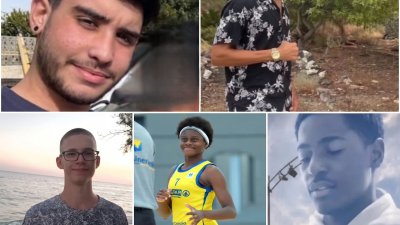
The coasts of the Canary Islands have claimed the lives of five young athletes in just over two years. These include four federated footballers and a promising basketball player, whose lives were cut short prematurely due to accidents in the aquatic environment, according to an analysis by the association Canarias, 1500 Km de Costa. “A tragedy that intensifies the pain of three families who still cannot say goodbye to their children, as their bodies have not been recovered from the sea,” highlights Chano Quintana, president of the association for the prevention of drownings.
The most recent case occurred last Tuesday, August 18, 2026, with the sad death of Jeremías, a 14-year-old footballer. The young man lost his life after getting into trouble due to strong waves in a rocky area of the coast of Mogán, located between Amadores and Puerto Rico beaches, in Gran Canaria.
This incident joins other tragic episodes recorded on the archipelago's coasts: that of Yassine (16 years old) and Alejandro (17 years old), who disappeared on March 8, 2024, after going fishing in the steep area of El Confital, in Las Palmas de Gran Canaria, where they were allegedly dragged out to sea by a strong wave. Their bodies were never found.
The case of Arek (15 years old), of Polish nationality and a federated footballer for the Stal Stalowa Wola team, whose whereabouts were lost on February 22, 2025, after being pulled in by a large wave at Charco del Viento, in La Guancha (Tenerife), and that of Fabiola Mbulito (12 years old), considered one of the great promises of Spanish basketball and a player for Spar Gran Canaria, who drowned last July on La Laja beach (Las Palmas de Gran Canaria), just after being called up to debut with the Spanish U-12 women's national team.
It should be noted that, unfortunately, and despite the prolonged efforts of the search teams in each case, the bodies of Yassine, Alejandro, and Arek remain missing.
“These events highlight the enormous force and danger of the sea, reminding us of the extreme need for caution in coastal areas. The world of sports bids a sorrowful farewell to Jeremías and Fabiola, and keeps the memory of Arek, Alejandro, and Yassine alive, with the hope that, one day, their families can find closure,” stated Quintana, an expert in aquatic safety.
Awareness talks and institutional commitment
Precisely, one of the main actions that this association has been developing for a decade is the giving of talks on the prevention of aquatic accidents, where students are explained how to avoid a risky situation on beaches and in swimming pools, and protocols are taught on how to act in risky scenarios to reach land unharmed, including real cases that are jointly analyzed by the drowning expert and researcher.
These talks are sponsored by the Vice-Ministry of Physical Activity and Sports (Ministry of Education of the Government of the Canary Islands); as well as the Ministry of Territorial Policy, Territorial Cohesion and Waters of the Government of the Canary Islands; the Cabildo of Gran Canaria; the Elder Museum of Science and Technology and the City Council of Las Palmas de Gran Canaria through the departments of Tourism and City of the Sea.
“We have been giving talks for more than a decade at all educational levels, from early childhood to university, but we continue to miss more commitment from entities linked to the sports field and, during this holiday period, from the dozens of summer camps organized throughout the Canary Islands.
"Thousands of children are introduced to the water without having previously received minimal training in a culture of aquatic prevention and safety," insisted Quintana. "If fires are put out in winter, drowning is prevented on land," he concluded.
"While the growing effort of some of the Canary Islands public administrations to reduce the figures of aquatic accidents is real and evident, reality overcomes us. We cannot place a lifeguard behind every swimmer. We must educate, train and inform citizens to promote self-responsibility and thus reduce the human tragedies caused by drowning.
More than 50% of those who died in 2026 had accessed the sea when a pre-alert or alert for strong waves was activated. This tells us everything," states Quintana.
Add La Voz de Lanzarote as a preferred Google source.
Stay informed with the latest current news.