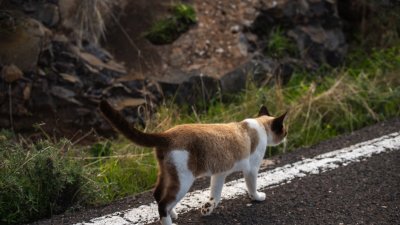
The municipality of Haría has carried out between the months of June and October a new campaign of the CER method (Capture, Sterilization, and Return), which has allowed 55 cats to be sterilized and 33 to be facilitated for adoption, with the aim of controlling the feline population, improving the living conditions of these animals, and promoting their coexistence with the residents.
This method consists of capturing the cats that live in the colonies, transferring them to a veterinary center for sterilization, and subsequently returning them to their place of origin. In this way, the birth of unwanted litters is avoided and the growth of the feline population is progressively reduced, while contributing to a decrease in behaviors related to heat, such as fights and meowing.
During these months, an adoption campaign has also been developed, which has allowed 33 felines to find a home. This measure offers an alternative for those animals that can adapt to domestic life, facilitating their reception of the necessary care and attention in a family environment.
The mayor of Haría, Alfredo Villalba, thanks all the people who have participated in these actions and points out that "animal welfare is a responsibility that we must all share." Therefore, "the collaboration of those who dedicate their time to caring for and protecting the cats in our municipality is fundamental to fostering respect for animals and improving coexistence," he adds.
For his part, the councilor for Animal Welfare, Marcos Lemes, highlights "the extraordinary work carried out by the volunteer feeders, who are responsible for attending to the cats in the different colonies daily," and especially thanks the participation of the Freya Association, a new organization for the protection of stray felines in Haría. "It is a satisfaction to have such committed people and an organization that joins this work, contributing their time and effort selflessly," he expresses.
The work of the feeders and collaborating entities is especially important for knowing the state of the colonies, detecting possible health problems, and monitoring the animals. Their regular presence also facilitates the identification of new individuals and allows for action when necessary, contributing to maintaining adequate conditions in the spaces where they live.
The campaign will end at the end of October, after several months of actions aimed at controlling the reproduction of community cats and promoting the adoption of those that can be integrated into a home, thus favoring more adequate attention to the needs of these animals.



Add La Voz de Lanzarote as a preferred Google source.
Stay informed with the latest current news.