
"We are three families living in one house", relates Deisy, who lives in Lanzarote with eight other people. "Why? There is work, the economy is good, but the problem of not being able to live with dignity makes us all want to give up", she confesses during an interview with La Voz.
Her two children, her husband, and she arrived in Lanzarote seven years ago with the hope of building a better future than the one that awaited them in the country where she was born. They were able to regularize their situation, find jobs (most of them linked to the service sector, the predominant one on the island), but the housing crisis affecting Lanzarote makes it increasingly difficult for them to have a room of their own and, with it, some privacy.
She shares a room with her husband and one of her sons. In their three-bedroom house, three complete families have been living together for two years, one family per room. "The privacy of each family is difficult, in the end, we try to make coexistence as good as possible. It's something we submit to when we come here as migrants, but it's very sad that we don't have something as basic as the right to housing", she continues.
This citizen relates that when night falls, when all the families return home after a day of work, is when coexistence is most affected. "We need them to look towards the productive sector, which is us workers, and yes, there may be work, tourism arrives, the hotels are full, but if we have nowhere to live, if families have nowhere to live, they will leave and in the end, who will work?", she adds.
Deisy took in her brother-in-law, his partner, and his son, as well as her other son, his girlfriend, and a grandson. In total, nine people. The idea was temporary coexistence until they could find a home that stubbornly refused to appear.
Since the economic crisis of 2008, renting has become the most viable housing alternative for the working class. In 2021, 15.09% of the Spanish population lived in rented accommodation. The housing market continues to tighten, and in territories like Lanzarote, accommodation prices are multiplying. For example, in the Canary Islands, the cost of rent has skyrocketed by 145% in a decade, one of the autonomous communities with the largest price increases in the entire country.
A "terrible" search that ended in a rental without a contract
"Finding a place to live in Lanzarote was not complicated, it was terrible," says Mario (a pseudonym for fear of reprisals), a 23-year-old who has been living on the island for over a year. He moved to Lanzarote to work in the service sector and tried to find "somewhat affordable" housing.
Despite having a job that pays above the average for the Canary Islands, with the second lowest salaries in the country, Mario was already prepared that he "would have to share an apartment" to make ends meet. "I'm from the mainland and they take advantage of the problem that you won't be able to physically see the apartment to try to scam you, with fake photos or apartments that don't exist," he recounts during a conversation with La Voz. After two attempted scams, he managed to find a place through acquaintances.
"This apartment was only rented to people in my sector; if you didn't belong to the sector, you couldn't access it," he explains. After passing the first hurdle, Mario encountered another impediment: his landlord did not want to sign a lease agreement with him. "By not declaring it, I cannot deduct it, I cannot receive any kind of help," he adds.
Currently, he pays 900 euros and shares the apartment with another person, although the owner has already warned him that the monthly payments will increase to 1050 euros, well above what is stipulated by law. In his case, the lack of a rental contract puts him in a precarious situation where he could be left homeless if the landlord changes his mind. "Living on the island, I would no longer have the risk of being scammed, but even so, it's super complicated, prices are exorbitant," he emphasizes about a hypothetical future where he might have to leave the property.
Despite everything, the young man feels fortunate to pay 450 euros for a room. "In Lanzarote, there are no apartments where a room costs less than 400 euros; I know people paying 600," he adds. "There are apartments in Playa Honda for over 2,000 euros, and I say: my goodness, who can afford that!".
In his case, saving depends on unforeseen expenses. "These last three months I haven't been able to save a single euro, because you have an unforeseen expense, and that unforeseen expense takes away all your savings for the month," he laments.
"It breaks my heart"
"I've lived in many places, and what I've encountered here truly breaks my heart," says Lucía, a 29-year-old who moved to Lanzarote for work but will leave the island due to the lack of affordable housing.
"I found myself in Lanzarote with nothing to my name, either I accepted this apartment or I would be on the street," she recounts. Lucía managed to rent the house she lives in through a coworker.
After living in several Spanish cities such as Madrid, Motril, Granada, or Cádiz, she states that she had not encountered a situation like the one in Lanzarote. "My rent is 1,000 euros, which I find exorbitant, it's not like I have a mansion and the apartments here are quite old," she adds. In her case, the apartment didn't even have coffee cups and was rented without a television.
"Finding an apartment was an odyssey, because everything is holiday rentals, very few are permanent residences. And if you do find one, they ask for totally surreal requirements," she adds. In her search for housing, Lucía encountered another increasingly common reality: the increase in rental prices forces you to live as a couple to make ends meet.
In her case, she points out that the rental contract included a cleaning clause of one hundred euros that will be deducted from her deposit when she leaves the property. "I told my landlady that I would leave the apartment perfect and she told me she doubted it because the windows, which are large windows, have to be clean but spotless," she continues.
Lucía narrates that this was the only property that they rented to her while she was single, but that her landlady warned her she would come looking for her at her workplace if she failed in the rent. In a few months, she will leave the island because, despite working, she has had to resort to loans to be able to afford it.
"I've spent my savings and I'm in debt with the bank, I had no debts, I had savings before coming here," she laments. "Here, there aren't jobs that pay enough for you to be able to cope with what they're asking for," she continues.
During the conversation, she recounts that this situation is also repeated in her circle. For example, she tells the story of one of her colleagues, who is leaving the island after living for more than a year and eight months in a rented house with constant power outages. She also remembers another friend who lives in her car for weeks so she can rent out her home for a few weeks and make her mortgage payments.
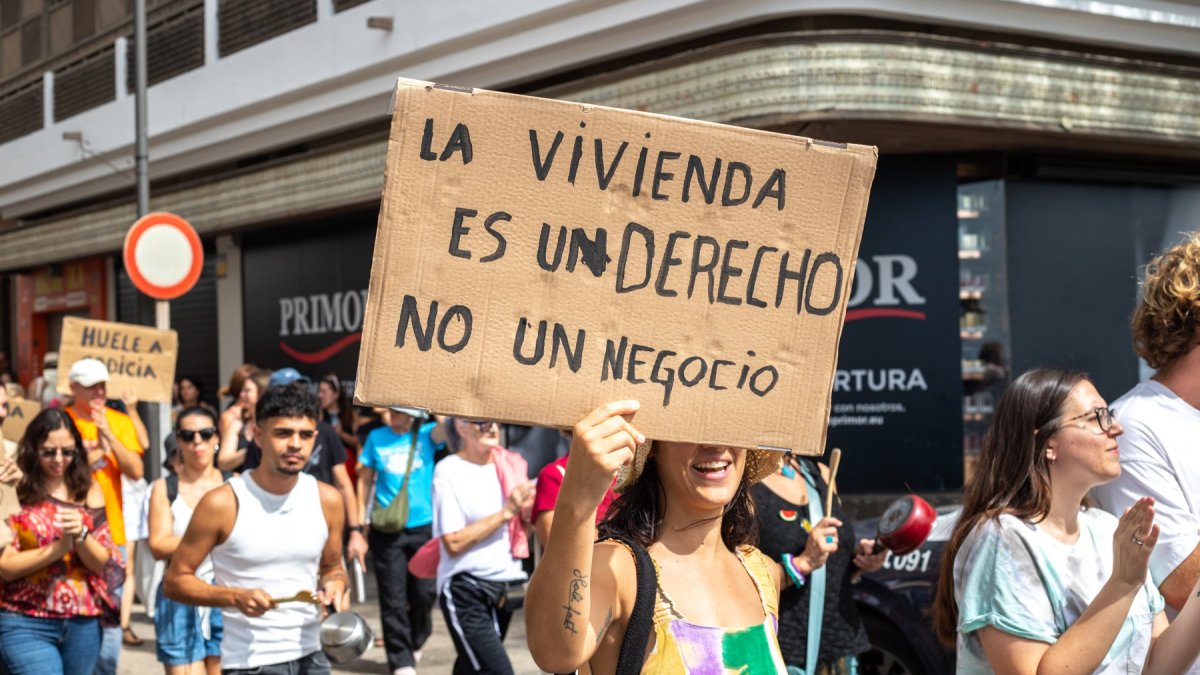
The housing situation in Lanzarote, specifically, and in Spain, in general, has led to the creation of the Assembly for the Right to Housing and the mobilization of thousands of people during a march on the island. Meanwhile, no rental housing has yet been delivered for social housing applicants.


Add La Voz de Lanzarote as a preferred Google source.
Stay informed with the latest current news.