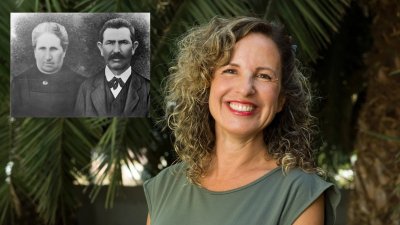
Canarian cuisine is characterized in many dishes by being a simple cuisine of resourcefulness that our ancestors prepared with what could be obtained from the land and the sea. However, in many affluent families, very elaborate recipes with ingredients difficult to obtain for the humblest people were cooked. This was the case of Josefa, the great-grandmother of the author Alma Perdomo, who kept a recipe book from the 19th and 20th centuries.
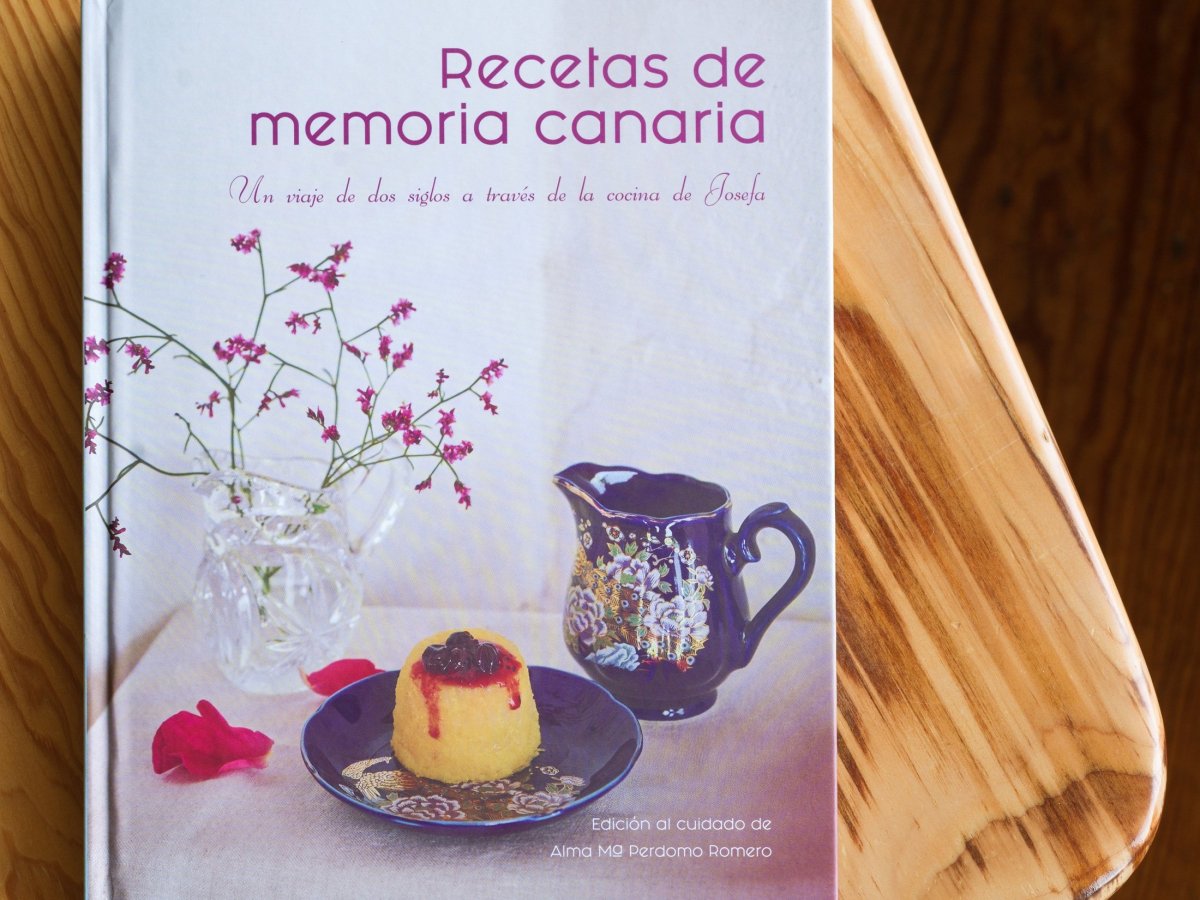
With these 148 recipes she found, the author has just released a recipe book called Recetas de memoria canaria. Un viaje de dos siglos a través de la cocina de Josefa, by Ediciones Remotas, which rescues these dishes and is now available in all bookstores.
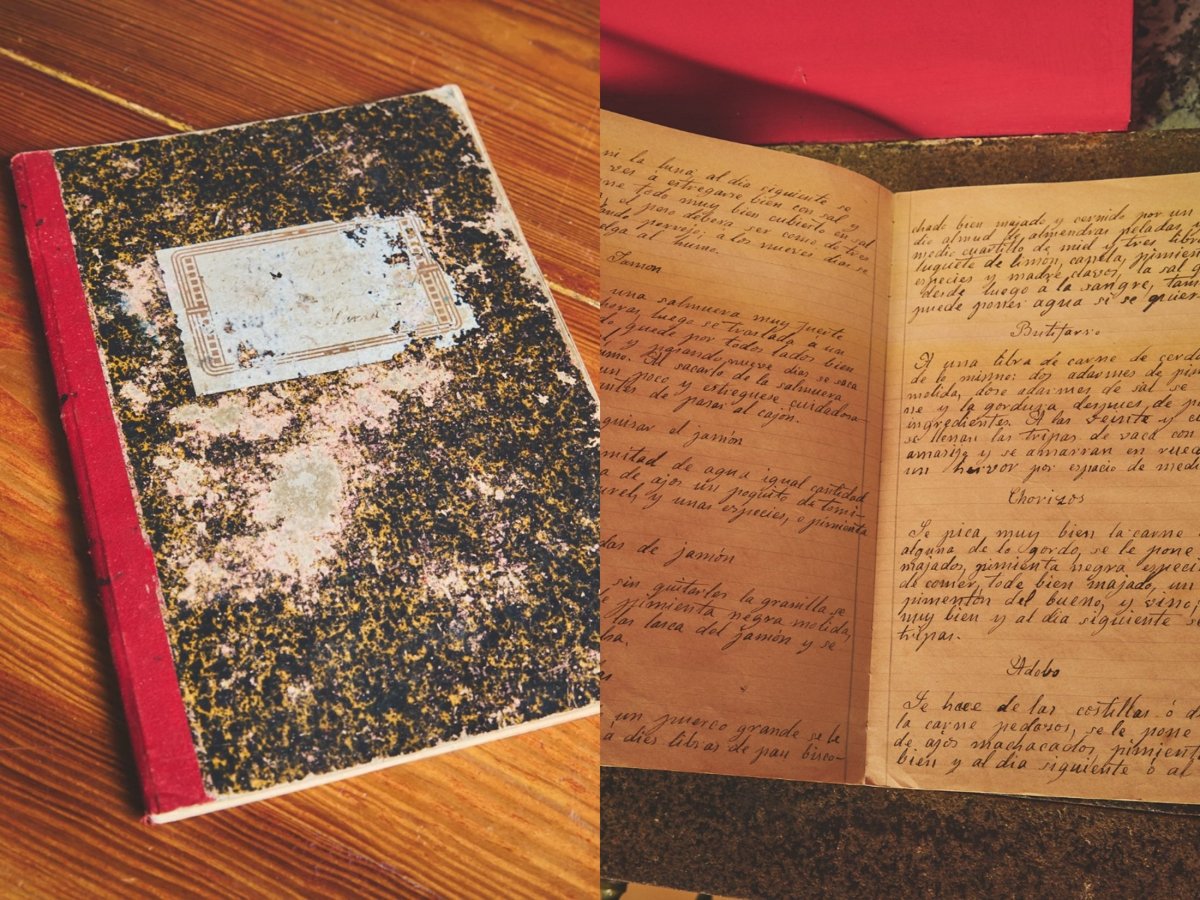
After her father's death, Alma Perdomo found a book among his belongings that she had never seen before. It was a recipe book from her great-grandmother Josefa Martínez Feo (Haría, 1886-1962), belonging to "the Perdomos of Haría," a very affluent family at that time. The cover of the recipe book barely showed some letters due to wear and tear over time, although she was able to read the surname Feo, which led her to find out it was her great-grandmother.
After discovering this recipe book written in her great-grandmother's own handwriting, Perdomo began to investigate, and the first thing she did was read it and prepare the recipes. "Some were complicated to eat and others were tastier," she says. At the same time, she carried out a graphological study of her great-grandmother, that is, an analysis of handwriting that is performed to interpret personality traits, emotional state, and way of acting.
The Lanzarote native began to take an interest in getting to know her great-grandmother Josefa as much as possible. "I started wanting to know who that woman was, to know how women related to each other at that time, as I realized it wasn't an isolated notebook, but a network of women who told each other things in this way, passing on recipes or knowledge," she explains. In fact, many of these recipes originate from England, the peninsula, Cuba, or Italy.
Rescuing Josefa's figure and finding answers
Perdomo's objective after finding this treasure in the form of a recipe book was to rescue her great-grandmother's figure and "to contextualize Josefa and try to provide answers."
From all of this, she began to investigate to discover where she got these recipes from, what trade routes she had, or the origin of those recipes. During this investigation, she discovered many cookbooks whose authors were men, so Alma Perdomo decided to rescue two female authors, Emilia Pardo Bazán and Carmen de Burgos.
"I found some similarities in recipes of theirs with Josefa's, although it doesn't have to be because Josefa read those books, or maybe she did, but maybe she had seen it or the neighbor had told her," she points out.
One of the most relevant characteristics of this book is that "you don't find wrinkled potatoes with mojo, and one of the explanations is because those recipes were already known, but normally in these houses there was a cook, and I remember my family telling me that my great-grandmother had one."
These women from well-off families knew how to read and write, so they transcribed the most elaborate and exquisite recipes and dictated them or had the cooks make them. "It was a way to entertain family and neighbors because there were no bars," she indicates. Added to this is the creation of several associations in Haría in those years, where neighbors would gather with food and music.
A tradition that transforms and adapts
To carry out this recipe book and bring it to the 21st century, the Lanzaroteña decided that "tradition does not only consist of doing exactly the same thing our ancestors did, but that we can make it our own." At this point, the paths of Alma Perdomo and the Canarian chef Rayco Arbelo crossed to be able to prepare these recipes by Josefa, but with a more current vision.
Of the hundreds of recipes, fifty were selected. "Rayco gave them a reinterpretation and delicious things came out," she assures.
During this process of reinterpreting the recipes, certain now-prohibited ingredients like shearwater had to be substituted or some dishes improved to make them palatable.
As can be seen in the photographs of the dishes, which were the responsibility of Daniel Cabecera, the presentation of the recipes is meticulously cared for, using tableware, pottery, and tablecloths that Perdomo has inherited from her family, which translates into a form of tribute. "The interesting thing about this recipe book is that it opens up a new world for us; Canarian food is not just traditional, but there were different kinds of food," she details.
"This recipe book opens a new door to understanding that Canarian food doesn't have to be just from the last fifty years, but rather that there was another food and way of life," she continues.
A recipe book to get to know her great-grandmother Josefa
The author assures that despite having heard about her great-grandmother Josefa, "you don't pay attention because you don't stop to notice." "As a result of starting to do it, people began to talk to her about her great-grandmother.
"Neighbors from Punta Mujeres like Toña told me that she loved to cook and that they had tried those recipes, and that at a certain point in her life when she stopped cooking, she always carried a deck of cards in her pocket, so you see a very real woman," she recounts.
Ingredients ranging from gooseberries to shearwaters
Some of the hundreds of recipes included ingredients such as gooseberries, saffron, shearwaters, artichokes, anchovies, or they even stuffed the fish with a paste made from the bones of the fish itself.
"Another thing is that the recipes have a lot of offal and, from what we have investigated, it was used mainly on the westernmost islands, but not on ours," she explains.
It is striking that the recipe book has a wide variety of cured meats and, through oral interviews conducted by the author, she discovered that this could be because they slaughtered older animals, so the offal was the softest and most pleasant part to the palate.
Alma calls on all those who have family recipe books in their possession to share them and to contact her to "create a network" with which to learn about the history of our ancestors and our roots.
Add La Voz de Lanzarote as a preferred Google source.
Stay informed with the latest current news.