

In Guatiza, the history of the school is also that of several generations of neighbors. Children have passed through its classrooms who found in school one of their first spaces for learning, coexistence, and discovery. Friendships were born there, memories were built, and bonds were established that still remain in the collective memory of the town. The CEIP Guenia represents much more than an educational infrastructure: it is part of the social evolution of the town itself.
The first preserved photographs allow us to go back to 1953, when education was already a reality in Guatiza. Eight years later, in 1961, the school building was constructed, marking a new stage in the town's education. Since then, the center has undergone profound transformations, incorporated new services, and faced difficulties related to its facilities, teacher availability, and enrollment evolution.
On this November 16th, International Day for Tolerance, it is appropriate to recall this trajectory and reflect on the role of education as an instrument for coexistence, equality, and social cohesion. The date invites us to remember that access to quality education must be guaranteed regardless of the size of a town or the number of schoolchildren attending its classrooms.
The first generations: a school that was already part of the town
Graphic memory is one of the main resources for reconstructing the early chapters of Guatiza's educational history. Among the preserved documents, a photograph dated 1953 stands out, belonging to the collection of Cándida Cadena Campos, which shows several schoolchildren with their teacher. Another image, dated between 1961 and 1970, shows a group of students in front of the school accompanied by the teacher José Robayna Betancor. Both photographs allow us to recognize faces, teachers, and settings that are part of the town's school memory.
These are not just old images. They are testimonies of an era when the figure of the teacher held a particularly relevant place in the life of towns. In addition to teaching reading, writing, and basic knowledge, teachers often represented a cultural and social reference for families.
The school was also a meeting place between generations. Children shared experiences and families found in the school a nearby institution integrated into daily life. For this reason, those photographs retain an important emotional value for those who recognize their parents, grandparents, siblings, or former classmates in them.
1961: the building that accompanied the transformation of Guatiza
The construction of the school building in 1961 marked a turning point in the educational trajectory of the town. The new facilities became the setting for the education of numerous generations and accompanied the economic and social changes experienced by Lanzarote during the following decades.
The modernization of the island, new educational expectations, and the transformations of the teaching system were shaping a reality very different from what the first students had known. However, the passage of time also left its mark on the facilities.
What for years had constituted sufficient infrastructure began to require modernization and adaptation to the demands of an increasingly diverse educational community. The issue was not exclusively architectural: a school must have adequate spaces to carry out teaching activities, meet the different needs of the students, and offer complementary services that facilitate work-life balance for families.
This need for updating would eventually become a recurring demand, both from families and municipal institutions.
2011: the facilities return to the center of institutional debate
In March 2011, the state of the school prompted an institutional visit in which representatives of the Teguise City Council and educational administration officials participated, accompanied by the center's management.
At that time, the CEIP Guenia had 158 students. During the meeting, the deficiencies of facilities that, after half a century of operation, required a more extensive intervention were presented.
Among the alternatives proposed were the remodeling of the existing building or the construction of a new school. The City Council expressed its willingness to provide land, even through the acquisition of a plot and the cession of another of municipal ownership.
The educational administration then announced a refurbishment for the following academic year and the development of a feasibility study to determine the most appropriate solution: building a new center in phases or carrying out the work in a single intervention.
The visit reflected a concern that went beyond ordinary maintenance. It was about deciding how to adapt a 1961 infrastructure to the needs of a school community that had reached a considerable size.
Three years later, the issue remained. In November 2014, the mayor of Teguise, Oswaldo Betancort, called for a comprehensive renovation and requested that the 2015 regional budgets include an allocation of 250,000 euros to undertake the reform. The City Council argued that ordinary maintenance tasks could not replace a structural intervention that the educational administration was responsible for promoting.
The repetition of these demands helps identify one of the school's historical problems: the need to reconcile daily maintenance with a broader modernization. Announcements of studies, budget allocations, or planned actions should not be confused with the confirmation of a comprehensive renovation that has actually been carried out.
The school canteen: a demand that transformed the center's services
One of the most significant advances in the recent history of CEIP Guenia was the launch of the school canteen.
For years, the absence of this service had influenced the decisions of some families, who chose to enroll their children in other centers that did offer this service. The situation had direct consequences on work-life balance and also on the school's ability to maintain and increase its enrollment.
In July 2012, the Teguise City Council announced an investment of 55,000 euros to condition and equip the canteen. Of this amount, 35,000 euros were allocated to electrical, plumbing, and space adaptation work, while the remaining 20,000 euros were reserved for equipment.
The inauguration of the facilities took place on June 25, 2013. The service would begin operating in September of that year, with an announced capacity of 36 students per shift. At that time, the school housed approximately 120 students.
The opening was the result of a sustained demand by teachers, families, and the parents' association. The lack of a cafeteria had contributed to some schoolchildren being enrolled in other centers, especially in Arrieta.
The new service allowed for improved work-life balance possibilities and strengthened the school's educational offering. Its importance was reflected in the following years, when plans were made to increase places to accommodate another 20 schoolchildren and the processing of that expansion was announced.
However, the continuity of the service was not permanently guaranteed either. The cafeteria remained inactive from the 2020/2021 academic year, a situation that once again deprived families of an important service for organizing their daily lives.
The recovery came in September 2025, when the Ministry of Education announced the reopening of the cafeteria for the 2025/2026 academic year, with 40 authorized places: 30 for Infant and Primary students and another ten for children in the two-year-old classroom.
The reopening meant recovering a service that had been a historical demand of the educational community and which, after several academic years of inactivity, was once again incorporated into the center's offering. Its trajectory shows that the continuity of a rural school does not depend exclusively on its classrooms and teaching staff, but also on complementary services that respond to the real needs of families.
Diego Arrebola: almost four decades teaching and consolidating volleyball
The history of a school is also built through the people who have dedicated a good part of their lives to teaching. In the case of CEIP Guenia, one of the names most linked to that trajectory is Diego Arrebola, a teacher originally from Granada who arrived in Lanzarote during the Transition and developed an extensive professional career in Guatiza.
His tenure at the center lasted for nearly four decades. According to his own calculations, he taught approximately 600 students, a figure that allows us to gauge his influence on several generations of schoolchildren.
His arrival on the island was marked by a very different context from the current one. He recalled that, when he joined Guatiza, there were hardly any services and the telephone was practically a shared resource. The town presented very different living conditions from those that the children of subsequent decades would experience.
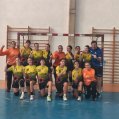
However, his contribution was not limited to ordinary teaching. Arrebola helped to introduce and consolidate a sporting tradition that would eventually become one of the school's hallmarks: volleyball.
The passion had been born during his previous professional assignment in a town in Granada, where there was an important tradition of this discipline. Upon arriving in Lanzarote, he transferred that experience to the school environment and began working with the school's teams.
What initially emerged as a sporting activity ended up acquiring its own dimension. Volleyball allowed schoolchildren to discover other forms of participation, learn to work as a team, and represent the school in competitions.
Arrebola's career reflects a dimension of the school that does not always appear in enrollment statistics or administrative balances: the capacity of a teacher to leave a mark that remains present long after their retirement.
For numerous former students, his name remains associated not only with classes but also with training sessions, competitions, and a stage of their childhood that is part of their own memories.
2015: families denounce lack of teaching staff and grouping
Difficulties related to the availability of teaching resources are not a recent concern. In September 2015, families at CEIP Guenia publicly expressed their discontent over the organization of groups and the withdrawal of a support teacher who, they claimed, had been promised for that academic year.
The situation forced schoolchildren of different ages and levels to be brought together in the same classroom. The families considered that this organization could harm individualized attention and demanded that each group have the necessary teaching resources.
The protests gained strength again in October, when parents requested the intervention of the mayor of Teguise to convey their demands to the Ministry of Education. Among their demands was the recovery of the support teacher withdrawn at the beginning of the academic year.
The controversy highlighted a concern that would reappear years later: in smaller centers, the organization of units and staffing can have direct consequences on educational attention and the response to student diversity.
2023: Groupings mobilize families again
In September 2023, families again expressed their concern about classroom organization, after it was proposed to combine first and second grade of Primary in the same group with 22 students.
Parents warned of the difficulties that a single teacher would face in simultaneously attending to children who were in different learning stages. The composition of the group added complexity to the situation, as among the students there were students with specific educational support needs, including minors with special educational needs associated with autism spectrum disorder.
Families demanded a response tailored to the group's characteristics and argued that the organization of units should take into account not only the number of enrolled students but also the particular needs of the students.
The episode once again made it clear that educational attention cannot be assessed solely by general figures. Student diversity, their learning paces, and the conditions under which teaching work is carried out are fundamental factors for organizing a center.
2024: A small school with a commitment to individualized attention
In April 2024, the CEIP Guenia once again found itself in the spotlight, this time due to the characteristics of its educational model and the schooling difficulties arising from the demographic size of Guatiza.
The center opted for small groups, with classrooms of between ten and fifteen students in Early Childhood and Primary education, an organization that allowed for more individualized attention and promoted the development of social skills, autonomy, and inclusion.
The administration acknowledged the difficulties in attracting new enrollments due to the small population of the town, although it also highlighted that some of the students came from nearby areas, such as Costa Teguise and Los Cocoteros.
The school had turned the size of its groups into an opportunity to develop a closer teaching approach, adapted to the characteristics and needs of each student. Among its resources were the use of pictograms, digital tools, and specific spaces to work on different skills.
However, this reality also posed a challenge: maintaining sufficient enrollment to preserve a stable organization and prevent variations in the number of students from affecting available resources.
The center's experience thus showed the two sides of the rural school. Small groups can favor more personalized attention, but they require educational planning that guarantees the stability of teaching staff and units.
2026: reorganization of units reopens conflict between families and Education
The most recent controversy occurred in June 2026, when families from CEIP Guenia expressed their rejection of the reorganization planned for the 2026/2027 academic year and warned of the possible loss of units and teaching resources.
On June 25, the educational community released a statement denouncing the planned elimination of two units, a decision that, according to the families, would mean going from seven to five. The group called for a review of the planning and questioned whether the measure reflected the actual evolution of enrollment.
Their main argument was that the departures of students finishing Primary school and continuing their studies in secondary school were offset by the incorporation of new students in Early Childhood Education and other enrollments. Therefore, they argued that the center maintained stable enrollment and that the reduction of units could lead to unnecessary reorganization.
The families warned that the loss of teaching resources would force the creation of mixed-grade classrooms, bringing together students from third and fourth grades, on the one hand, and fifth and sixth grades, on the other. They also expressed concern about the difficulties that such an organization could create in a center with students requiring different educational support measures.
The school community maintained that the reduction in teaching staff could harm individualized attention and inclusion, in addition to affecting the stability of the pedagogical project. Likewise, it questioned the medium-term planning and warned that a new evolution in enrollment could force the recovery of units in the following academic year.
It is important to distinguish these claims from administrative data. The families publicly argued that there was no real loss of students, but the specific enrollment figures that circulated during those days do not have an official closing certification that would allow the discrepancy to be resolved documentarily. Therefore, it is not appropriate to present the conflicting counts as definitive nor to use them as a conclusive basis for explaining the reorganization.
Another claim was added to the discussion about the classrooms: the absence of a caretaker for a full school year. The families reported that this situation had hindered the daily maintenance of the facilities and demanded a solution. The educational administration recalled that the hiring of this personnel and the maintenance responsibilities of Infant and Primary schools correspond to the town councils.
The conflict once again brought to the table two different areas of responsibility: the planning of units and teaching resources, which corresponds to the educational administration, and the ordinary maintenance of the facilities, which falls under the responsibility of the Town Council.
Beyond the differences regarding the organization of the next academic year, the episode reflects a concern that has accompanied the school for years: how to guarantee a stable educational offering with sufficient resources in a town where any modification of units can directly impact student attention.
A school that is part of Guatiza's identity
The trajectory of CEIP Guenia demonstrates that the history of a school cannot be measured solely by its years of operation, the number of students, or the units authorized by the Administration. It must also be valued for its contribution to the life of a community, for the generations that have passed through its classrooms, and for the bonds it has built with families.
From the first school photographs to the 2026 protests, the history of the center reflects the transformation of Guatiza and the changes experienced by education in Lanzarote. The images of the first students, the memories of teachers like José Robayna Betancor, the long career of Diego Arrebola, and the recovery of the school canteen constitute chapters of a collective memory that deserves to be preserved.
Current difficulties are a reminder that the continuity of a school does not depend solely on keeping its doors open. It requires adequate facilities, sufficient teaching staff, resources to cater to diversity, and services that allow families to trust their local school.
The future of CEIP Guenia is not solely an administrative matter, nor does it only affect those who currently have children enrolled in school. It also concerns Guatiza as a community, because a public school helps to maintain the population, fosters coexistence between generations, and is one of the essential services for the life of any town.
November 16th, International Day for Tolerance, offers an opportunity to remember the value of education as an instrument of equality, respect, and coexistence. In Guatiza, this reflection takes on a particular meaning: behind each classroom there is a story, behind each teacher a generation of students, and behind each protest a community that wants to continue to have a future.
Because preserving the Guatiza school does not simply mean preserving a building constructed in 1961. It means protecting a part of the town's memory and ensuring that future generations can also write their own history within its classrooms.
Documentary Sources
• Memoria de Lanzarote: Guatiza school photograph from 1953, collection of Cándida Cadena Campos.
• Memoria de Lanzarote: photograph of the Guatiza school, 1961-1970 period, by Javier Reyes Acuña.
• La Voz de Lanzarote, April 21, 2024: "The keys to Colegio Guenia: fostering social skills, small groups, and inclusion."
• La Voz de Lanzarote, June 25, 2026: "Families of Guenia school warn of the planned dismantling of several units at the center."
• Government of the Canary Islands: official file of CEIP Guenia.
• Teguise City Council: documentation on investments, school canteen, and municipal actions.
• Statements from the families and the educational community of CEIP Guenia, especially those relating to the planning of the 2026/2027 academic year.
• UNESCO and United Nations: institutional documentation on the International Day for Tolerance, November 16.


Add La Voz de Lanzarote as a preferred Google source.
Stay informed with the latest current news.